Susannah Streeter: Investors Brace for Tax Rises Amid a Summer of Resilience and Rebuilding
Key Takeaways
- •Wildfires in France's Gironde region have stabilized following recent rainfall, but tourism businesses continue to suffer significant revenue losses during their peak trading season.
- •Governments across southern Europe face escalating reconstruction costs from record-breaking wildfire seasons, creating long-term investment opportunities in resilient infrastructure and renewable energy.
- •A Wealth Club survey found that 98% of investors expect taxes to rise over the coming year, though experts recommend utilizing existing tax-efficient wrappers rather than making speculative portfolio changes.
- •Unilever's latest results show consumers are increasing purchase volumes rather than simply absorbing higher prices, with brand loyalty proving stronger in personal care than in food categories.
- •NATO members are increasingly treating the alliance's 2% GDP defence spending target as a minimum floor amid multiplying global security threats and strained public finances.
The Notebook — where the City's movers and shakers have their say. Today, financial commentator Susannah Streeter takes the pen.
At this time of year, the Médoc region's beautiful beaches, long lunches, endless Atlantic coastline, and famous wines enjoyed at sunset would typically be in full swing. Instead, devastating fires that tore through the Gironde placed the plans of thousands of holidaymakers — and the businesses that depend on them — in jeopardy. Volunteers and firefighters, including Streeter's friend Jean-Michel, have been working around the clock to protect homes, forests, and livelihoods.
The situation has now stabilised following what has been a traumatic period. Rain over recent days brought some relief, and authorities have urged visitors to return. The immediate human cost remains immeasurable, but the economic bill mounted almost as quickly as the flames spread. Tourism businesses are losing what should be among their busiest weeks of the year, and the narrow window to capture seasonal trade leaves them in urgent need of support. The Gironde fires are part of a wider pattern: southern European nations have faced successive summers of record-breaking wildfire activity, straining emergency budgets from Portugal to Greece.
Governments in France and elsewhere, already contending with stretched public finances, now face another sizeable reconstruction bill. As extreme weather events grow more frequent, spending is set to accelerate across fire defences, water infrastructure, resilient electricity networks, and communications systems. For infrastructure investors, engineering firms, and renewable energy companies, the rebuilding and resilience effort could generate opportunities lasting decades. The EU has already begun channelling funds through its climate adaptation programmes, recognising that the cost of prevention consistently undershoots the cost of disaster recovery.
Defence Deep Dive
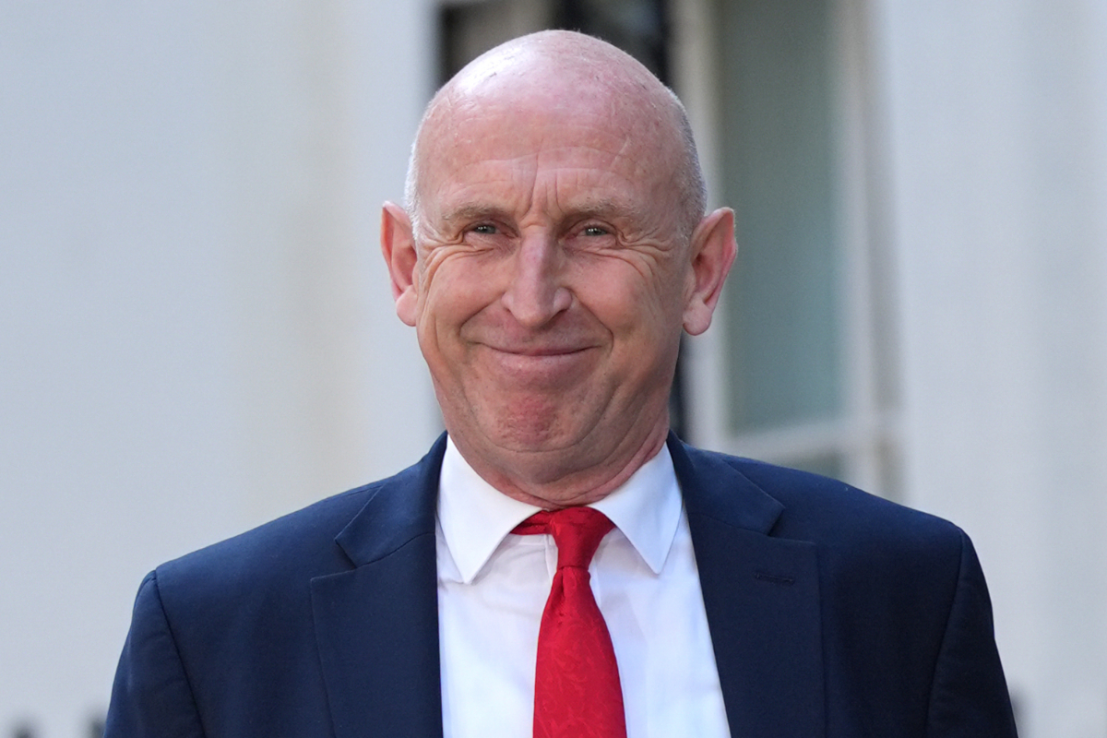
The theme of resilience also took centre stage as Streeter swapped markets commentary for military strategy, resuming her RAF hosting role at the Global Air Chiefs' Conference in London (Global Air & Space Chiefs' Conference 2026). Among the military leaders in attendance, there was likely a quiet sense of relief following the appointment of John Healey as Chancellor. Having spent years advocating for stronger defence capability, Healey understands the challenges armed forces face in an increasingly dangerous world. The question now is whether he can reconcile that understanding with the Treasury's unforgiving arithmetic. The backdrop is acute: NATO's 2 per cent of GDP spending benchmark, long treated as a ceiling by many members, has become a floor that an increasing number of allies are racing to clear as security threats multiply.
A Taxing Summer
As Andy Burnham rose to power, summer drinks receptions across the City quickly turned into tax speculation sessions. The latest Wealth Club survey found that 98 per cent of investors are bracing for a rise in taxes over the next year.
It is understandable that many are wondering whether they should make wholesale changes to their portfolios. Streeter's advice is consistent: do not let the tax tail wag the investment dog. History shows that reacting to speculation can prove costly. Selling successful investments too early can crystallise tax bills and mean missing out on years of compounding returns. Instead, investors should make full use of the tax-efficient wrappers already available — whether ISAs, pensions, or, for those who understand the risks involved, Venture Capital Trusts, Enterprise Investment Schemes, or Seed Enterprise Investment Schemes.
Big Brand Power
Back on the high street, there are at last some encouraging signs that consumers are more upbeat. Wimbledon and the World Cup under sunny skies have helped draw shoppers back, while Unilever's latest results highlight the power of trusted brands. After several years in which inflation did much of the heavy lifting, shoppers are now buying greater volumes of products rather than simply paying higher prices — a shift that major consumer goods groups have been waiting for as input costs ease and pricing power reaches its limit.
However, the trend is not uniform. Consumers appear happy to gravitate toward big names in beauty and personal care, with Dove and Vaseline continuing to command particular loyalty. When it comes to groceries, shoppers are far more likely to look around. While Marmite and Hellmann's remain household names, they are not as sticky as body wash — which is why Unilever remains keen to find them a new home outside its core power brands business.
Treading the Boards
After a summer spent discussing defence, wildfires, economics, and markets, Streeter will also be taking her seat at the Bristol Hippodrome to watch Annie — not only for the love of a Miss Hannigan performance, but to help decide what production her daughter's theatre group should stage next. Somehow, she has also become chair of the group.
Watching nearly 1,200 tickets sell out for the group's recent production of School of Rock, seeing 43 young performers light up the stage, and receiving a message of support from Lord Andrew Lloyd Webber himself served as a reminder of why so many parents willingly give up evenings and weekends to make these productions happen. They transformed themselves into stage managers, wardrobe teams, front-of-house staff, prop makers, and lighting crews — all while juggling careers as teachers, lawyers, investment analysts, and countless other professions.
We often talk about the value of volunteering, but perhaps we do not sufficiently recognise what these parents bring back into the workplace. Organising productions, solving last-minute crises, motivating teams, managing budgets, and delivering under pressure are skills every employer values. Supporting children's clubs helps build stronger, more resilient workforces. After a summer like this one, it is no wonder a holiday is needed.

