Premier League: US Owners Now Dominate More Than Half of the 20 Clubs
Key Takeaways
- •Eleven Premier League clubs have a majority or most influential stake held by a US firm or individual.
- •British owners account for 20 per cent of this season’s Premier League clubs.
- •Manchester City and Newcastle United are the main examples of sovereign wealth influence in the league.
- •European ownership remains present through Nottingham Forest, Sunderland and Hull City.
- •UEFA and the Premier League have tightened rules on multi-club ownership and related competition issues.
The Premier League returns this evening for its 35th season, with its clubs now established as commodities traded by some of the world's richest and most influential investors.
Spanning private equity funds, individual billionaires and sovereign wealth, the current crop of 20 team owners — refreshed this season by Hull City, Coventry City and Ipswich Town, who replace Burnley, West Ham United and Wolverhampton Wanderers in the top flight — could be the richest the competition has ever seen.
That mix matters well beyond the boardroom. Ownership now shapes transfer spending power, stadium strategy and, increasingly, whether clubs are run as local institutions or as global media assets — which is why the identity of buyers has become almost as closely watched as the football itself.
So just who owns the Premier League?
US owners lead the field
Increasingly, the answer lies across the Atlantic. A total of 11 Premier League clubs have a majority stake, or their most influential stake, held by a US firm or individual.
The shift has been two decades in the making. It began with the Glazer family's leveraged takeover of Manchester United in 2005 and Fenway Sports Group's purchase of Liverpool in 2010, and it has accelerated as owners of closed-league US franchises — the NFL, NBA and MLB among them — seek growth in a competition that carries relegation risk but unmatched worldwide reach.
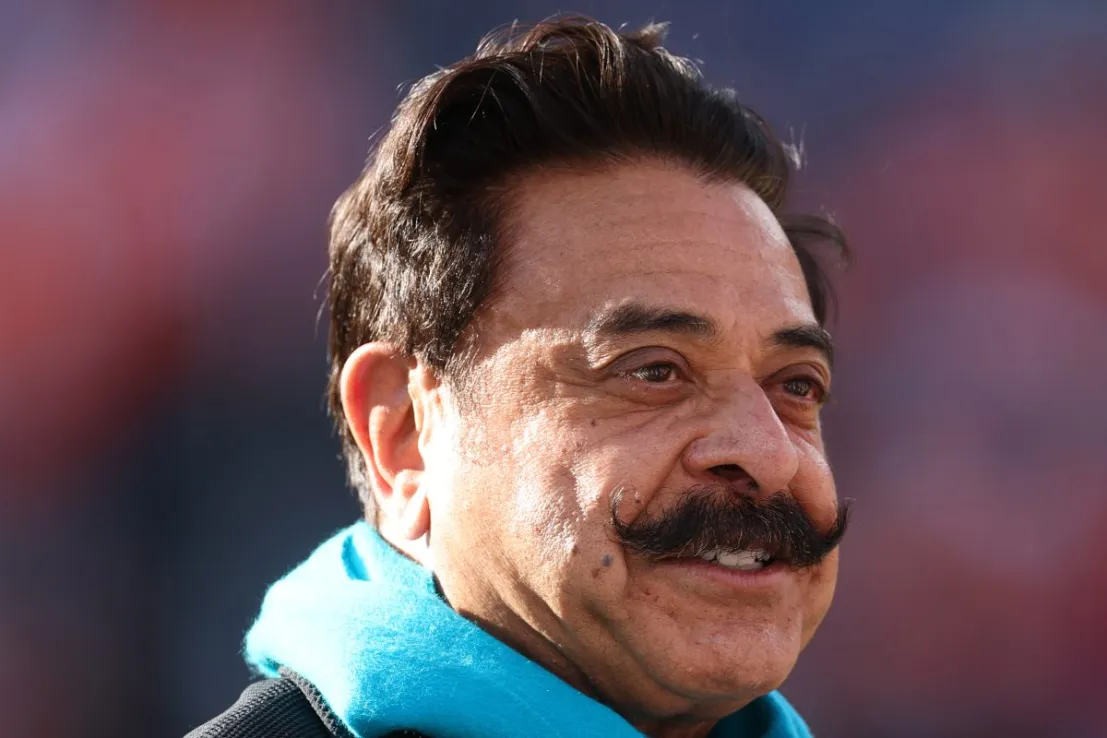
Arsenal is owned by Kroenke Sports & Entertainment, whose portfolio also includes the Los Angeles Rams, the Denver Nuggets and other US franchises, while Jacksonville Jaguars owner Shahid Khan controls Fulham.
Aston Villa's owners, V Sports, have major US backing, and Black Knight Football Club, which owns Exeter Chiefs, also owns Bournemouth. Chelsea is owned by Clearlake Capital, the private equity firm that led the 2022 takeover which ended Roman Abramovich's near two-decade ownership, with the likes of Todd Boehly and former LA Lakers owner Mark Walter reportedly looking to offload their holdings, while Woody Johnson's purchase of John Textor's shares in Crystal Palace keeps US influence at Selhurst Park.
Everton play under the US flag after being bought by the Friedkin Group, whose takeover completed in late 2024 at the end of a protracted search for new investment, and Ipswich Town and Leeds United are controlled by Gamechanger 20 and 49ers Enterprises respectively.
Liverpool remains under the umbrella of Fenway Sports Group despite taking investment from Jeff Bezos as part of a British-Indian-led consortium, and fellow Big Six side Manchester United remains in the hands of the Glazer family despite a healthy stake being held by British billionaire Sir Jim Ratcliffe, whose deal handed day-to-day control of football operations to his Ineos group.
British owners form the second-largest group
The biggest ownership bloc after the Americans is the British, with 20 per cent of this year's Premier League clubs owned by people from these shores.
Brighton and Hove Albion is controlled by avid racehorse owner Tony Bloom, while Brentford is one of two London clubs owned by Brits. Matthew Benham's stake in the Bees is joined by ENIC, which owns the majority of Tottenham Hotspur. Returning side Coventry City is under the stewardship of Doug King.
Both Bloom and Benham built their fortunes in professional gambling and sports analytics, a route into the boardroom that has since changed how Premier League clubs recruit players and price transfers.
Sovereign wealth
Sovereign wealth has yet to penetrate the Premier League in a major way, but it has been consequential where it has arrived.
At the Etihad, long-term ownership of Manchester City by City Football Group — under Sheikh Mansour bin Zayed Al Nahyan and Abu Dhabi United Group — has seen the blue side of the northern powerhouse dominate over the last decade. On the banks of the River Tyne, the Saudi Arabian Public Investment Fund's backing since its 2021 takeover saw Newcastle United claim the League Cup.
Both state-linked arrivals have fuelled long-running debate about the role of national wealth in English football, though neither has slowed the flow of institutional money into the competition.
European foothold
Ownership from continental Europe also endures, with Evangelos Marinakis in control of Nottingham Forest, French-Swiss businessman Kyril Louis-Dreyfus at Sunderland, and Turkish media firm Acun Medya at newly promoted Hull City.
What comes next will be shaped as much by rulemakers as by buyers. UEFA restricts clubs sharing an owner from competing in the same European competition without approval, and the Premier League has tightened its own rules around multi-club ownership — constraints that any further wave of US, state-linked or multi-club investment will have to navigate.
