Panama Canal Cuts Daily Capacity to 32 Ships as El Niño Measures Deepen
Key Takeaways
- •From September 4, the canal will offer nine neopanamax slots and 25 panamax slots per day, before total daily capacity falls to 32 vessels on September 15.
- •The restrictions are driven by insufficient rainfall and low lake levels, since each transit uses large volumes of freshwater from Gatun Lake that must be replenished by rain.
- •Clarksons Securities said the tighter canal limits are likely to support freight rates by pushing more ships onto longer alternative routes.
- •The Panama Canal Authority has also changed auction rules and delayed planned draft reductions to 48 feet and 47.5 feet.
- •Canal slot auctions averaged about $1.1 million a day earlier this month, with some neopanamax bids reaching several million dollars.
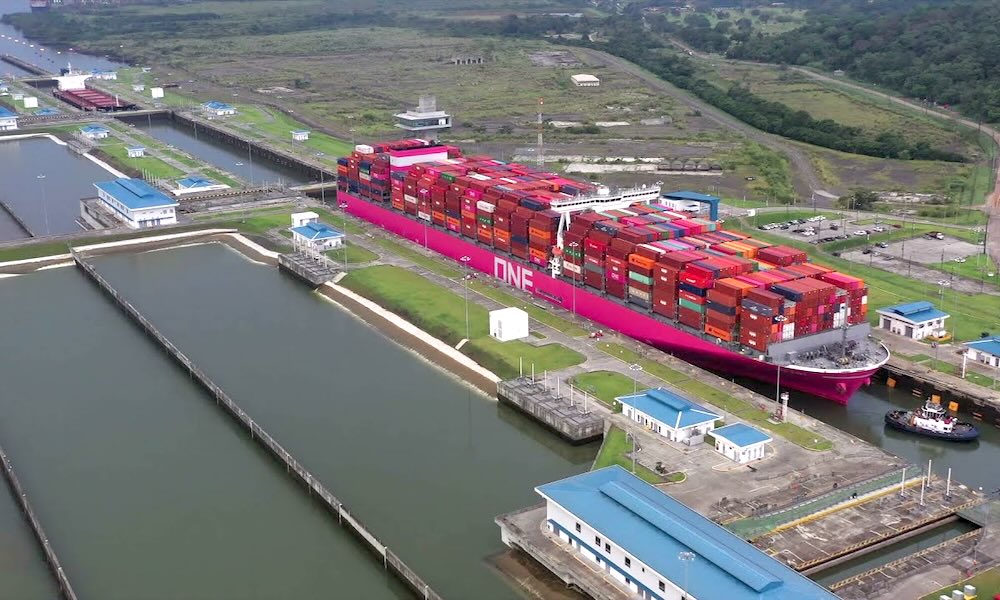
The Panama Canal will reduce daily booking capacity to 32 ships from mid-September, as worsening rainfall deficits force the waterway into deeper defensive measures against El Niño.
For booking dates from September 4, the canal will offer nine neopanamax and 25 panamax slots per day. From September 15, panamax availability drops again to 23 slots, bringing total daily capacity to 32 vessels. The move follows earlier announcements on draft restrictions.
The constraint is hydrological rather than operational: each transit flushes roughly 50 million gallons of fresh water from Gatun Lake into the sea, and that water can only be replaced by rainfall over the canal's watershed. The result is that a waterway carrying about 5% of global seaborne trade has its effective capacity capped by lake levels rather than demand, leaving the route directly exposed whenever rainfall underperforms.
Clarksons Securities analysts Frode Mørkedal and Omar Nokta warned earlier this week that the deteriorating canal situation will soon begin feeding into freight rates, as restrictions tighten effective vessel supply and push more ships onto longer routes — via Suez or around South America, detours that add thousands of nautical miles and more than a week of extra steaming on typical US Gulf-Asia voyages. Clarksons is particularly bullish on VLGCs, which are heavily exposed to US Gulf-Asia trades through Panama, as well as dry bulk. The firm has raised its 2026 VLGC rate forecast by $15,000 to $81,250 a day and its 2027 estimate by $20,000 to $70,000.
The Panama Canal Authority said the latest measures were necessary despite the arrival of the rainy season, with precipitation and watershed inflows continuing to disappoint.
Auction rules are also being overhauled. LNG and LPG carriers, bulkers, containerships and vehicle carriers, and tankers will be separated into four groups for selected auctions, while the largest containerships by teu capacity will receive priority in the neopanamax slot competitions.
As Splash reported in July, the canal had already cut daily booking capacity from 36 ships to 34, after draft restrictions returned in June for the first time in around two years.
The pressure has increasingly shown up in the price of securing passage. Daily auctions for canal slots averaged around $1.1m earlier this month, with some neopanamax bids reaching several million dollars, as water restrictions coincided with unusually strong demand for the route.
There is some immediate relief on draft. A planned reduction to 48 ft has been delayed until September 2, while the subsequent move to 47.5 ft has been pushed back until October 1.
During the 2023-24 drought, throughput fell as much as 40% below normal, with daily transits at one point cut to the low 20s before capacity was gradually restored through the same combination of transit and draft restrictions tied to lake levels that is being deployed again now.
Source: Splash247
