Wellington College Lagos Puts Human Skills at the Centre of the Education Debate in the Age of AI
Key Takeaways
- •Christine Haslett cited a 2022 UK study showing that 19% of bar staff and 24% of security guards hold university degrees, questioning whether degrees reliably deliver greater opportunity.
- •A UK survey referenced by Chris Rothwell found that while 87% of young people use generative AI, only 9% feel their education is preparing them for a world shaped by the technology.
- •The OECD's 2025 Education for Human Flourishing framework identifies five core competencies for schools: understanding the world, appreciating the world, adaptive problem-solving, ethical competence, and acting in the world.
- •Wellington plans to embed AI across its curriculum for students aged three to 18, train teachers in the technology, and cut administrative tasks so educators can give more personalised attention rather than be replaced.
- •Wellington College International Lagos is set to open in September 2027 in Alaro City on the Lekki peninsula, and the forum marked the first introduction of the human flourishing framework outside London and the UK.
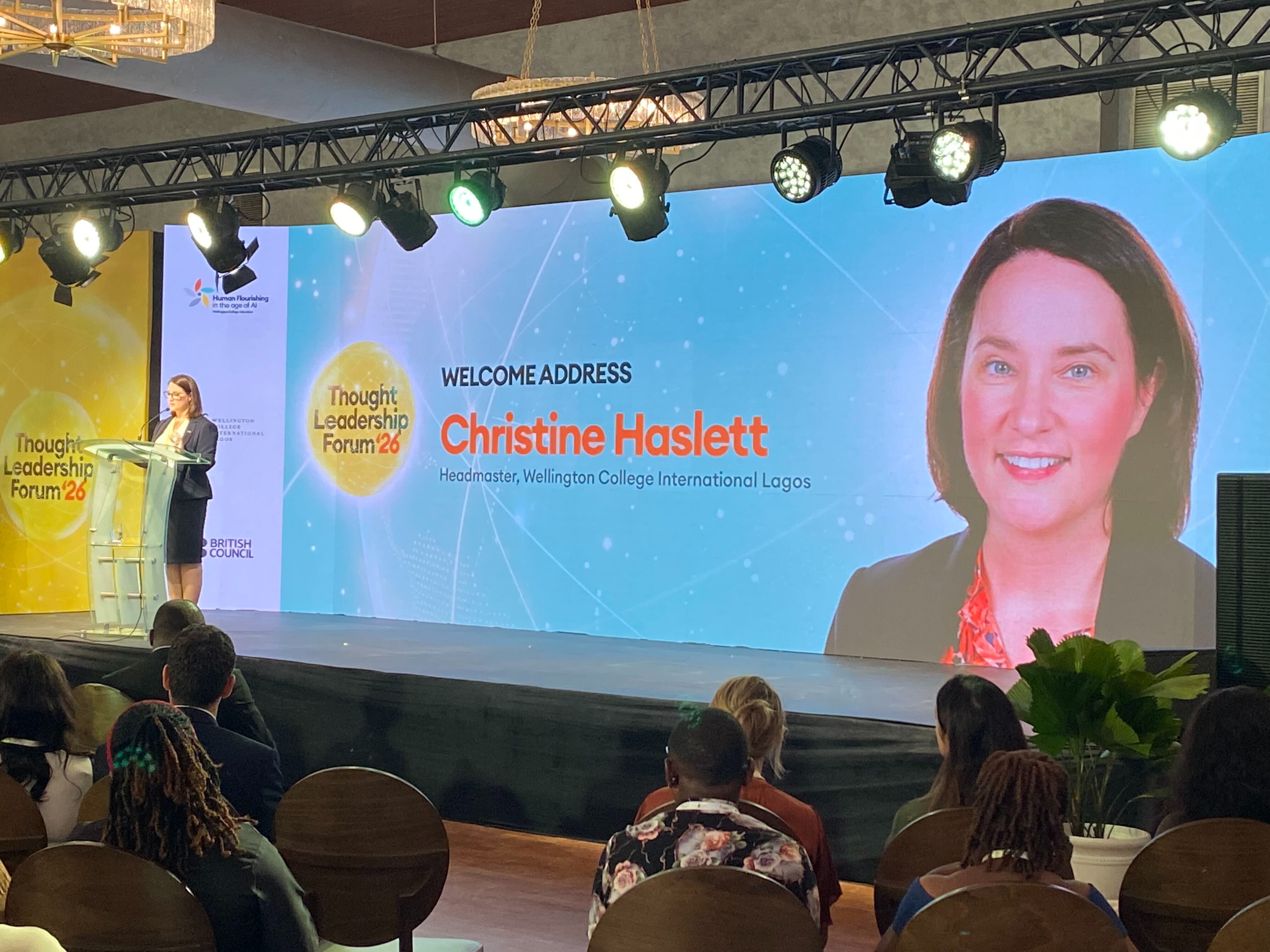
Wellington College International Lagos, part of the international network of Wellington College — the British independent school founded in England in 1853 — has opened a debate on what a good education should mean in an era defined by rapid advances in artificial intelligence. The discussion anchored the school's first Thought Leadership Forum, "Human Flourishing in the Age of AI," held on November 19 at the Metropolitan Club in Lagos.
The gathering drew educators, technology leaders, policymakers and business professionals to examine how schools can prepare students for a future in which machines increasingly perform tasks once considered uniquely human.
Christine Haslett, Headmaster of Wellington College International Lagos, argued that the conversation should extend beyond technology itself to challenge long-standing expectations of education and ask whether past measures of success still hold.
Drawing on a teaching career that began in 2003 — when having a computer and an interactive whiteboard was still a big deal — Haslett traced how laptops and learning management systems transformed classroom life. Yet she pressed educators to consider whether these tools have produced the improvements once promised.
"Has technology really delivered the educational transformation that we were promised?" she asked.
Her concern was not technology's place in schools but an education system that, in her view, fixates on exam results, accountability and university admission while neglecting students' well-being and what happens after they graduate.
Haslett cited troubling research from England showing that the share of children aged eight to 16 with probable mental health issues rose from one in eight in 2017 to one in five in 2023. She also pointed to declining childhood happiness and rising school absenteeism. "These challenges should give educators pause," she said.
She further questioned the assumption that good grades and a university degree guarantee better opportunities. Citing a 2022 study, she noted that 19% of bar staff and 24% of security guards in the UK hold university degrees. "There is absolutely nothing wrong with working in a bar or being a security guard if that's what makes you happy," she said. If young people are encouraged to believe a degree leads to greater opportunity, she argued, it is fair to ask whether those opportunities have matched the qualifications.
With AI reshaping the landscape, she said, the question becomes even more pressing. Academic achievement matters, she maintained, but it should not be the only measure of a successful education. "At Wellington, we want them to be great human beings: curious, compassionate, thoughtful, courageous, resilient, and capable of contributing positively to the world," she concluded.
Chris Rothwell, Founding Director of the Wellington College Education Institute of AI, made the case for education to pursue broader goals. He referenced research from the Organisation for Economic Co-operation and Development (OECD) — the Paris-based intergovernmental body whose PISA assessments serve as a global yardstick for comparing school systems — highlighting key problems in education systems.
According to Rothwell, while education improves slowly, gaps persist between disadvantaged students and their peers. Concerns are growing about young people's mental health and sense of belonging. The traditional model of schooling as preparation for the workforce has become increasingly difficult to justify amid rising higher education costs and shifting job market returns, and AI adds further complexity: tasks once thought to be exclusively human are now being handled by machines. The real question, he emphasised, is not only what AI can accomplish, but what education should enable people to become.
Rothwell introduced the OECD's 2025 framework for Education for Human Flourishing, which identifies five core competencies schools should nurture: understanding the world, appreciating the world, adaptive problem-solving, ethical competence, and acting in the world.
He stopped short of calling for traditional subjects to be abandoned, firmly believing that foundational skills such as mathematics, science and literacy remain vital. The problem, he said, lies in the belief that knowing facts and scoring well on tests is enough.
Citing a survey of young people in the UK, Rothwell revealed that while 87% use generative AI, only 9% feel their education is preparing them for a world influenced by the technology. "AI is with us. We are not going to stop it, even if we wanted to," he stated. His challenge, he said, is to guide young people to use AI in ways that enhance their skills rather than diminish them.
Rothwell also outlined how Wellington plans to implement these ideas across its schools, including the upcoming Lagos campus. AI will be integrated into the curriculum for students aged three to 18, and teachers will receive training to become comfortable with the technology. The goal, he stressed, is not to replace teachers with machines but to give them more tools and free up their time to focus on students.
"We think of teachers as the architects of learning," he explained. Teachers will have the freedom to choose which tools to use, when to use them, and how they fit into each student's learning journey.
A key focus is cutting administrative tasks so teachers can spend more time with pupils, understand their needs and give them personalised attention. Rothwell added that technology should be used to make education more inclusive, while maintaining a balance with social, group and traditional classroom experiences.
Wellington considers three questions before introducing any technology: Can it do the task? Should it do the task? And how much of the task should it handle? The approach matters, he said, because the connection between a teacher and a student is an essential part of the learning process.
The forum also offered insight into how Wellington College International Lagos plans to bring its educational philosophy to Nigeria. In an interview, Haslett said Nigeria was chosen for its youthful population, ambitious parents and dynamic education and business sectors. She highlighted the country's desire for quality education and stressed the school's aim to make a positive impact. Nigeria has one of the youngest populations in the world — a demographic profile that gives the forum's questions about preparing young people for an AI-influenced economy immediate relevance.
Scheduled to open in September 2027 in Alaro City, a master-planned development on the Lekki peninsula of Lagos, the school will blend Wellington's British educational roots with Nigerian culture and context. As the opening approaches, how it carries out the AI curriculum planned for ages three to 18 — while preserving the teacher-student connections Rothwell described — will offer an early view of how the human flourishing framework takes shape in classrooms outside the UK.
Sir Anthony Seldon, Founding Father of Wellington College Education and a former Master of Wellington College known for championing well-being in British schools, sent a recorded message underscoring the significance of the event. He noted that the gathering marked the first introduction of the human flourishing framework outside London and the UK, and highlighted the mission to harness the benefits of technology in education while preserving what makes people truly human, such as creativity and individuality.
A panel discussion featured voices from technology, entrepreneurship and education, including Iyinoluwa Aboyeji of Future Africa, Folasade Adefisayo of Leading Learning Ltd., and Jadesola Adedeji of STEM METS. "In the age of AI, the skill that distinguishes talent is not knowing but building," Aboyeji emphasised.
For Wellington College, the forum was not about presenting a definitive solution for integrating technology in education, but about encouraging a broader conversation on the values schools should prioritise. Its central argument: as technology advances, education needs to focus more on developing judgment, character and relationships — qualities that technology cannot replicate.

