Lewis-Mertens-Stock Weekly Economic Index Decelerates Through August 1
Key Takeaways
- •The Lewis-Mertens-Stock Weekly Economic Index decelerated in its most recent release, which covered economic data through August 1.
- •The WEI tracks U.S. real economic activity using ten high-frequency data series, including initial unemployment claims, electricity consumption, railroad traffic, fuel sales, and consumer confidence surveys.
- •The index is jointly published by the Federal Reserve Bank of Dallas and the Federal Reserve Bank of New York, with weekly updates incorporating revised input data.
- •High-frequency indices like the WEI are closely watched by economists and policymakers because they can signal economic shifts well before official quarterly GDP figures are available.
- •The deceleration suggests a moderation in the pace of real economic growth, though subsequent weekly releases will be needed to determine whether the slowing is temporary or part of a sustained trend.
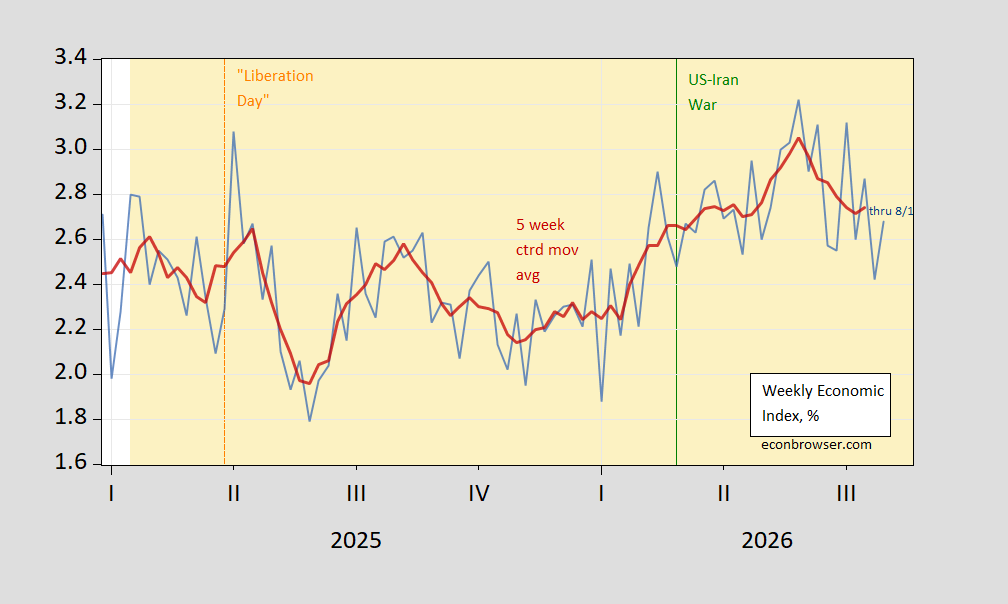
The Lewis-Mertens-Stock Weekly Economic Index (WEI) decelerated based on the latest weekly releases, covering data through August 1.
The WEI is a real-time economic indicator developed by economists Daniel Lewis, Karel Mertens, and James Stock. It is designed to track the pace of U.S. real economic activity using ten high-frequency daily and weekly data series, including measures such as initial unemployment insurance claims, electricity consumption, railroad traffic, fuel sales, and consumer confidence surveys. The index is scaled to correspond to four-quarter GDP growth rates, providing a timely signal of economic conditions between official quarterly releases.
The indicator is published by the Federal Reserve Bank of Dallas and the Federal Reserve Bank of New York, with weekly updates that incorporate revised inputs as new data becomes available. High-frequency indices like the WEI are closely watched by economists and policymakers because they can signal shifts in activity well before quarterly GDP figures are published, making them particularly useful around Federal Reserve decision meetings and turning points in the business cycle.
A deceleration in the WEI suggests a moderation in the rate of real economic growth relative to prior weekly readings. As with any single weekly observation, subsequent releases will indicate whether the slowing reflects temporary noise in component data or a more persistent cooling trend.
Source: Econbrowser

