Weekly Recap: Stocks Slip and Bitcoin Falls as Fed Chair Warsh's Jackson Hole Remarks Fuel Rate Hike Fears
Key Takeaways
- •Fed Chair Kevin Warsh said the Fed has work to do if inflation does not return to its 2% target and that financial conditions do not currently look restrictive.
- •The market-implied probability of a September rate hike rose from 35.4% before the speech to more than 57% afterward, per CME FedWatch data.
- •Treasury yields climbed across the curve, with the 2-year up nearly 13 basis points to 4.36% and the 30-year reaching 5.21%.
- •The dollar index gained 0.61% to 99.71, its largest single-day rise in roughly two and a half months, while gold fell 3.19% and silver dropped 4.15%.
- •Rate-sensitive assets led the decline, with the Russell 2000 down 1.4%, the Nasdaq off 0.52%, and bitcoin lower by 2.77%.
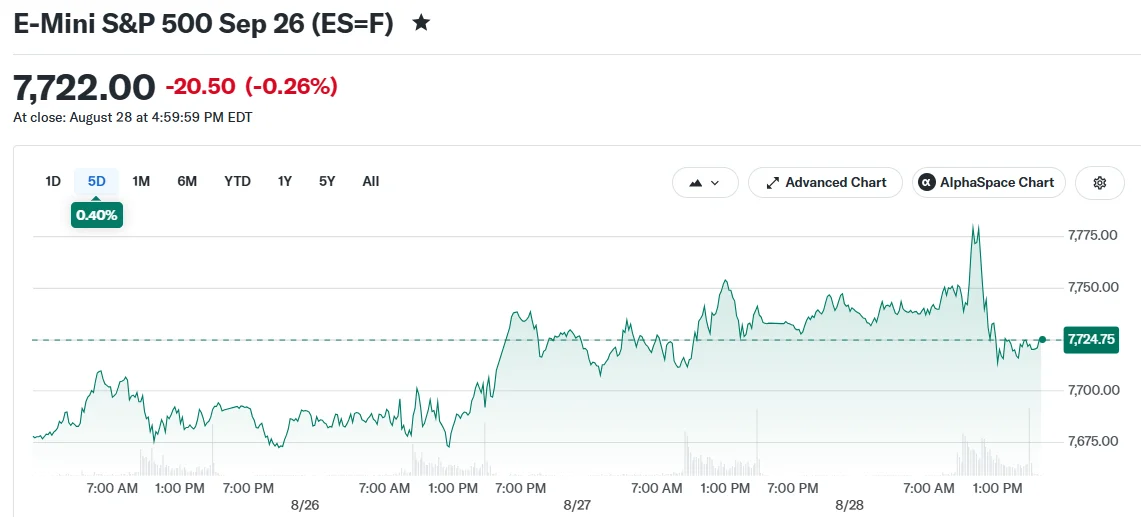
Markets pulled back on Friday after Federal Reserve Chair Kevin Warsh delivered his first Jackson Hole speech, signaling that further interest rate hikes could be on the way. The annual symposium in Jackson Hole, Wyoming, hosted by the Kansas City Fed, has historically served as a venue where Fed chairs signal shifts in policy thinking, which is why traders pay close attention to the remarks even when, as Warsh stressed, they are not formal forward guidance.
FED WARSH AT JACKSON HOLE (Summary): On policy: • He gave no timetable for a rate hike and said the speech should not be viewed as forward guidance or a formal reaction function • Short-term interest rates remain the Fed's main policy tool • A "good majority" at the July… pic.twitter.com/pUZUOUa0Lj — Wall St Engine (@wallstengine) August 28, 2026
Warsh said the Fed "will have work to do" if inflation does not return to its 2% target. He also acknowledged that financial conditions do not look restrictive at the moment. Those remarks were enough to send markets lower and push rate hike expectations sharply higher.
Rate Hike Bets Jump Overnight
Before the speech, traders assigned a 35.4% probability to a September rate hike. Afterward, that figure jumped to more than 57%, according to CME Group's FedWatch tool, which tracks pricing in the fed funds futures market to estimate the odds the market assigns to Fed rate moves.
The 2-year Treasury yield, which closely tracks Fed rate expectations, rose nearly 13 basis points to 4.36%. The 10-year yield climbed to 4.728%, and the 30-year hit 5.21%.
The dollar also surged. The dollar index rose 0.61% to 99.71, its biggest single-day gain in roughly two and a half months. The euro fell to $1.158. Higher U.S. yields tend to attract capital toward dollar-denominated assets, which in turn pressures commodities priced in dollars and weighs on other risk assets.
Tech stocks and small-cap companies took the hardest hit. These categories tend to suffer when rates rise, because borrowing costs increase and future earnings become worth less in today's terms.
Nasdaq and Small-Caps Lead the Losses
The Nasdaq Composite fell 138.93 points, or 0.52%, to close at 26,402. The S&P 500 dropped 19.23 points, or 0.25%, to 7,711. The Dow Jones slipped just 9.45 points, ending nearly flat at 53,559.
The Russell 2000, which tracks smaller companies, was the worst performer, dropping 1.4%. Smaller firms typically carry more floating-rate debt and depend more heavily on bank lending, making them more sensitive to rate expectations than large-cap peers.
Nvidia fell on Friday after surging the previous day on strong earnings results. Analysts at Mizuho said the Jackson Hole remarks pushed rate hike expectations higher, which historically weighs on momentum tech stocks.
Gold dropped 3.19% and silver fell 4.15% as the stronger dollar pressured commodities.
Bitcoin Also Drops
Bitcoin was not spared. It fell 2.77% on the day as the rate hike news hit risk assets broadly. Crypto tends to move with overall risk sentiment, and higher interest rates generally push investors away from speculative assets.
European stocks held up better. The STOXX 600 index finished up 0.51% before the full impact of Warsh's remarks filtered through.
The next major data points for markets will be the August jobs report next week and the August inflation data, which will provide clearer signals on the direction of interest rates. Beyond those releases, traders will also be watching upcoming appearances by other Fed officials for signs of whether Warsh's hawkish tone reflects a broader consensus on the rate-setting committee.

