Vraic: The Michelin-Starred Restaurant Putting Guernsey on the Fine-Dining Map
Key Takeaways
- •Vraic opened on Guernsey a year ago and earned a Michelin star within months, the island's first in more than a decade.
- •Chef Nathan Davies previously worked at two-Michelin-star Ynyshir and founded SY23 in Aberystwyth in 2019, which closed after four years due to what he called unprecedented financial challenges.
- •The restaurant is named after the Guernésiais word for seaweed, and its menu is built around local seaweed and produce.
- •A seaweed broth — an umami, dashi-style soup with pickled and raw seaweeds and kelp gel — is an ever-changing dish served year-round that Davies says has left a mark on guests.
- •Vraic debuted in the top 50 of the National Restaurant Awards, the UK ranking voted on by chefs, restaurateurs and food writers.
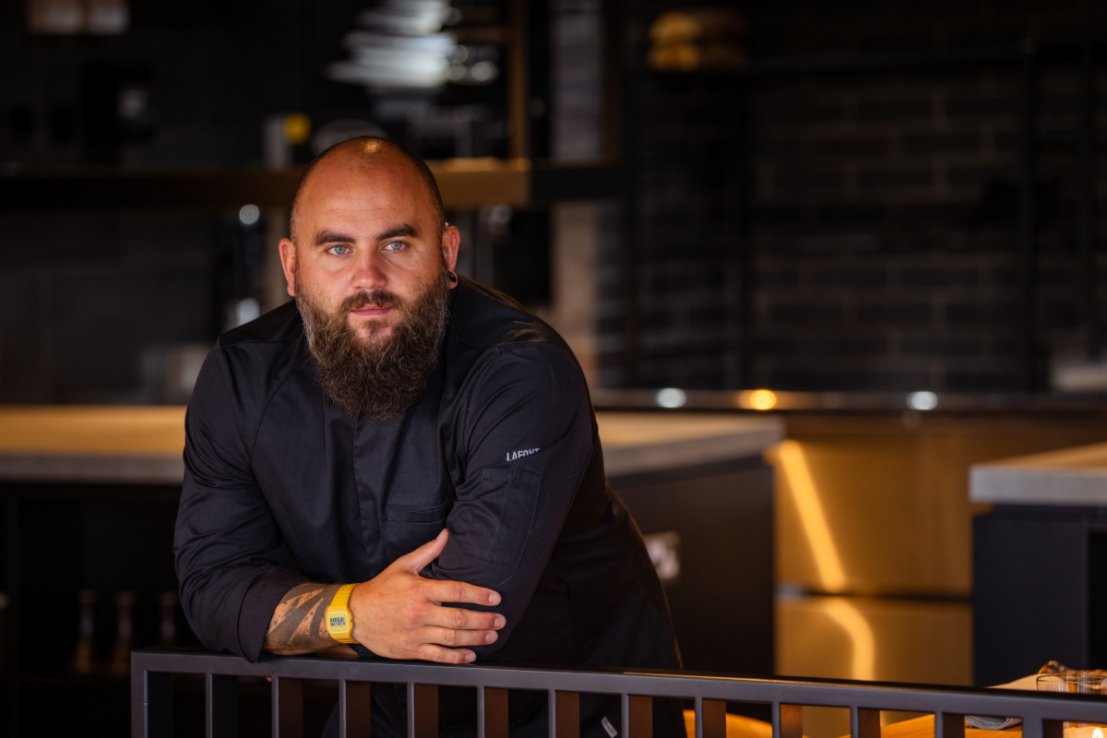
At Vraic, chef Nathan Davies has created a restaurant that is worth flying to – and back from – in a single day, writes Carys Sharkey.
Flying anywhere for lunch is a decadent act; flying back the same day is borderline obscene. Yet Vraic, which opened on Guernsey a year ago, has muscled its way into the fine-dining spotlight. Within months of opening it was awarded a Michelin star – the island's first in more than a decade – and it debuted in the top 50 of the National Restaurant Awards, the UK's annual ranking voted on by chefs, restaurateurs and food writers. That is a considerable amount to achieve in twelve months, and it suddenly makes the journey feel much shorter.
Guernsey, the small rocky Channel Island that slips towards France and slouches towards England while remaining entirely of itself, has a fog problem. On arrival, all anyone talked about was fog; it is hard to hold a conversation without low-lying cloud coming up, sometimes quite literally. The Guernésiais – speakers of the island's Norman-French heritage language – have their own version of weather-based obsession – not so different after all. The threat of delayed and cancelled flights might put off a restaurateur, but it certainly adds an element of anticipation. Hurrying across the island on roads and, occasionally, pavements, I felt the unique excitement that comes with 'destination' restaurants. And Nathan Davies' Vraic is quite a destination.
The restaurant is perched on the north of the island, facing England's south-west coast, where the wind whips around the headland and sweeps salty air across its black, glassy exterior. Inside, the style is Scandi-light: a wide open-plan kitchen, fires flickering in the corner, sheepskins draped over chair backs and cutlery made from antlers. It recalls Ynyshir, the highly acclaimed two-Michelin-star restaurant in Mid-Wales where Davies was head chef before setting up another critically acclaimed restaurant, SY23, in Aberystwyth in 2019. SY23 quickly gathered a cult following and became one of the best restaurants in Wales, but just four years later it was forced to close amid what Davies described as "unprecedented" financial challenges – a reminder of the pressures facing even celebrated independent restaurants in the UK's post-pandemic, high-cost dining economy. Vraic, though, is less angular and less dark than Ynyshir: the thrilling jaggedness of one restaurant has been smoothed out by the genius of another, softened and sanded down by island life like sea glass.
Island identity is everything to Vraic. For Nathan and his wife Hollie, the restaurant's operations manager, the move had to feel right. Their children's first language is Welsh, and the family had grown up on the craggy coast of Wales; London was not calling. But when they were approached to set up on Guernsey, a visit to the island and the location made it all click into place. Here was a rugged wildness that echoed what had come before – and, more importantly, an abundance of seaweed.
"Moving to Guernsey, we were very conscious not to lose our food philosophy and identity, and to continue what myself and the team had built in Wales," Davies said. "But moving to an island, where we wanted to celebrate the food from here, meant we kept a lot of our cooking style and techniques, but swapped out ingredients to use local produce."
The star of Davies's larder is undoubtedly seaweed. The restaurant is named after it ('vraic' is the Guernésiais word for seaweed), the walls are adorned with paintings of it, and the menu is built around it. The best meal there begins with it too, in the form of a seaweed martini. Historically, vraic was gathered by islanders and used to fertilise the land; Davies's kitchen gives the traditional resource a fine-dining reinvention.
Before arriving at the restaurant, we stopped at a beach to learn about seaweed from Ben and Naomi Tustin, who founded Guernsey Seaweed and sell everything from seasoning blends to anti-chafing cream. As we nibbled on sea-plumped leaves and capillary-dense blooms, we learned that the only thing seaweed cannot do is get you high – although perhaps they simply have not tried hard enough. Otherwise, the opportunities seem limitless, and in Davies's kitchen that does not feel like hyperbole.
The seaweed appears as a verdant, vegetal dusting in an opening dish of crab and hazelnuts, and is sprinkled like saline confetti over a lobster tail in a sanbaizu ('three bowls of vinegar') sauce made unctuous with yellow Guernsey butter. The course comes with a lobster bun – somewhere between prawn toast and Singaporean fried mantou – crowned with sesame seeds and ideal for mopping the bowl dry. One of the highlights was a perfect piece of turbot, cooked whole on the bone over fire before being sliced into shoebox-sized rectangles. The fish is served with a burnt butter sauce split with chive oil, sprinkled with plankton and topped with a bouquet of seaweeds that changes with the seasons and the tides; on my turbot there were four varieties with entirely different textures and flavours. Davies's cooking is often delicate, so the undercurrents of concentrated flavour take you by surprise, like a riptide.
Nowhere is that more comprehensively on show than in the seaweed broth. Davies gently pushes back when I suggest it has become something of a signature dish – Vraic has only just turned one, he points out, and it is a little premature to talk of signatures. But he concedes the broth has "left a mark" on guests.
"It's an ever-changing dish, so it can be on the menu all year round, giving us lots of time to perfect it as we grow and develop. But it's a heavy hitter already, and I'm looking forward to continuing to make it better and better," Davies said.
It is a deceptively unassuming dish, appearing at the start of the tasting menu: an intensely umami, dashi-style soup served with a tangle of pickled and raw seaweeds and a gel made from kelp, with bright green chive oil scattered across the surface. It looks – and eats – like a rockpool after rain. Davies may resist the term signature dish, but his cooking and the restaurant's Sarnian identity are so creatively intertwined in this broth that it is hard to imagine it ever leaving the menu.
On the way back to the airport we stopped for a couple of pints at Happy Landings, the pub about thirty seconds from the terminal – which was lucky, because by the time we left, our flight was boarding. Or should have been. Instead, with the flight delayed for hours by fog, we drank more beer, played a game vaguely resembling gin rummy and grumbled about the weather. It felt like an apt end to a whistle-stop tour of Guernsey – and, with a restaurant as good as Vraic, hopefully the first of many.
Vraic:

