Volkswagen California 2026 Review: A Cult Campervan Grows Up
Key Takeaways
- •The Volkswagen California T7 is built on the VW Multivan people carrier platform and is offered with three engine options including a 245hp plug-in hybrid that delivers 52.2 miles of electric-only range and CO2 emissions of 70g/km.
- •All T7 California variants feature a pop-up roof and can sleep four adults, with trim levels ranging from the entry-level Beach Camper starting at £64,432 to the range-topping Ocean tested at £91,102.
- •The T7's transition to a people-carrier base produces more car-like road manners than its T6 predecessor, and its lower roofline allows clearance under height barriers commonly found at supermarkets and coastal car parks.
- •Despite being smaller and simpler than the Grand California, which includes a wet room and dining table, the T7 proved equally capable for family camping with advantages such as dual sliding doors and comparable build quality.
- •The California benefits from strong brand image and low depreciation, potentially making running costs more affordable than expected when the vehicle serves double duty as both a campervan and a family car.
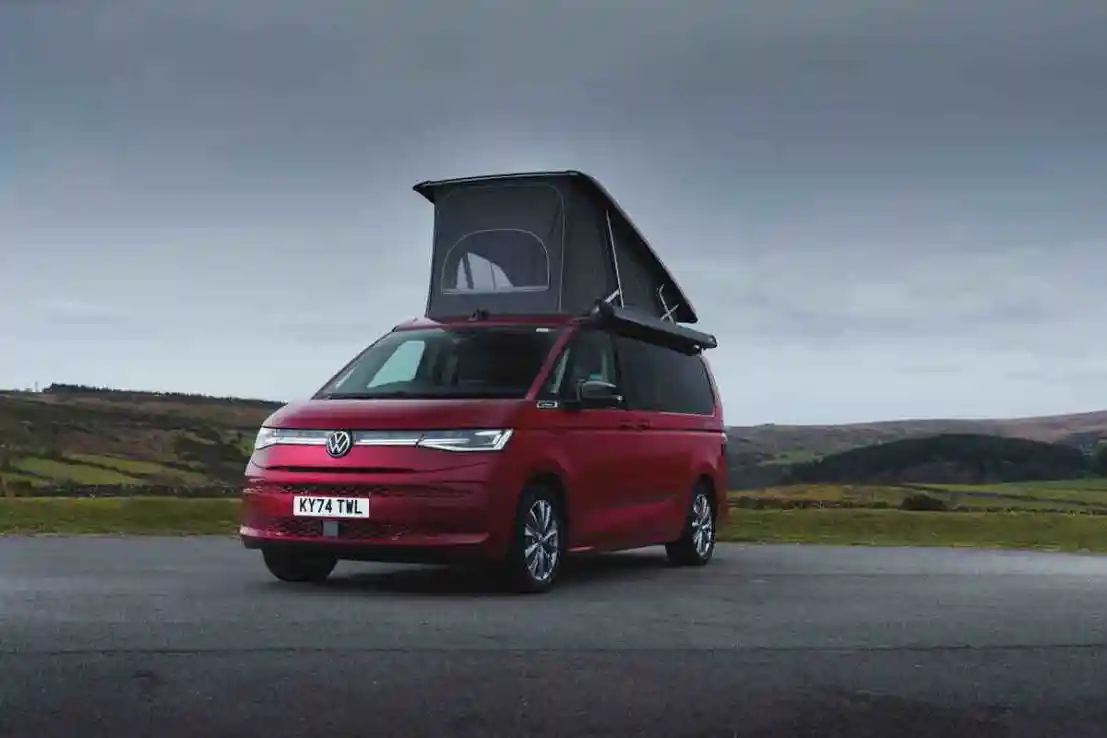
Britain's best-selling vehicle so far in 2026 is the Ford Puma. Visit the south coast during holiday season, however, and you would be forgiven for thinking the Volkswagen California holds that title. Whether stuck in tourist traffic, parked at the beach, or stationed at a campsite, these campervans are seemingly everywhere.
Volkswagen campers have held cult status since the air-cooled, flower-powered T1 originals, with the California nameplate itself dating back to 1988. The latest T7 model is based on the VW Multivan people carrier and starts at £64,432. A larger variant, the Grand California, is closely related to the VW Transporter van and is priced from £85,408. The broader UK leisure vehicle market has grown markedly in recent years, with staycation demand and flexible working arrangements encouraging more buyers to explore campervan ownership.
Motoring Research's budget did not stretch to cover the author's ambition of a road trip to California in a California. Instead, following the well-trodden path of seemingly every other VW camper owner in the British Isles, the journey headed south on the M3 through the New Forest, to Bournemouth and beyond. The question: how would the T7 perform as both holiday transport and a home-from-home for a family of four? A week on the road provided the answer.
Beach Camper, Coast, or Ocean?
The California is offered with a choice of three engines: a 150hp TDI diesel, a 204hp TSI petrol, and a 245hp plug-in hybrid. All variants come with four-wheel drive and Volkswagen's twin-clutch DSG automatic gearbox — there is no manual option.
The tested PHEV variant pairs a 1.5-litre petrol engine with a 19.7kWh battery, delivering an electric-only range of 52.2 miles and official CO2 emissions of just 70g/km, resulting in correspondingly low first-year Vehicle Excise Duty (VED). The electric range is also sufficient for short urban commutes, and as a current-generation petrol model the California meets the Euro 6 standards required for compliance with London's ULEZ and equivalent clean air zones across other UK cities.
Every T7 California features a pop-up roof and can sleep four adults in a two-up, two-down configuration. The entry-level Beach Camper offers five seats and a simple slide-out gas hob. The mid-range Coast seats four and includes a more comprehensive kitchen with robust cupboards, a basin, and a small built-in fridge.
The range-topping California Ocean shares the Coast's interior layout but adds amenities including an electric-opening roof, LED matrix headlights, heated seats, and ambient interior lighting. The test vehicle was priced at £91,102.
On the Road
The shift from a dedicated van platform (as with the previous T6) to the Multivan people carrier base might initially appear to be a regression for the T7. In practice, while the driving position is not as elevated as some may prefer, the California's road manners are notably more car-like than commercial.
The hybrid battery supplements the engine's pulling power, delivering a combined 184lb ft of torque from 1,500rpm, making progress feel adequately brisk even when fully loaded. Steering is light, the DSG transmission shifts smoothly, and parking is assisted by sensors and a reversing camera.
Drivers remain conscious of the vehicle's considerable size and weight — at 2,693kg, it is a substantial machine, though still comfortably under the 3,500kg maximum authorised mass that defines the standard UK Category B driving licence limit. However, its flat-sided profile makes it easier to position on the road, and the natural inclination is to adopt a more measured pace. Driving a vehicle of this heft like a hot hatchback would quickly leave the contents of the cupboards in disarray.
Life at the Campsite
Upon arriving at a campsite and fielding the inevitable questions from curious T5 and T6 owners, the process begins: plugging into the campsite power supply (which operates interior lights and appliances but does not recharge the hybrid battery), manually extending the awning, and elevating the roof.
In the California Ocean, raising the roof is a button-operated affair — a tent-like structure cantilevers open to reveal an overhead double bed. Accessing it requires a degree of athleticism, and space to stretch out is limited. The sprung mattress, however, is more comfortable than any two-person tent, and Volkswagen's touchscreen-controlled central heating system keeps the interior warm.
The lower bed is narrower due to the kitchen and side cabinets, but accommodated two children (aged 15 and 12) side by side. Effective use of storage is essential to keep the space feeling cosy rather than cramped.
Comparison with the Grand California
Three years prior, the same family undertook a similar trip in a T6 van-based Volkswagen Grand California, which featured additional amenities including a dining table and a wet room with a toilet and shower. Despite being a smaller and simpler proposition, the T7 proved equally capable.
The T7 advantages include dual sliding doors for easier access and a lower roofline that clears the height barriers common at supermarkets and coastal car parks. The overhead bed in the Grand California is notably claustrophobic, with insufficient headroom for even small children to sit upright.
While the dining table was missed during rainy weather, outdoor dining using the fold-out camping chairs stored in the tailgate was generally preferred. Additional interior features include rotating front seats that create a lounge area, along with a comprehensive array of power points and USB sockets — including a USB-C port in the upper sleeping area.
For those who venture off the beaten track, the Grand California's additional versatility would be advantageous. However, for campers who prefer sites with electricity, showers, and toilets, the California represents a more practical choice — equally usable for day trips and comfortable at night, with no compromise in the quality of fittings and equipment compared to its pricier counterpart.
Verdict: Volkswagen California Ocean
Owning a California is akin to having a caravan, but with considerably more cachet. It encourages spontaneity, longer holidays, and exploration. While potentially cheaper camper van conversions exist from manufacturers such as Ford and Citroen, and direct rivals like the Mercedes-Benz Marco Polo offer a comparable people-carrier-based campervan proposition, the California's strong brand image and correspondingly low depreciation mean that running costs may prove more affordable than expected — particularly if it serves double duty as a family car. And £91,102 would fund a considerable number of hotel stays.
There is also a distinct camaraderie associated with driving a Volkswagen camper, a phenomenon reserved for cult vehicles such as classic Land Rovers, the original Mini, and the Volkswagen Beetle. Fellow owners approach to look inside, share stories, and showcase their modifications. Owners become part of an unofficial California club — though standing out from the crowd is unlikely, particularly on the south coast during summer.
• Tim Pitt writes for Motoring Research

