Fetterman Party-Switch Speculation Raises Questions About His Political Future
Key Takeaways
- •Fetterman stated he would change parties if Democrats make opposition to Israel part of their official platform, according to a NOTUS report.
- •Despite progressive criticism, Fetterman votes with Democrats 93 percent of the time and GovTrack places him to the left of Senators Raphael Warnock and John Ossoff ideologically.
- •His former chief of staff Adam Jentleson predicts Fetterman would switch parties if he becomes a Senate majority-maker after the 2026 midterms in order to gain national attention.
- •Fetterman holds only 19 percent approval among Pennsylvania Democrats, suggesting significant erosion of his political base within his own party.
- •Historical precedents set by Joe Lieberman, Joe Manchin, and Kyrsten Sinema indicate that senators who act as spoilers without switching parties eventually lose their political base and depart before formally flipping.
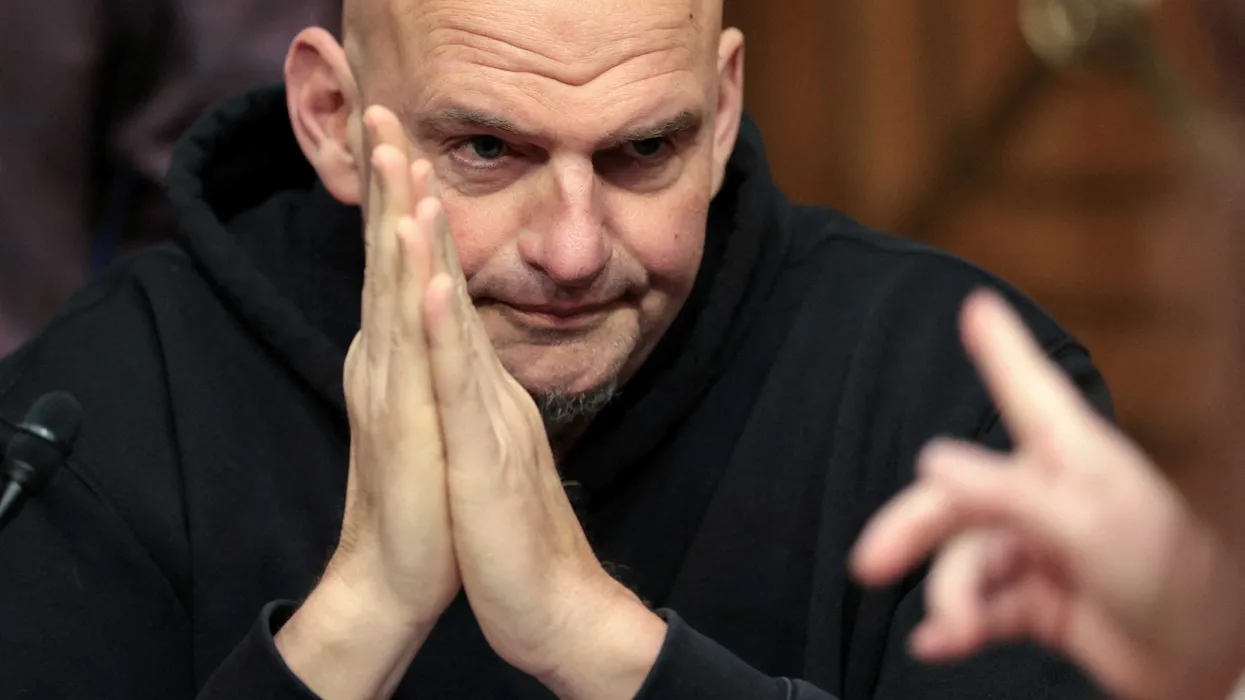
Sen. John Fetterman is unlikely to switch parties if he wants to remain politically relevant, even as he has discussed the possibility. According to NOTUS, the Pennsylvania Democrat said last week that he would change parties if “Democrats make opposition to Israel part of their official platform.” Still, Pennsylvania Republicans are unlikely to support him in large numbers because he remains a Democrat. Pennsylvania is a battleground state that flipped from Trump in 2016 to Biden in 2024, and its senators face unusually intense cross-pressure from both partisan bases.
Fetterman's progressive critics see the matter differently. They argue that he is already a Democrat in name only and that a formal party switch would simply confirm what they view as the existing reality. They cite his unconditional support for Israel, his backing of “border security,” his support for the Iran War and his repeated claim that Democrats suffer from TDS — or “Trump Derangement Syndrome” — a phrase suggesting that the party exaggerates the consequences of a gangster presidency.
The record is more complicated. According to Politico, Fetterman votes with Democrats 93 percent of the time. GovTrack.us, which analyzed the ideological positions of all 100 senators, placed Fetterman to the left of senators with more broadly liberal public profiles, including Georgia Democrats Raphael Warnock and John Ossoff. Progressives may discount those figures, but other voters are unlikely to ignore them. If Fetterman left the Democratic Party, Democratic voters would no longer trust him, while Republican voters would likely remain skeptical.
Whether Fetterman recognizes that political constraint is harder to assess from his recent conduct. He has appeared frequently on Fox in the role of a Democrat validating Republican criticisms of his party. He also regularly points to polling showing increased approval among Republicans. He recently described himself as “a guy that votes 90 percent on the Democratic line [with] 80 percent GOP approval.”
Fetterman also appears to have broken with Sen. Bernie Sanders, whose 2022 endorsement helped present Fetterman as a progressive contender and ease his path into the Senate. Fetterman criticized Sanders for supporting “train wrecks” whom he described as so politically extreme that they make Republicans look moderate.
Those actions suggest that Fetterman may believe there is more political opportunity outside his current alignment. His former chief of staff, Adam Jentleson, told NOTUS that Fetterman would switch parties if Democrats win the Senate by a single seat in the coming congressional elections “in order to stay relevant.” Jentleson added: “I think, if he is the majority-maker, he will flip, because it would give him a massive amount of attention.” The 2026 midterms, when Fetterman is not on the ballot, will determine the next Senate balance and could produce the narrow margin Jentleson described.
But a senator does not have to change parties “to stay relevant” or receive “a massive amount of attention.” Joe Lieberman, Joe Manchin and Kyrsten Sinema each gained leverage without immediately leaving the Democratic caucus. Their careers also showed that the spoiler role can be temporary. Over time, each became an independent who caucused with Democrats before acknowledging that their political base had eroded. They quit before flipping. With Fetterman holding 19 percent approval among Pennsylvania Democrats, a similar outcome may await him.

