Vitalik Buterin Says Ethereum Scaling Can Learn From Bitcoin's Utreexo
Key Takeaways
- •Vitalik Buterin suggested in an Aug. 16 post on X that Ethereum can adapt ideas from Bitcoin's Utreexo, proposed by Thaddeus Dryja in 2019, which lets nodes verify outputs through inclusion proofs rather than holding the full UTXO set.
- •A native UTXO proposal by Ethereum researcher Toni Wahrstätter could reduce permanent state usage by about 99.8% for simple payments, estimating roughly 300 MB of storage for one billion entries versus 100 GB to 150 GB under equivalent account models.
- •The native UTXO idea remains a research design that depends on EIP-8141's programmable transaction frames and is not currently scheduled for Ethereum's Hegotá upgrade planned for 2027.
- •Buterin separately proposed recursive STARKs for the Ethereum mempool, a bandwidth-focused approach using roughly 128 kB proofs that he estimated would add about 2 MB per second per node with eight peers and 500-millisecond aggregation intervals.
- •Buterin argued that supporting UTXO-style state, dynamic state, and intermediate models could scale most Ethereum activity while preserving decentralization and censorship resistance.
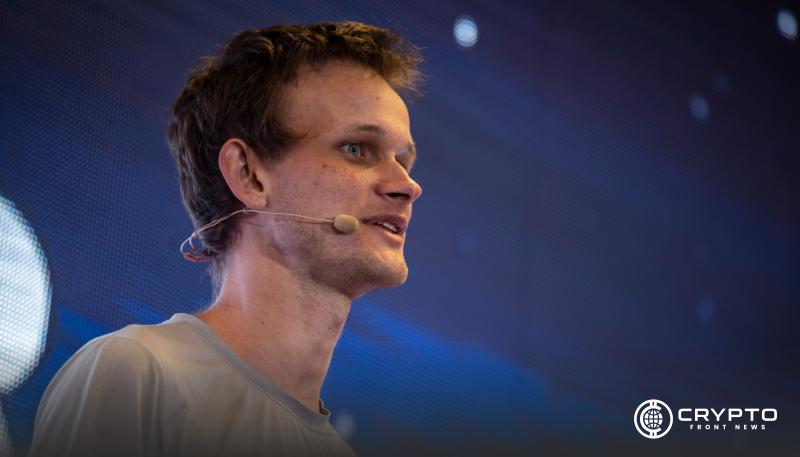
Ethereum co-founder Vitalik Buterin says Ethereum's scaling research can borrow ideas from Bitcoin's Utreexo, a system that reduces the need to store full blockchain state. In an Aug. 16 post on X, Buterin credited Bitcoin developers for pioneering related ideas and described Ethereum's proposed approach as a mix of UTXO-style and dynamic state across different types of network activity.
Two strands of research sit behind the discussion: native UTXOs, which could cut permanent Ethereum state usage by about 99.8% for simple payment activity, and recursive STARKs, which target bandwidth demands. Native UTXOs remain a research proposal rather than a roadmap target.
Buterin Points to Utreexo for Ethereum Scaling
Buterin said Ethereum should support UTXO-style state, dynamic state, and models in between. UTXOs, or unspent transaction outputs, are the accounting model Bitcoin uses to track ownership, whereas Ethereum uses an account-based model. In his view, the approach could scale most Ethereum activity without sacrificing decentralization, node operation, or censorship resistance.
Utreexo, proposed by Bitcoin developer Thaddeus Dryja in 2019, uses a compact cryptographic accumulator for Bitcoin's UTXO set. Nodes can verify transaction outputs through inclusion proofs instead of storing the entire set locally.
That model addresses storage pressure, but Ethereum faces a broader state problem. Its account-based system also stores smart-contract balances, code, and application data, and full nodes must keep that state available, which makes rising storage requirements a recurring pressure point for running a node and verifying the chain independently. The native-UTXO idea therefore joins a longer line of Ethereum research aimed at curbing what nodes must store, including multi-year work on statelessness and verkle trees intended to let nodes verify blocks without holding the full state.
Ethereum Proposal Adds Native UTXOs
Ethereum researcher Toni Wahrstätter has proposed native UTXOs for simple payment activity. The proposal would keep Ethereum's account model while adding UTXO-style payments for transactions that need little persistent state.
According to the proposal, native UTXOs could reduce permanent state usage by about 99.8%. It estimates roughly 300 MB of storage for one billion entries, compared with 100 GB to 150 GB under equivalent account models.
The proposal remains a research design, however. It depends on EIP-8141, which introduces programmable transaction frames for validation, gas payments, and execution.
Recursive STARKs Target Network Bandwidth
Buterin has also proposed recursive STARKs for the Ethereum mempool, where pending transactions wait before being included in blocks. His January research assumes proofs of about 128 kB and uses recursive aggregation to combine validity proofs, letting nodes check pending activity without re-executing each transaction individually.
Unlike the UTXO proposal, the model targets bandwidth rather than permanent state storage. With eight peers and 500-millisecond aggregation intervals, Buterin estimated additional bandwidth at about 2 MB per second per node.
A community response suggested that combining recursive STARKs with native UTXOs could support very large transaction volumes. That remains an extrapolation, not an Ethereum throughput target.
Ethereum's roadmap lists Hegotá for 2027, after Glamsterdam in late 2026. Native UTXOs are not currently scheduled for Hegotá, while Frame Transactions, the programmable-transaction-frame design introduced by EIP-8141, remain under consideration. For the native-UTXO idea, the practical signal to watch is whether that dependency moves from research toward a scheduled upgrade.
Source: Crypto Front News

