HSC Ho Chi Minh Panel Debates Data Sovereignty and Vietnam's Path from AI Pilots to Production
Key Takeaways
- •Vietnamese AI talent is widely regarded as leading in ASEAN, but the country lags in product development and global scalability, with many startups lacking a global-first mindset.
- •Panelists emphasized that enterprise AI deployment requires data cleansing, standardization, and human-in-the-loop workflows before models can be applied, contradicting the plug-and-play misconception.
- •Enterprises struggle to move beyond pilot projects primarily because boards demand quantifiable financial returns and rigorous security, reliability, and compliance checks.
- •Panelists debated AI sovereignty, warning against dependence on foreign closed models and proposing a pooled national open-weight model adapted to Vietnamese language and governance needs.
- •The panel closed with measured optimism for the next three to five years, including a call for a unified national language model initiative and for founders to target global markets from inception.
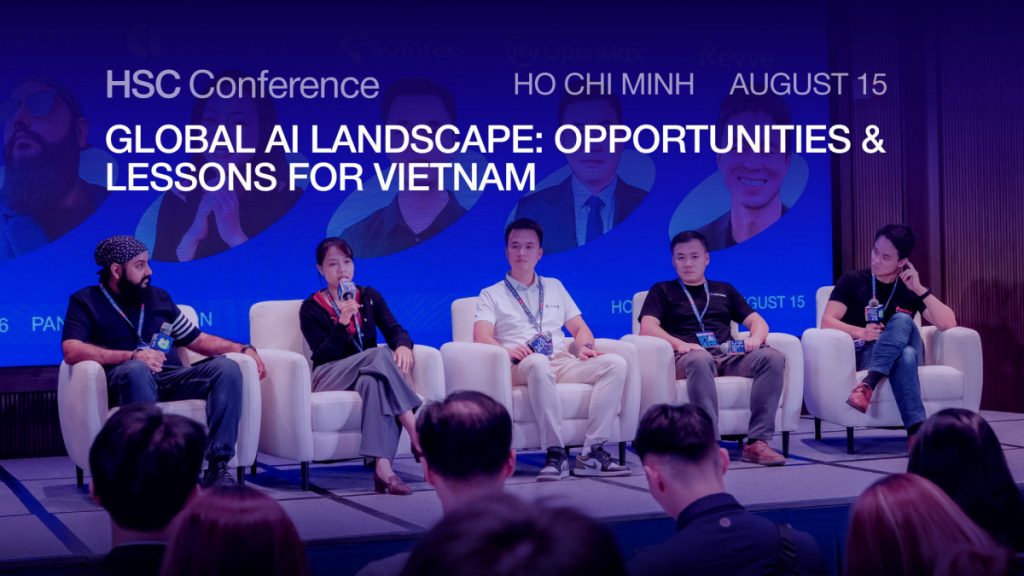
On August 15, the HSC Conference returned to Ho Chi Minh City, bringing together senior figures from venture capital, enterprise technology, and software engineering to debate artificial intelligence adoption, data sovereignty, and the future of agentic enterprise systems.
One of the event's most anticipated sessions, "Global AI Landscape: Opportunities & Lessons for Vietnam," was moderated by Harpreet Singh Maan, Chief Executive Officer at TEIZA. The panel featured Laura Nguyen, Partner at GenAI Fund; Harry Vu, Senior Vice President and Chief Operating Officer at SotaTek; Charlie Hu, Co-founder of OpenMax; and Trung Vu, Founder and Chief Executive Officer at Revve AI.
Rather than treating Vietnam's AI rise as an inevitable by-product of its deep engineering talent pool, the panelists dissected the practical barriers separating technical potential from scalable deployment. They examined where the country's renowned developer base and policy momentum have produced genuine competitive advantages—and where fragmented enterprise data, local-first product mindsets, and unquantified pilot projects stall adoption before it reaches production. That policy momentum is real: Vietnam's government issued its National Strategy on Research, Development and Application of Artificial Intelligence through 2030 in 2021, which set targets for AI research investment, talent development, and national data infrastructure—giving the discussion about execution gaps a concrete policy backdrop.
The conversation also weighed the strategic tension between leveraging international foundation models and cultivating sovereign, open-weight alternatives suited to Vietnamese language and governance requirements, while considering what it would take for AI agents to evolve from experimental chatbots into secure, bankable systems capable of operating within institutional compliance frameworks. This debate mirrors a broader global trend, as governments from the European Union to Japan have moved to support domestic AI capabilities and, in some cases, locally hosted open-weight models to reduce reliance on foreign providers.
The result was a candid reckoning with the practical realities of building, deploying, and trusting AI in an emerging market—starting with an honest assessment of where Vietnam currently stands.
Strengths and Weaknesses of the Ecosystem
Laura introduced a "people, process, and product" framework to evaluate Vietnam's readiness. She noted that Vietnamese AI talent is frequently described as the best in ASEAN, supported by strong entrepreneurial energy and proactive government policies. Still, the panel agreed that the country lags in product development and global scalability. Trung, a Y Combinator alumnus, observed that too many startups lack a "global-first mindset," remaining focused on local markets rather than international expansion. The ability to build rapidly is well established; launching world-class products remains the critical challenge.
The Enterprise Implementation Gap
Harry pushed back on a widespread corporate misconception: that AI is essentially plug-and-play. Deploying a model, he stressed, is typically the final step—after cleansing fragmented data, standardizing structures, and establishing human-in-the-loop workflows. "If your data is ugly, is fragmented… before applying AI, you have a lot of things to do," he explained. Charlie drew a sharp distinction between personal prototypes and enterprise-grade solutions, noting that large organizations prioritize governance, data privacy, and regulatory compliance over marginal performance gains. "If you don't have the proper legal checks and security checks, they're not going to go with your solution at all," he stated. Vietnam's data protection regime, anchored by the Personal Data Protection Decree effective from July 2023, adds another layer of compliance that enterprise deployments must satisfy.
Sovereignty and the Model Debate
The discussion took on a geopolitical dimension as panelists debated Vietnam's reliance on international foundation models. Charlie cautioned against unconditional trust in American frontier labs, describing closed models as "essentially still a black box." The moderator warned of "digital colonization," in which sustained dependence on foreign infrastructure could eventually compromise national negotiating power. Trung proposed a pragmatic middle path: rather than having individual tech giants build separate models, Vietnam should pool resources to develop an open-weight model adapted to local language and culture. Laura framed the strategic dilemma through an academic lens of trust—capability, benevolence, and transparency—suggesting that policymakers and entrepreneurs may rightly reach different conclusions.
Barriers to Scalable Adoption
Despite widespread enthusiasm, enterprises struggle to advance beyond pilot projects. Laura argued that the fundamental obstacle is quantifiable return on investment: boards of directors require financial justification, not vague promises of productivity improvement. "At the end of the day, how much money is it bringing back to me or the organization?" she asked. Trung added that enterprise workflows contain unspoken cultural rules that resist easy automation, while Charlie noted that many existing solutions simply fail the rigorous security and reliability checklists enterprise leaders demand. This pattern of stalled pilots is not unique to Vietnam: industry surveys of enterprise AI adoption have repeatedly found that moving from proof of concept to production remains a bottleneck worldwide.
Closing the session, the panelists expressed measured optimism about the next three to five years. Harry advocated for a unified national language model initiative, while Charlie affirmed his company's strong commitment to Vietnam's digitally savvy market. Trung urged future founders to think globally from inception. Overall, the conversation portrayed Vietnam as possessing both the talent and the ambition to carve out a distinctive AI trajectory—provided the ecosystem closes the gap between technical capability and enterprise-ready execution.
Source: Metaverse Post
