Reported Harsh Conditions Aboard USS Abraham Lincoln Draw Dismissal from Trump and Hegseth
Key Takeaways
- •Accounts cited in the report describe worsening food shortages, supply problems, and mold aboard the USS Abraham Lincoln.
- •The Lincoln has been deployed in the Middle East since November and is approaching the record length for a U.S. Navy carrier deployment.
- •Pete Hegseth said the conditions had already been addressed, while Donald Trump called the reports fake and said the ship had not been deployed long enough.
- •The New Republic said crews on the USS Benfold, Carl Vinson, and Tripoli have also reported miserable conditions in recent weeks.
- •With the Lincoln returning home, questions remain about which carrier will replace it and how the Navy will manage crew strain and retention.
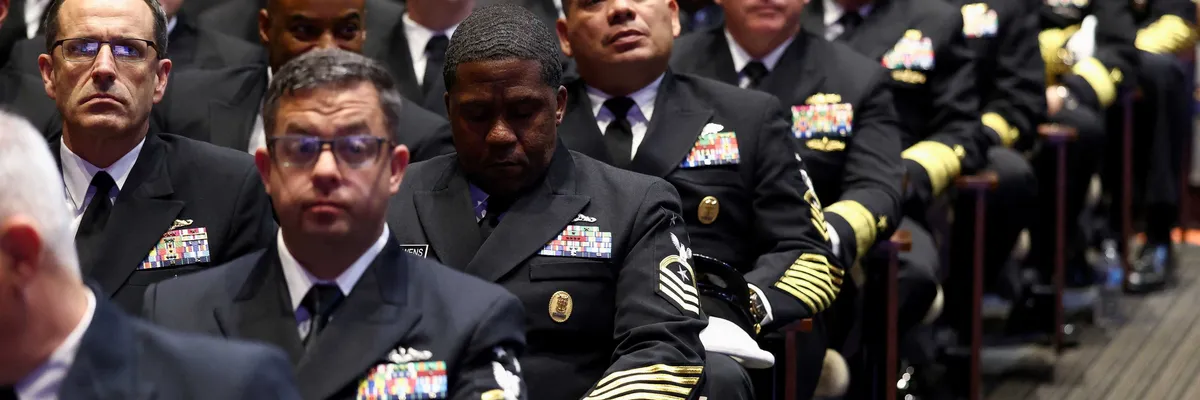
Reports of deteriorating conditions aboard the USS Abraham Lincoln, an aircraft carrier stationed in the Middle East since November, have drawn sharp criticism of President Donald Trump's treatment of the military — and, according to The New Republic, some service members are now openly voicing their frustration.
In recent weeks, accounts have emerged describing worsening food and resource shortages aboard the carrier, along with declining physical conditions that include mold infestations in parts of the ship. The Lincoln is a Nimitz-class nuclear-powered carrier homeported in San Diego, and because its reactors do not require refueling, the supplies at issue — food, spare parts, and other consumables — arrive only through replenishment at sea. The deployment is nearing the record for the longest in U.S. Navy history, a mark set during the Vietnam War, stretching well beyond the roughly six-month span the Navy has traditionally planned carrier deployments around. According to the reports, some troops, driven to extreme desperation, have attempted to jump overboard to escape the conditions onboard.
When pressed about the stories, Trump and his officials have largely been dismissive. Defense Secretary Pete Hegseth described the conditions on the Abraham Lincoln as an old story and claimed they had already been addressed. Trump, for his part, called the reports a "fake CNN story" and insisted, when asked whether the deployment had gone on too long, that the Abraham Lincoln had not been deployed long enough.
In a Saturday piece for The New Republic, deputy editor Jason Linkins connected the situation to separate emerging reports about troops leaving "anonymous graffiti" messages criticizing the ongoing Iran war, written into the dust on an aircraft wing flap. Among the messages were "Operation Epstein Fury," "Peace deal #64 incoming … ALL THIS FOR THE HOLYLAND," and other insults implying Trump's subservience to Israeli leaders.
"Whether these sentiments are new is indeed unclear, but it's not without a frame of reference," Linkins wrote. "Trump has always been fairly explicit in his disrespect for the grunts who do most of the work—and all of the dying—in this racket that we call 'war.' But only now is a seemingly unwinnable war bringing this all to a head. It's no longer possible to pretend that the president doesn't have boundless contempt for U.S. service members. They're trapped in a war that was essentially kicked off to distract from all the other terrible news the Trump administration generates—or at least to turn attention away from the Epstein files. (Though if these dust etchings are any guide, Trump failed in this attempt to wag the dog.)"
He added later: "As it happens, this trouble is not confined to the USS Lincoln: Crews on the USS Benfold, Carl Vinson, and Tripoli have also reported miserable conditions in recent weeks. Pete Hegseth, our self-styled 'secretary of war,' has gone to great lengths to downplay and even deny these accounts, characterizing them as misrepresentations while covering up the reason the Lincoln, which is now finally coming home, wasn't resupplied. The dust scribbles ... tell a different story."
With the Lincoln now heading home, the open questions are which carrier takes its place in the region and how the Navy reconciles sustained carrier presence with the strain on crews — an issue on which lawmakers and government watchdogs have pressed the service in past years over readiness and retention.
