Hanroro Tops Korea's First-Half Streaming Rankings as K-pop's Big 4 Miss the Top Five
Key Takeaways
- •Hanroro’s songs “Landing in Love” and “0+0” took the top two spots in Circle Chart’s first-half 2026 streaming rankings.
- •No idol-group song from HYBE, SM Entertainment, JYP Entertainment or YG Entertainment appeared in the top five.
- •Her song “Landing in Love,” released in 2023, gained most of its streaming momentum two years later as a word-of-mouth sleeper hit.
- •Listeners in their 20s through 50s connected with her lyrics, which they described as sincere, comforting and rooted in shared youth experiences.
- •Music teachers said students increasingly choose Hanroro songs for lessons because they find emotional comfort in them rather than use them to showcase technical skill.
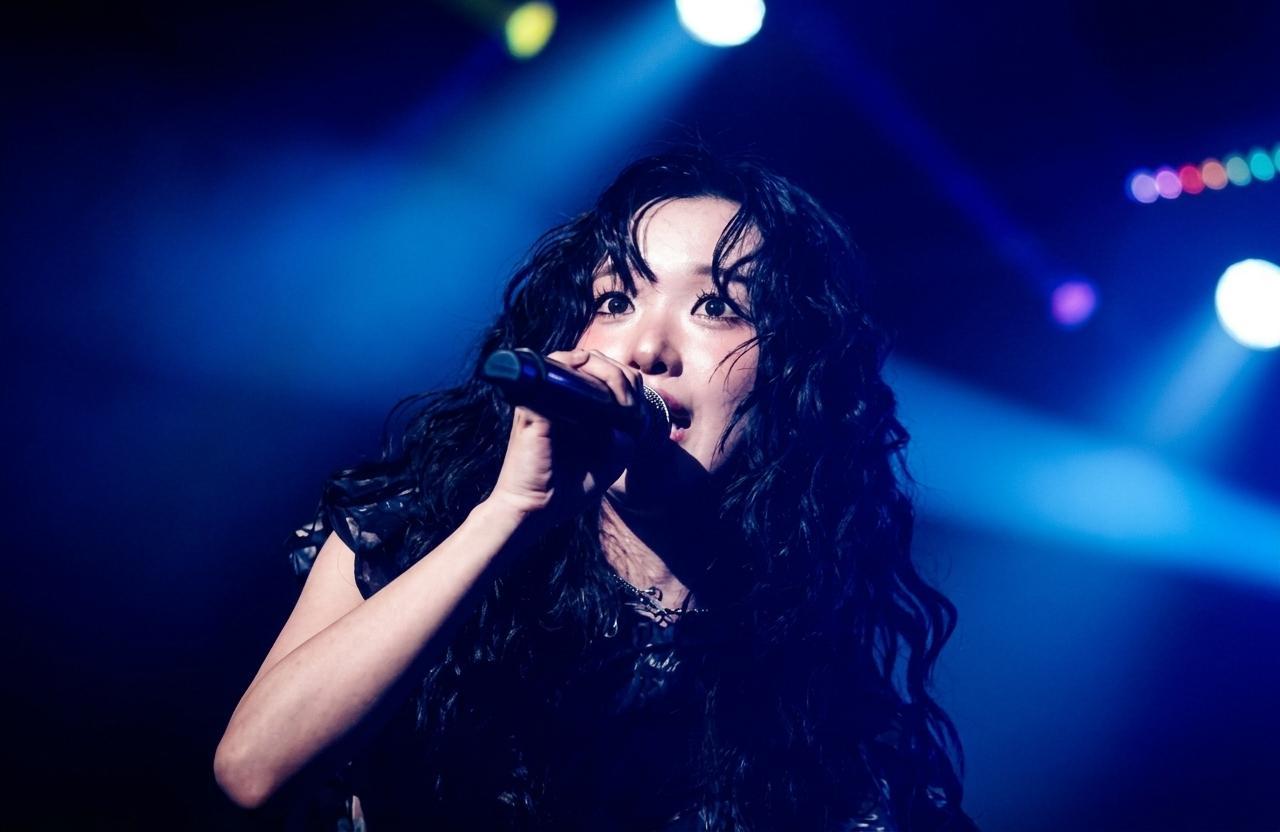
Fans in their 20s and 50s alike say the artist's self-written lyrics offer company rather than a promise that things improve.
Last spring, a vocal instructor at a private music studio in the greater Seoul area that trains students for college auditions took a phone call from a mother. The woman was not asking about admission to a college music program; she asked the instructor, surnamed Lee, to look out for her child, who was under heavy stress from the college admissions grind.
The student Lee met at the studio had entered university the year before, found her major a poor fit, become socially isolated and dropped out. She was preparing to apply all over again.
At the first lesson, Lee showed her a list of songs that work well for training. The student wanted something else.
"She told me she wanted to sing the song with those lyrics — 'I won't abandon you. You think the same, don't you?'" Lee said. The song was "0+0," by the rock singer Hanroro.
Reached by phone on Aug. 13, Lee explained why the request stood out. "At music academies we don't recommend Hanroro's songs first to students preparing for auditions. Her music isn't the kind of material for showcasing vocal range or building instrumental skill. They're easy, aren't they?" she said. "I think she wanted to find some comfort in Hanroro's songs."
The student had not picked a song to win an audition. She had picked one she could sing in her own voice to get through a period of uncertainty.
Private music classes serve as a barometer of what young Koreans actually want to sing and play, and Hanroro's songs have become increasingly common in lessons there. Similar posts proliferated on social media, including one that read: "The song a student brought in for her lesson was Hanroro's 'Jacheo' ('Even If You Leave'). At first I heard it as 'japcheo' (Korean slang for ruining something)."
K-pop 'Big 4' shut out of top 5
The trend extends well beyond a few unusual song choices. Hanroro dominated streaming in Korea over the first half of this year. In the 2026 first-half streaming Top 200 that Circle Chart released recently — the chart service run by the Korea Music Content Association, the record-industry body behind Korea's official music charts — her songs "Landing in Love" and "0+0" ranked No. 1 and No. 2. The ranking compiles January-to-June streaming data across seven major music platforms available in Korea, among them Melon, long the country's dominant domestic streaming service, Genie Music and Spotify, which entered the Korean market in 2021. Since Circle Chart began publishing first-half rankings in 2018, no song by a female rock artist had ever ranked as the most-played track. This one did — an upset.
Not one song by an idol group under HYBE, SM Entertainment, JYP Entertainment or YG Entertainment — the four agencies known as K-pop's Big 4, and the home of acts including BTS, aespa, TWICE and BLACKPINK — appeared in the top five.
That result stands out in a market where organized fan groups run coordinated streaming campaigns, replaying tracks in bulk to lift a favorite group's chart position, and where organized fandom power has traditionally been most visible in bulk purchases of physical albums.
"Landing in Love," moreover, came out in 2023. Where a new idol release typically enters the upper chart on the coordinated streaming efforts of its fan base, Hanroro's rise followed the opposite trajectory: the song drew its heaviest play two years after release, becoming a sleeper hit that pulled in new listeners by word of mouth over a long stretch. "Let Me Love My Youth," which she released four years ago, also finished among the 40 most-streamed songs of the first half.
Reading 'youth' differently in Hanroro
Listeners her own age were not the only ones who found Hanroro, who was born in 2000. Actor Ko Hyun-jung, one of South Korea's best-known television actors, who entered college in 1990, drew attention with a video of her singing "Let Me Love My Youth" on YouTube. The generations differed; the readings did not. In the same music, people found their own youth. Listeners in their 20s and 30s were drawn to the unabashed earnestness of her words, while those in their 40s and 50s heard the unguarded years of their own young adulthood in her voice.
"I love the line in '0+0' — 'I won't abandon you. You feel the same way, don't you?' In a way it's excessive, even corny, but I like that heat. If I like CORTIS because they're cool, then Hanroro pulls me in for being the exact opposite," said Lee So-min, 33.
"I used to love indie music like Sweden Laundry and lalasweet. I was glad to feel that same indie sensibility in Hanroro," said Min Jin-a, 36.
"I could feel depth in the lyrics. With K-pop idol songs now there's so much English, and I can't tell what the context is, so at some point I just stopped bothering to read lyrics at all," said Kim Ye-jun, 24.
Older listeners found another generational appeal in her songs.
"That refrain in 'Let Me Love My Youth' — the 'aseulhi' part — is my favorite. Hearing Hanroro took me back to the old college song festival days," said Lee Ui-jun, 53, referring to the televised campus music contests that made stars in Korea decades ago. "That voice from back then, fresh and green with no technique to it. The same thing I felt hearing the group Sharp's 'After the Play Ends,' from 1980."
"I found out about Hanroro through my daughter, who's in middle school. I don't think she sings all that well, but her voice is comfortable and strange at the same time. I wondered whether you'd get that voice if you combined Lee Sang-eun, who sang 'Damdadi,' with Kim Yun-ah of Jaurim," said Ahn Min-seong, 46, naming the singer who topped Korean charts in the late 1980s and the lead singer of Jaurim, the rock band Kim Yun-ah has fronted since the 1990s.
"The lyrics are literature, aren't they? I felt something sincere in them," said Choi Hyun-woo, 48. "If you're going to work as a singer rather than a dancing idol group, I think you should sing your own story in words you wrote yourself. Hanroro was interesting to me on that count."
For Hanroro, the unit of survival is 'day'
What each generation prized differed. What united them was identical: the lyrics. Pop music critic Choi I-sak said the theme alone explains nothing.
"Youth as a theme is not something distinctive to Hanroro. Most of the music that reaches the top 100 on the platforms draws on youth in one way or another," Choi said. "But Hanroro created her point of difference by describing the fragile, transparent core of youth with a sharpness, in 'layered Korean lyrics' she wrote herself."
Those "layered Korean lyrics" are neither difficult nor pedantic. She slips humor into unfamiliar phrasing such as "a paradise where nobody scolds you," from "0+0," with literary sensibility. She also connects intimately with the listener as if speaking to them directly, as in "help me bloom," from "Let Me Love My Youth."
Survival runs through words written for the moment an anxious person turns to someone else right now. In her house, "a heating system that doesn't work," from "H O M E," feeds the unease.
The anxiety, environmental and emotional at once, never fully recedes. So Hanroro does not tell anyone to "believe in yourself," and she does not promise "everything will be all right." She will instead "hold the bruised winter" (from "The last stop of our pain"), carrying her scars, and offers the only comfort her songs have to give — "Clasping wound-covered hands, staggering into jjakjjakkung again" ("Don't Be Afraid to Fall"), jjakjjakkung being a Korean children's clapping chant — for company.
Her unit of survival is a day. Across the 31 songs for which Hanroro wrote the lyrics, the word "day" appears 15 times in five of them.
She returns to it again and again — "From the things I hate, I pray for a day," on "1111," and "a dive I put off for just one day," on "Welcome!" The future in her songs does not stretch ahead in years. Getting through today and reaching tomorrow comes before any promise of distant success.
Gen Z and millennials immersed themselves in her lyrics. Pop music critic Seo Jeong Min-gap linked the response to deepening inequality.
"With inequality worsening and even 'an ordinary life' getting harder to build, the sense of crisis Hanroro sings about, that you have to survive, has become a common feeling among young people today," he said. "It's the posture of saying not 'I'll fight this and change it' but 'I'll hold on with everything I have' that delivers realistic comfort."
How Hanroro differs from Chang Kiha's 'Cheap Coffee'
Chang Kiha, whose 2008 song "Cheap Coffee" with the indie rock band Kiha & The Faces became an anthem of precarious young adulthood, spoke for the grinding realities of that decade. Hanroro has emerged as the comparable voice for the mid-2020s.
The two handle the same anxiety in opposite ways. Chang Kiha, drinking his cheap coffee and singing that he just gets by uneventfully in "I Live With Nothing Special Happening," portrayed listlessness with a cynic's eye and spoke for his generation. Hanroro does not hide the anxiety. She reaches today's young adults with an "ethics of survival" that refuses to give up on anyone.
Her popularity marks a shift in how Korean pop music talks about being young. Yun Suk-jin, a professor of Korean language and literature at Chungnam National University, said the shift tracks a shrinking sense of the future.
"Young people respond to the words 'survival,' 'a day' and 'separate but connected' in Hanroro's lyrics because they find it hard to imagine a future they can sustain," he said. "When anxiety looks permanent and beyond fixing, words that promise to stay alongside you offer more real comfort than words that promise a solution."
Not to show off a voice. Not to lift a favorite up the chart. Students at Korea's music classes are singing Hanroro's songs themselves, in their own voices, for a different reason: they recognized their own anxiety in them.
This article from the Hankook Ilbo, the sister publication of The Korea Times, is translated by a generative AI system and edited by The Korea Times.
