Farmers Sue USDA After New Rules Effectively Bar Solar From Rural Energy Program
Key Takeaways
- •The USDA's final rules, effective October 16, bar REAP funding for solar or wind projects on cropland that use components made in countries designated as foreign adversaries, effectively ending new solar development on farms through the program.
- •Applicants must now operate their energy systems for one year before becoming eligible for reimbursement, leaving them to carry upfront that can reach tens of thousands of dollars.
- •The Iowa Farmers Union, represented by Earthjustice and alongside the Environmental Law and Policy Center, sued the USDA on September 28, arguing the changes violate the REAP statute and the Administrative Procedure Act.
- •The restrictions follow a series of disruptions, including a July 2025 executive order against subsidizing wind and solar, an August 2025 anti-solar policy change, a March 2025 grant freeze, and a March 2026 pause of the program.
- •The USDA says the rules protect farmland from solar development, while advocates warn the changes will harm family farms and rural businesses facing rising costs and accelerate consolidation in agriculture.
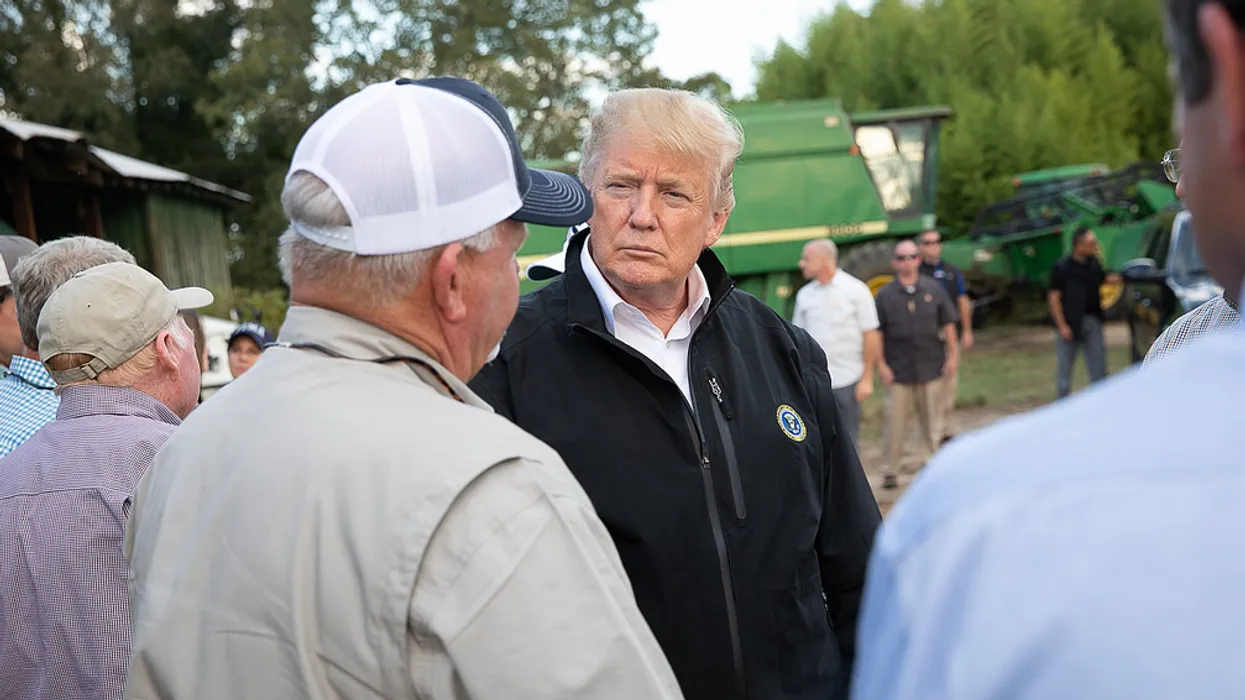
The U.S. Department of Agriculture announced changes earlier this month, after a series of stops and starts, to a long-running program designed to help farmers and rural small businesses launch renewable energy projects — a move that has drawn a legal challenge from family farm advocates.
The new rules, which took effect on October 16, effectively make any solar power development ineligible for funding through the Rural Energy for America Program, or REAP. It is the latest in a series of rollbacks by the second Trump administration that advocates say are essentially rendering the program unusable.
Installing solar systems on farmland can require tens of thousands of dollars in upfront costs, which many agricultural producers may not have or may be reluctant to spend given their low profit margins. REAP has long provided financial support to help farmers build renewable energy systems on their land.
These projects typically deliver multiple benefits to participants. They can lower utility bills for agricultural producers and rural businesses by supplying operations with additional power, and farmers and business owners can also sell excess energy back to the grid. By cutting costs or padding revenue, such systems can serve as a lifeline at a time when farmers are facing escalating costs for fertilizer, fuel, labor, and seeds, making it difficult to make ends meet. Research also shows that investing in renewable energy can be an economic driver in rural parts of the country.
“All of these things lined up,” said Matt Russell, executive director of the Iowa Farmers Union, an independent organization representing family farmers. For the Trump administration to “shift away from those kinds of win-win-win investments is very disappointing,” he added.
The Iowa Farmers Union is one of the plaintiffs in a lawsuit filed last month against the USDA, alleging that earlier changes to REAP were already harming rural communities by severely restricting solar development under the program. The suit was filed on September 28, just days before the agriculture department published its new rules.
The lawsuit takes aim at changes made to REAP in August 2025, which followed a July executive order by President Donald Trump stating that taxpayers would no longer “subsidize expensive and unreliable energy sources like wind and solar.” Although the order did not instruct the USDA to do anything in particular, the office within the agriculture department that administers REAP changed the criteria for applicants such that most solar projects would become ineligible for grants or loan guarantees.
Part of the plaintiffs’ argument is that such a move violates the REAP statute. Lawmakers created the program in 2008 as part of that year’s farm bill by combining two existing initiatives that sought to develop renewable energy and increase energy efficiency.
“Rather than complying” with that mandate, “the agency has decided to completely ignore what Congress told them to do,” said Michael Youhana, an attorney at Earthjustice, the nonprofit environmental law group representing the plaintiffs. “In fact,” he added, the USDA is doing “the opposite of what Congress told them to do” by promoting the use of fossil fuels over renewables.
The lawsuit also alleges that the USDA’s anti-solar moves violate the Administrative Procedure Act, which essentially requires agencies to show that regulatory decisions were reached through careful consideration — a statute that has long served as the primary route for challenging federal agency actions in court. The USDA says “that they’re taking this action to protect farmland from being gobbled up by solar systems,” said Youhana. “But farmers are voluntarily applying for REAP, and they’re doing it because solar gives them all kinds of really great financial benefits that the agency has completely ignored.”
The USDA did not respond to Grist’s request for comment in time for publication. In an email to the energy news site Utility Dive, a USDA representative said that under the Biden administration, “fertile farmland that should be feeding America” was used instead to produce solar power. “Those days are over. USDA will not actively participate in repurposing farmland historically used to sustain this country’s abundant food supply.”
Grist has previously reported on how the USDA’s abrupt freeze of REAP grants in the early days of Trump’s second term created confusion and chaos for small farmers who had already spent tens of thousands of dollars on energy upgrades. In March 2025, the agency that grant money but asked participants to voluntarily revise and resubmit their applications without any mention of climate change. Later that summer, the USDA announced the anti-solar policy over which Earthjustice, along with the Environmental Law and Policy Center, are suing.
The disruptions did not stop there. A year later, in March 2026, the USDA effectively paused REAP as a whole, announcing it would suspend further grant awards until the program rules were rewritten to comply with Trump’s executive order from the year before.
This month, on October 1, the department published its final rule changes. They state that solar or wind projects on cropland involving “any component made in a country named as a foreign adversary” are no longer eligible for funding through REAP. Because so many parts of solar power systems are manufactured in China, the provision effectively ends any new solar development on farms through the once-popular USDA program.
Another change drags out the timeline for receiving funding: applicants must now have energy systems up and running for one year before being considered eligible for reimbursement. Because the money functions as a repayment, that structure leaves applicants to carry the full upfront cost of equipment and installation — costs that can reach tens of thousands of dollars — for at least a year before any funds arrive.
These changes “more deeply entrench the anti-solar policy we’ve challenged in our lawsuit,” said Youhana. While “federal investments in renewable energy projects could help to offset rising energy costs, making life more affordable for farmers and the broader American public alike,” he added, the USDA appears to be moving in the opposite direction. With the final rules now in effect while the litigation proceeds, any court ruling in the case could shape the program’s eligibility criteria for future applicants.
Russell argued that further restricting funding sources like REAP will only accelerate the consolidation of the agricultural industry, in which only the biggest, wealthiest operations can survive while smaller producers suffer without adequate public support.
“It’s like stacking the deck against family farms, and entrepreneurial businesses in small towns that are trying to bootstrap themselves,” he said. “It’s picking winners and losers, and the losers are the very kinds of farms and businesses and communities that I think the vast majority of American taxpayers think that they’re investing in.”
This story was originally published by Grist, a nonprofit, independent media organization dedicated to reporting on climate change.

