Iranian Town Mourns Five Killed in U.S. Strike on Wedding Celebration
Key Takeaways
- •U.S. strikes on Kuhestak on Tuesday killed five people and wounded more than 60 at a wedding gathering where about 150 women had assembled before the bride and groom arrived.
- •A U.S. weapons expert said evidence from the scene suggests American guided bombs were used, with fragments indicating a JSOW and a GBU-39 glide bomb.
- •U.S. Vice President JD Vance said the wedding attack is being investigated fully, stating the U.S. never targets civilians but that 'sometimes things happen.'
- •A communications tower just over 100 meters from the family compound was also hit, disrupting phone and internet service that was largely restored by Friday.
- •Kuhestak lies near Minab, where more than 100 children were killed in a U.S. missile strike on a primary school on Feb. 28, the opening day of the war.
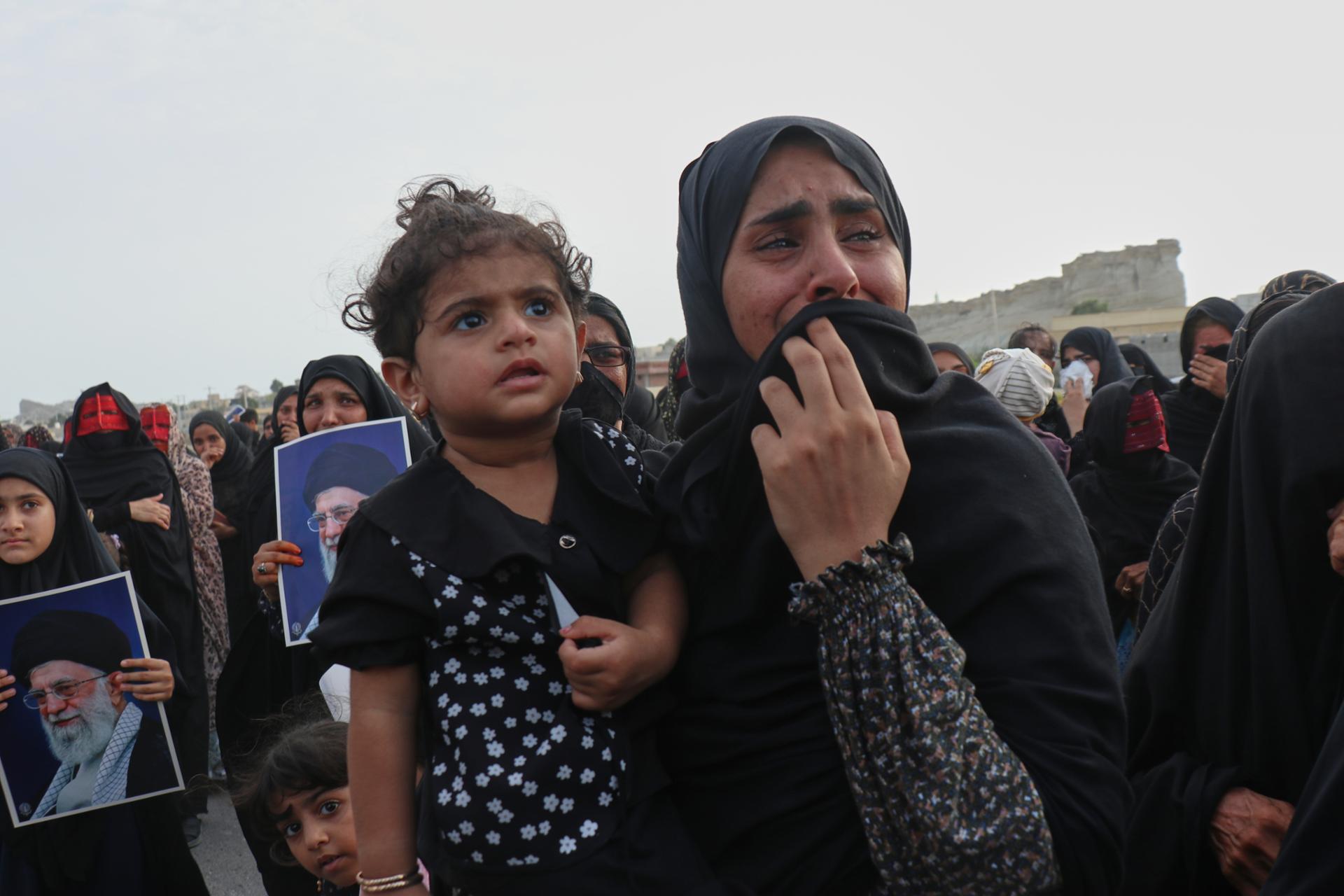
KUHESTAK, Iran — Women and children had gathered in a house and courtyard in this small town on Iran's southern coast, waiting for the bride and groom to arrive and begin a wedding celebration. Then an explosion turned the joyful scene into carnage.
Kuhestak is still reeling from a barrage of strikes that killed five people during an American bombardment of southern Iran on Tuesday evening. Large posters of four of the dead — a 4-year-old boy, a 16-year-old and two women — hung from lampposts at the town's entrance. A fifth victim, a woman who was among more than 60 people wounded in the blasts, died Thursday at a hospital, according to Iranian media and a rights group.
On Friday, an Associated Press team made a rare visit to the town, which sits on the coast overlooking the Strait of Hormuz, the narrow waterway through which roughly a fifth of the world's oil supply passes and a focal point of strategic tensions during the conflict. In a densely built neighborhood of houses and unpaved alleys stood the compound of the Mallahi family, struck while relatives were celebrating their daughter's wedding. A U.S. weapons expert who reviewed images from the scene said the evidence suggests the strikes were carried out with American guided bombs.
Blast left gaping hole in roof
Ali Mallahi, a cousin of the bride, pointed to a gaping hole in the roof of a room that took a direct hit in one of the compound's four houses. Large cracks ran through walls decorated with floral designs. Windows were shattered, and twisted sections of roofing and metal framework lay across the courtyard, amid carpets and household appliances the family had pulled from other damaged rooms.
Video of the immediate aftermath aired by Iranian media showed colorful decorations and palm fronds strewn across the ground.
Weddings in the area are traditionally segregated by gender. On Tuesday evening, roughly 150 women were gathered in the house while the men held a separate celebration in another building about 50 meters away, Mallahi said. A strike hit the room where the women were to be served dinner, but the celebrations had only just begun and the bride and groom had not yet arrived.
"Thank God, the casualties were not higher," Mallahi said. The father of the bride, his uncle, is also named Ali Mallahi.
Sasan Zarei, a neighbor, said she rushed to the Mallahi home and helped pull people from the rubble. "Most of the injured were kids. The scenes were very heartbreaking," she said.
Vance says US is investigating
U.S. Vice President JD Vance said Thursday that he had been briefed on the wedding attack. "We're investigating it very fully," he said. He stated that the U.S. never targets civilians in combat but added, "Sometimes things happen." The U.S. military has previously acknowledged civilian casualties in past conflicts after investigations, though outcomes of such inquiries have varied widely and often take months or years.
Residents told the AP how a series of heavy explosions shook Kuhestak, lighting up the night sky. The blasts came amid the latest round of American bombardment in southern Iran, which the U.S. military said targeted air defenses, radar systems and maritime assets.
A communications tower by Kuhestak's port, just over 100 meters from the Mallahi home, was also hit. AP footage showed the tower toppled and heavy damage to the neighboring building housing the town's telecommunications department. The proximity of the two targets — the tower and the family compound — raises questions that the announced U.S. investigation may address, though no conclusions have been reached.
Hassan Sayadi, a technician with the department, said the tower had provided telephone and internet connections across the area. The Hormozgan provincial telecommunications department said Wednesday that U.S. attacks had disrupted landlines and mobile phone service in multiple locations, including Kuhestak, and that it was working to restore services. By Friday, mobile phones and data services were operating.
Town near site of primary school strike
Kuhestak lies about 30 kilometers (18 miles) from the town of Minab, where more than 100 children were killed in an American missile strike on a primary school on Feb. 28, the opening day of the war launched by the U.S. and Israel. The region of Hormozgan, on the Gulf coast, has repeatedly found itself in the path of strikes aimed at military and infrastructure targets given its concentration of ports, naval assets and air defense positions along the Strait of Hormuz.
Following Tuesday's strikes, residents and Iranian media displayed fragments of munitions found at the scene, including a thermal battery unit, a segment of a control fin and part of the exterior body of the munition.
Weapons experts told the AP they believe imagery of the fragments points to an American guided munition. Trevor Ball, a former U.S. Army explosive ordnance disposal technician and an analyst at Armament Research Services, said the imagery shows remnants of both a JSOW and a GBU-39, types of guided, air-delivered glide bombs. Such precision-guided weapons are designed to hit specific coordinates, which is why analysts examine fragment evidence to determine what was used — and why investigations examine how targets are selected and verified.
The images were "being evaluated to determine if one of these munitions, or another model, was responsible," he said.
Videos released by U.S. Central Command of its operations that night in Iran show aircraft heading out on missions, including an F/A-18E loaded with a JSOW.
The AP could not immediately determine where the remnants were collected or whether they all came from the wedding venue or also from the communications tower.
