Analyst Warns New US Strikes on Iran Risk Tempting America's Enemies to Act
Key Takeaways
- •The U.S. struck two sites on Larak Island in the Strait of Hormuz where IRGC members were staging rocket launchers intended to attack merchant ships.
- •The strikes came days after President Trump described Iran as a "failing nation" in a Truth Social post.
- •NYT correspondent David Sanger said China and Russia may see the strikes as a sign the U.S. must commit considerable forces to the Persian Gulf for the foreseeable future.
- •Sanger warned the escalation could tempt Vladimir Putin to seize territory from a small NATO country or Xi Jinping to move against Taiwan.
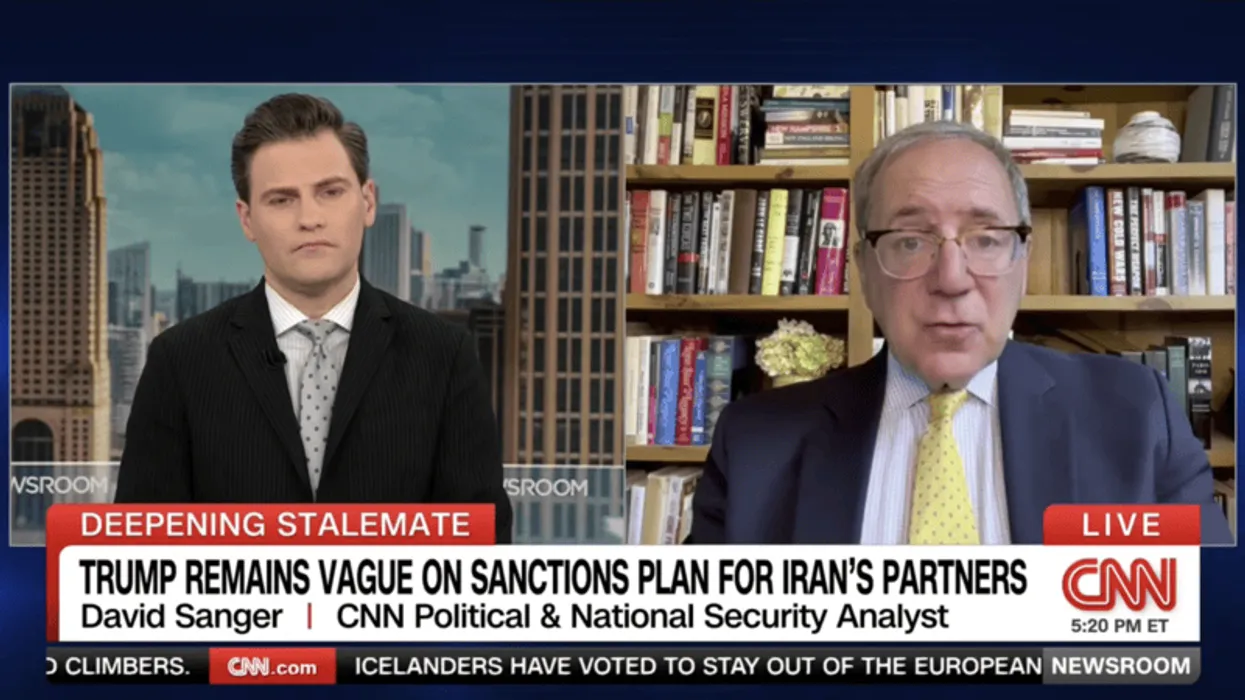
A new round of U.S. strikes against Iran on Sunday has produced an "interesting sign" that risks spurring America's enemies to act, according to New York Times national security correspondent David Sanger.
The U.S. launched a series of strikes against two sites on Larak Island in the Strait of Hormuz, where members of the Iranian Revolutionary Guard Corps were staging rocket launchers intended to attack merchant ships, according to reports. The Strait of Hormuz is a narrow waterway between Iran and Oman through which a significant share of the world's seaborne oil trade passes, making it a recurring flashpoint for maritime security. Shipping through the strait has long been a point of tension between Iran and Western powers, with past episodes of tanker seizures and attacks on commercial vessels prompting naval deployments by the United States and its allies. The strikes came just days after President Donald Trump called Iran a "failing nation" in a post on Truth Social.
Sanger shared his assessment of the strikes on Sunday's broadcast of "CNN Newsroom."
"I think they take it as an interesting sign," Sanger said, describing how America's enemies such as China and Russia reacted to the new strikes. "I think they both also see that the U.S. is now going to have to tie up considerable forces in the Persian Gulf for the foreseeable future."
Sanger also warned that the new strikes could carry bitter geopolitical consequences. The concern reflects a longstanding debate among defense planners about how simultaneous commitments in multiple regions can strain U.S. military resources and shape adversaries' calculations about when and where to test American resolve.
"That could tempt Vladimir Putin to try to go take a small NATO country, or at least some territory in it," Sanger said. "It could tempt Xi Jinping to go after Taiwan."
