US Job Market Rebounds With 162,000 New Jobs in August; Unemployment Rate Holds at 4.1%
Key Takeaways
- •U.S. employers added 162,000 jobs in August, more than double the 65,000 forecast, and the unemployment rate held at 4.1%.
- •Average hourly wages rose 3.1% year over year, the weakest increase since May 2021, while inflation ran at 3.7% by the Fed's preferred measure.
- •The strong hiring data may increase the likelihood the Federal Reserve raises interest rates at its Sept. 15-16 meeting.
- •A worker shortage driven by immigration restrictions and baby boomer retirements has pushed firms to adopt technology and AI rather than hire new staff.
- •Weekly unemployment claims have stayed near 200,000-230,000 for a year, reflecting a 'no-hire, no-fire' market with strong job security but tough conditions for job seekers.
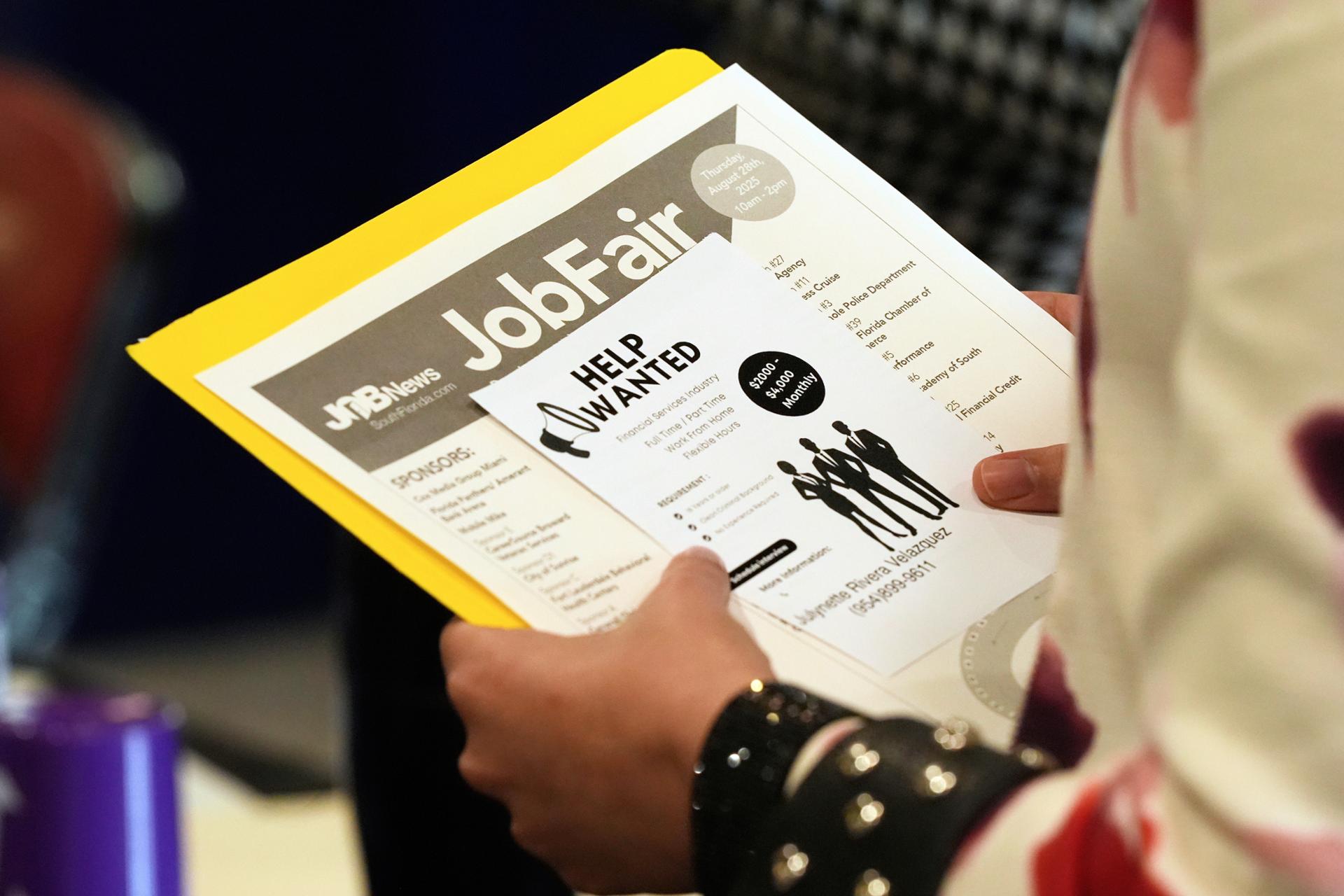
WASHINGTON — The U.S. job market rebounded in August as employers added a surprising 162,000 jobs, while the unemployment rate held steady at a low 4.1%, according to a Labor Department report released Friday.
The report could be good news for President Donald Trump two months before midterm elections in which the health of the economy weighs heavily on voters' minds. Elections are typically decided heavily on pocketbook issues, and a strong headline jobs number tends to dominate economic coverage even when underlying conditions — such as weak wage growth and slow gross hiring — are more mixed.
Hiring far exceeded expectations. Forecasters had anticipated just 65,000 new jobs, according to a poll by FactSet. The Labor Department's revisions also looked favorable, adding 55,000 to June and July payrolls. Employers created 21,000 jobs in July; the department had originally reported a cut of 23,000.
By sector, restaurants and bars added 59,000 jobs last month, construction companies added 22,000, and manufacturers added 16,000. The U.S. labor force — the number of people working or looking for work — jumped by 683,000 after falling in June and July.
Still, many households are struggling with the high cost of living, and wage gains are providing little relief. Average hourly wages rose 3.1% last month from a year earlier, the weakest year-over-year increase since May 2021. With inflation running above that pace by the Fed's preferred measure, real purchasing power for many workers remains under pressure — a gap that helps explain why solid headline job figures have not translated into broad consumer optimism.
Friday's report may increase the likelihood that the Federal Reserve will raise its key short-term interest rate when it next meets Sept. 15-16. Solid hiring suggests that current borrowing costs may not be high enough to restrain the economy and cool inflation. A rate hike would ripple through the broader economy, raising borrowing costs on credit cards, adjustable-rate loans, and business financing — one reason markets and households alike watch each monthly jobs release and inflation print closely for clues about the Fed's next move.
Fed Chair Kevin Warsh said last week that inflation — running at 3.7% by the Fed's preferred measure — remains too far above the central bank's 2% target, and that without further progress the Fed would have "work to do." With hiring appearing healthy, the Fed's attention now shifts to a critical inflation report due next week. On Thursday, Fed Governor Christopher Waller said he is leaning toward keeping rates unchanged, but would support a hike if inflation comes in high.
Adding to inflationary pressure is the difficulty U.S. employers have faced amid a shortage of workers — the result of President Trump's immigration crackdown and the retirement of baby boomers. Some companies are responding by deploying technology to perform tasks previously done by humans, a shift that economists and labor analysts have tracked across industries as firms seek productivity gains in place of new headcount.
Employers have also been reluctant to let go of the workers they have, leaving most Americans with unusual job security and keeping unemployment low.
"It's a very strange labor market," David Kelly, chief global strategist at J.P. Morgan Asset Management, wrote in a commentary Monday. "The No. 1 puzzler: Hiring is weak, but layoffs are rare."
Indeed, employers have not been eager to take on new workers. The Labor Department reported Tuesday that gross hiring — before subtracting people who lost or left their jobs — fell 5% to fewer than 5.1 million new jobs.
The United States no longer needs as many new jobs as it did until recently to keep the national unemployment rate from rising. Trump's immigration crackdown and baby boomer retirements mean fewer people are available for work, and more than 1.3 million people have dropped out of the U.S. labor force over the past year. As a result, the "break-even" rate of monthly hiring — 155,000 in 2023-2024 — has dropped, perhaps to nearly zero, according to a Federal Reserve study.
Rather than drawing from a diminished pool of available workers, "businesses are increasingly focused on boosting efficiency through technology and AI and increasingly seek to do more with their existing workforce," EY-Parthenon economists Gregory Daco and Lydia Boussour wrote in a commentary this week.
Even if they are not hiring aggressively, companies remain reluctant to lay off existing staff, still remembering the unexpected labor shortages that followed the end of COVID-19 lockdowns. That has kept unemployment low: for the past year, weekly applications for unemployment benefits — a proxy for layoffs — have stayed in a historically low range of around 200,000 to 230,000.
The result is what economists call a "no-hire, no-fire" labor market, in which those who have jobs enjoy strong job security, but conditions are tough for young workers seeking entry-level positions and for unemployed people trying to return to work. For policymakers, the coming weeks will help clarify the picture: the inflation report due next week and the Fed's Sept. 15-16 meeting will show whether healthy hiring and sticky inflation translate into tighter monetary policy, while subsequent monthly jobs data will test whether August's rebound marks a durable shift or a one-month surprise.
Source: The Korea Times

