Strait of Hormuz Shipping Back in the Firing Line as US-Iran Strikes Resume
Key Takeaways
- •US forces struck two Iranian launchers on Larak Island on Sunday, the first known US strike inside Iran since late July, prompting Iranian missile and drone attacks on US bases in Jordan.
- •Iran's Revolutionary Guard said an unidentified tanker struck two naval mines and caught fire, an incident not independently confirmed and the third tanker strike in Hormuz in less than a week.
- •Iran has circulated a list of 46 ships it claims breached its new navigation regime, while IRGC small craft are ordering selected vessels to abort transits.
- •US Central Command says the internationally recognised traffic corridor is mine-free, but the Joint Maritime Information Center warns that drifting and uncharted mines still pose a danger.
- •The International Maritime Organization estimates up to 400 ships carrying around 6,000 seafarers remain unable to safely leave the Gulf six months into the conflict.
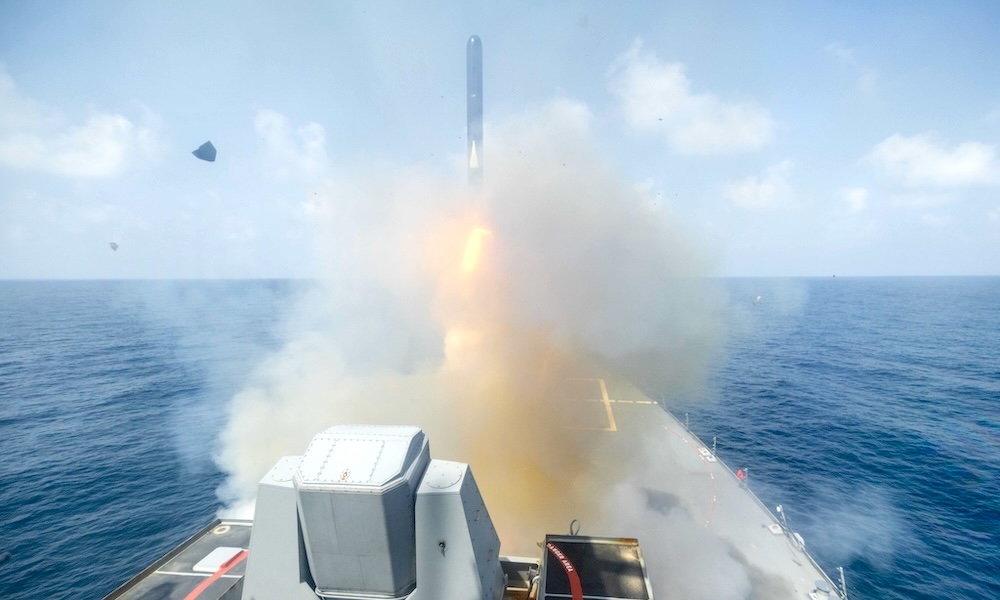
The fragile lull in the Strait of Hormuz has broken down, with the United States and Iran exchanging fire for the first time in over a month just as a new series of attacks on merchant shipping threatens to shut down hard-won transit routes. The strait is one of the world's most critical chokepoints for seaborne trade, with roughly a fifth of global oil and liquefied natural gas shipments normally passing through it, which is why each flare-up there reverberates far beyond the Gulf.
Iran's Revolutionary Guard claimed on Monday that an unidentified tanker struck two naval mines in the southern part of the strait, caught fire, and was brought to a complete halt. The IRGC gave no details about the vessel, its crew, or its cargo, and the incident has not been independently confirmed. Tehran asserted that the ship was attempting to use an "illegal" route and warned other vessels to comply with its rules for navigating Hormuz. The claim of an "illegal" route is Tehran's own framing; the traffic separation scheme through Hormuz is an internationally recognised corridor, not one administered by Iran.
Last week, US Central Command announced that mine clearance operations had left the internationally recognised traffic separation scheme (TSS) free of sea mines. The Joint Maritime Information Center has been far more cautious, warning that drifting and uncharted mines still pose a danger around the TSS and that designated mine danger areas remain active. The divergence between the two assessments underscores the uncertainty operators face when deciding whether to route tankers through the strait or take longer, costlier detours around the Arabian Peninsula.
The renewed military confrontation began on Sunday, when US forces struck two Iranian launchers on Larak Island, which overlooks the shipping lanes at the entrance to the Gulf. Washington said IRGC personnel had been preparing rockets carrying sea mines and described the operation as limited action against an imminent threat to Hormuz shipping. It was the first known US strike inside Iran since late July, ending a stretch in which both sides had appeared to be pulling back from direct engagement.
Iran responded with missile and drone attacks on US bases in Jordan. Iranian reports also indicated ballistic missile launches from several parts of the country and anti-ship cruise missiles fired toward Hormuz, placing commercial shipping directly back in the line of fire.
The escalation follows a difficult week for tanker shipping. An unidentified inbound tanker was hit by an unknown projectile late on Saturday around 12 nautical miles north of Khasab, Oman. No casualties or pollution were reported. It was the third tanker struck in Hormuz in less than a week. The Kuwaiti products tanker Al Salam II was hit on August 25, sustaining a hole above the waterline and a small fire, while the Liberian-flagged aframax Metro Venetian was disabled by an engine-room fire following another strike a day earlier.
Iran has meanwhile intensified its efforts to police inbound traffic. Maritime security sources report that IRGC small craft are identifying ships at close range and ordering selected vessels to abort their transits, while Tehran recently circulated a list of 46 ships it claims have breached its new navigation regime. That list, and the close-range boardings or inspections implied by such enforcement, add a commercial dimension: owners and insurers must weigh not only the risk of mines and missiles but also the possibility of detentions or cargo delays under Iran's unilateral rules.
Six months into the conflict, a return to normal shipping remains a distant prospect. The International Maritime Organization estimates that up to 400 ships carrying around 6,000 seafarers remain unable to leave the Gulf safely. Watch points in the days ahead include whether mine clearance operations can be re-established around the TSS, whether additional vessels appear on Iran's 46-ship list, and whether either side signals an interest in de-escalation after the first direct exchanges in over a month.
