Top U.S. General in Europe Warns Pentagon of Depleted Naval Forces Amid Iran War
Key Takeaways
- •Gen. Alexus Grynkewich warned the Pentagon that without an additional Navy destroyer, he will be forced to prioritize defending the United States homeland over defending Israel.
- •U.S. naval destroyers in the eastern Mediterranean, equipped with the Aegis Combat System, have been intercepting ballistic missiles fired at Israel by Iran and Iran-backed Houthi militants.
- •The Standard Missile-3 and Standard Missile-6 interceptors relied upon by these destroyers are manufactured in limited annual quantities and have faced replenishment difficulties after prolonged combat use across multiple regions.
- •U.S. European Command must simultaneously sustain missile-defense coverage in the Mediterranean while preserving readiness against potential Russian aggression toward NATO territory.
- •Defense analyst Tom Karako of CSIS noted that the warning underscores how sustained wartime operations are degrading military readiness and munition stockpiles, raising broader strategic questions.
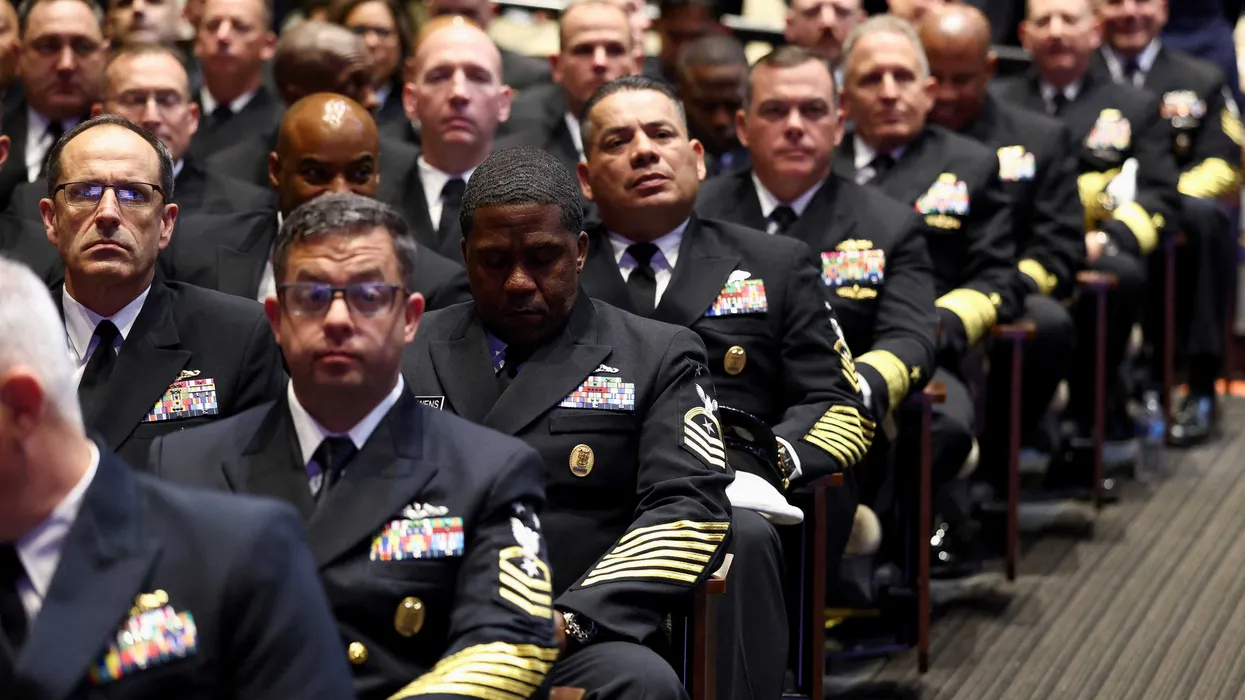
The head of U.S. European Command has privately warned the Pentagon that he lacks sufficient naval forces to continue defending Israel from incoming ballistic missiles, a revelation first reported by the Washington Post on Saturday. The warning underscores how the ongoing Iran war has strained military resources to a degree that could jeopardize the defense of the United States homeland.
Gen. Alexus Grynkewich, who leads U.S. European Command, sent a written notification to senior Pentagon officials this week stating that without an additional Navy destroyer, he will be forced to prioritize defending the United States over defending Israel. Officials familiar with the correspondence spoke on the condition of anonymity.
"The top U.S. general in Europe privately warned the Pentagon this week that he lacks sufficient naval forces to continue protecting Israel from incoming ballistic missiles, officials said, illustrating how the ongoing Iran war has imposed constraints on the military," the Post reported.
According to the report, Grynkewich wrote that without another Navy destroyer, "he will be forced to choose defense of the United States 'homeland' over that of Israel."
One defense official, speaking anonymously to the Post, characterized the message as "consistent with past outreach to the Pentagon from the military's top generals when they see certain risks that require Washington's consideration." Such communications are to be expected, the official added, "as commanders compete for finite resources and weapons."
U.S. European Command plays a central role in the defense aid the United States provides to Israel, as it coordinates all military operations in the Mediterranean Sea. U.S. naval destroyers stationed in the eastern Mediterranean have formed a key component of Israel's defense architecture for years. These vessels, equipped with advanced radar systems and a broad array of missiles, have intercepted projectiles fired at Israel by both Iran and Iran-backed Houthi militants in Yemen. The destroyers rely on the Aegis Combat System and interceptors such as the Standard Missile-3 and Standard Missile-6, munitions that are produced in limited annual quantities and have faced replenishment shortfalls following sustained combat use across multiple theaters in recent years.
At the same time, European Command forces must maintain readiness against any potential Russian incursion into NATO-protected territory. Russia itself poses a ballistic missile threat to the United States, with weapons capable of reaching the U.S. mainland. The challenge of simultaneously sustaining missile-defense coverage in the Mediterranean while preserving deterrent capabilities in Europe has long been a point of tension for combatant commanders, but the Iran war has brought the trade-off into sharp relief.
Tom Karako, director of the Missile Defense Project at the Center for Strategic and International Studies, told the Post that Grynkewich's warning highlights the widening scope of the challenges created by the Iran war.
"Being on a wartime footing is going to take a toll in terms of readiness and munitions inventory levels," Karako said. "Now the question is: What's the strategy here?"

