China's Domestic Car Market Faces Steepest Decline Since 2021 Even as Global Demand for Chinese Vehicles Grows
Key Takeaways
- •China's passenger vehicle sales dropped 20.2 percent year on year in the first half of 2026, prompting the CPCA to lower its full-year forecast to a 14 percent contraction from a previously projected flat performance.
- •The discontinuation of government EV subsidies and a 15.3 percent year-on-year rise in transportation energy costs in June were major contributors to the domestic downturn, with ICE vehicle sales plunging 39 percent that month.
- •Mexican sales of Chinese-brand vehicles rose 30 percent in the first half of 2026 to 137,525 units, increasing their market share to approximately 17 percent from 14 percent a year earlier.
- •Imports of Chinese-brand vehicles into Mexico fell 43 percent in the first five months of 2026 as automakers had stockpiled inventory ahead of U.S. tariff implementation, potentially weakening future sales.
- •CPCA Secretary General Cui Dongshu expects market consolidation to accelerate, with only seven or eight EV producers dominating China's auto market by 2030 as cost competition intensifies.
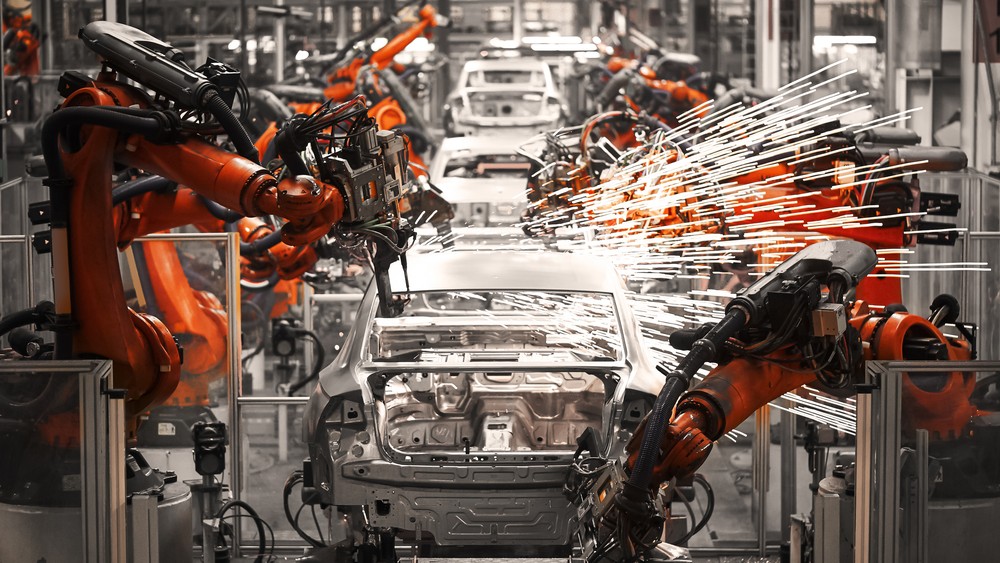
China's domestic car sales have fallen sharply in 2026, even as Chinese-made vehicles gain substantial ground in international markets such as Mexico, underscoring rising global demand driven by the launch of affordable and competitive electric vehicles (EVs) from manufacturers including Build Your Dreams (BYD). The contraction is significant for the global automotive industry, as China has been the world's largest car market for over a decade and a key growth engine for both domestic and foreign automakers.
China's passenger vehicle market is on track for its worst performance since 2021, a stark reversal from the record-high sales posted in 2025. Passenger vehicle sales declined 20.2 percent year on year in the first half of 2026, prompting the China Passenger Car Association (CPCA) to revise its full-year retail sales forecast downward to a 14 percent contraction. The association had previously projected flat year-on-year sales. The CPCA now anticipates total deliveries of 20.4 million units by year-end, down from the record 23.7 million units achieved in 2025. Cumulative sales for 2026 currently stand at 8.7 million units.
Xiao Feng, head of Hong Kong/China Industrials Research at Citic CLSA, expects an even steeper decline of approximately 20 percent year on year for the full year. However, Feng forecasts that sales of new energy vehicles (NEVs) — encompassing both electric and hybrid models — will fare comparatively better, declining only 5 to 6 percent.
Tu Le, founder of Sino Auto Insights, told CNBC: "this is going to continue to be a brutal year."
Multiple factors are driving the domestic downturn. Transportation energy costs rose 15.3 percent year on year in June, according to China's National Bureau of Statistics, contributing to a 39 percent year-on-year plunge in internal combustion engine (ICE) vehicle sales that month. Simultaneously, the discontinuation of government subsidies for EV purchases has dampened consumer interest in NEVs. The subsidy rollback marks a turning point for a program that helped China build the world's largest EV market over more than a decade of state support.
Chinese automakers are also contending with elevated raw material and component costs, particularly for EV batteries. These pressures are expected to weigh heavily on profitability throughout 2026. Average sales profit margins stood at just 3.4 percent between January and May 2026, with industry profits falling 20 percent year on year.
CPCA Secretary General Cui Dongshu said that weak sales and thin margins are likely to accelerate consolidation in China's highly fragmented auto market, with only seven or eight EV producers expected to dominate by 2030. He anticipates that China's BYD, Geely, and Leapmotor, along with Germany's Volkswagen and Japan's Toyota, will overtake several American automakers as cost competition intensifies.
Among Chinese automakers, BYD reported 1.8 million unit sales in the first half of 2026. Geely delivered 1.4 million units, while Leapmotor recorded 356,000 unit sales during the same period. On the international side, Volkswagen Group reported 973,000 unit sales in China, and Toyota achieved 579,000 unit sales between January and May.
Despite the current downturn, experts expect Chinese vehicle sales to rebound in the coming years as consumers replace ageing vehicles, reflecting the inherently cyclical nature of the market.
Meanwhile, Chinese automakers continue to expand aggressively in international markets, building reputations for competitive EV and hybrid offerings. The export push comes as domestic overcapacity pressures mount, giving manufacturers added incentive to seek buyers abroad. In Mexico — long regarded as a strategically important market for Chinese brands due to nearshoring potential and its position as a manufacturing hub under the USMCA trade framework — the landscape has shifted following the introduction of U.S. tariffs on vehicles from various countries. Nonetheless, Chinese automakers are making significant inroads, reflecting Mexican consumers' openness to lesser-known, more affordable brands.
Mexican sales of Chinese-brand vehicles surged 30 percent in the first half of 2026, according to a report from the Mexican Association of Automobile Distributors. Chinese brands accounted for approximately 17 percent of new vehicle sales in Mexico during this period, up from 14 percent in the first half of 2025 — rising from 107,712 to 137,525 units.
The United States introduced tariffs on Asian vehicles to shield its domestic auto industry, which struggles to compete with China on component costs and vehicle pricing. However, the growing popularity of Chinese vehicles among Mexican consumers has raised concerns among U.S. industry representatives.
Notably, several Chinese automakers built up vehicle inventories in Mexico ahead of the tariff implementation, which has distorted current sales figures. Imports of Chinese-brand vehicles during the first five months of 2026 actually declined 43 percent compared to the same period in 2025, a trend that could weaken Chinese car sales in the Mexican market going forward.
By Felicity Bradstock for Oilprice.com

