U.S. Forces Fire on Panama-Flagged Ship Attempting to Breach Iran Blockade
Key Takeaways
- •A Panama-flagged commercial vessel was disabled by U.S. forces after it ignored repeated warnings and attempted to breach the American maritime blockade of Iran.
- •A military helicopter was used to disable the ship's steering mechanism, and all crew members were reported safe following the engagement.
- •The incident is part of a broader U.S. enforcement campaign, as American forces have previously redirected or disabled commercial vessels connected to the blockade.
- •Shipping companies, insurers, and vessel operators may face higher costs and more complex risk assessments as military confrontations in the region escalate.
- •The confrontation carries implications for global energy markets and may prompt legal scrutiny under international frameworks such as UNCLOS and the San Remo Manual.
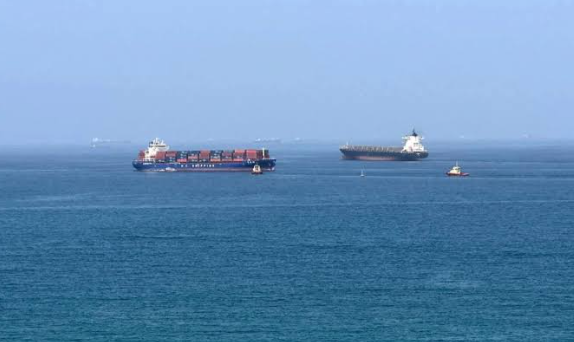
U.S. forces opened fire on a Panama-flagged commercial vessel attempting to breach the American maritime blockade of Iran, according to a report by The Wall Street Journal. The confrontation highlights Washington's increasingly direct enforcement of restrictions on shipping linked to Iranian ports.
The vessel reportedly ignored multiple warnings to stop before U.S. forces intervened. A military helicopter was used to disable the ship's steering mechanism, preventing it from continuing toward its intended destination. All crew members were reported safe following the incident.
Reports of the confrontation circulated on Tuesday, with multiple outlets carrying details of the encounter and the broader U.S. effort to restrict maritime traffic to and from Iranian ports.
From Warnings to Direct Enforcement
The most significant aspect of the incident may be the message it sends to other commercial ships operating in the region. According to reports, the vessel received repeated warnings before U.S. forces acted. The decision to disable the ship indicates that American commanders are prepared to escalate from communication and interception to physical enforcement when vessels refuse to comply.
That distinction carries weight for the international shipping industry. A radio warning can be ignored; a physical intervention cannot. For commercial operators, the incident could compel shipping companies, insurers, and vessel captains to reassess the risks of attempting to enter or leave Iranian ports while the blockade remains active.
The U.S. military has previously redirected or disabled commercial vessels in connection with the blockade, demonstrating that the latest incident is part of a broader enforcement campaign rather than an isolated event. In one previously reported case, U.S. forces disabled a vessel after its crew failed to comply with repeated orders, with American officials describing the action as part of the blockade enforcement effort. Another reported incident involved a tanker that U.S. forces disabled after it allegedly attempted to reach an Iranian port in violation of the blockade.
U.S. Central Command has previously stated that compliant commercial vessels can be redirected while forces focus enforcement measures on vessels that violate the restrictions.
The Significance of the Panama Flag
The vessel involved was operating under the Panama flag. Panama is the world's largest ship registry by tonnage, with thousands of commercial vessels registered under its jurisdiction. Alongside Liberia and the Marshall Islands, Panama accounts for a substantial share of the global merchant fleet, meaning that enforcement actions against Panama-flagged vessels are not uncommon in international maritime operations.
A ship's flag identifies the state under whose legal authority the vessel operates, though it does not necessarily indicate the nationality of the ship's owner, operator, cargo, or crew. Commercial shipping companies frequently use international registration structures in which ownership, management, financing, and flag registration are based in different countries. As a result, a confrontation involving a Panama-flagged vessel can have consequences for businesses and governments far beyond Panama itself.
Crew Safety and the Steering Mechanism
Despite the use of force, all crew members were reported safe — a detail of particular significance in a region where commercial vessels have increasingly become exposed to military confrontations. Shipping companies are closely monitoring crew safety as geopolitical tensions rise around Iran.
The reported decision to target the vessel's steering capability rather than sink the ship underscores the apparent objective of stopping its movement rather than destroying it. Disabling steering is fundamentally different from attempting to sink a vessel: a ship can potentially remain afloat and its crew can remain safe while being prevented from continuing toward a restricted area.
However, the action still carries risks. A large vessel without effective steering can become difficult to control. Weather, currents, nearby vessels, and waterway congestion can all influence what happens after a ship loses maneuverability. That makes the safe management of the vessel and its crew an important part of any subsequent enforcement operation. The distinction could also become important in future discussions over the proportionality and legality of the action.
Strait of Hormuz at the Center of the Crisis
The confrontation comes against a backdrop of continuing tensions surrounding the Strait of Hormuz. The narrow waterway connects the Persian Gulf with the Gulf of Oman and the Arabian Sea and serves as one of the world's most important energy corridors. Large quantities of crude oil, refined petroleum products, and liquefied natural gas normally pass through the region.
Energy markets are particularly sensitive to developments around the Strait of Hormuz because alternative routes are limited. Even when a vessel is not physically attacked, the possibility of military intervention can cause shipping companies to increase insurance coverage, reroute vessels, or delay voyages. Those additional costs can ultimately affect global commodity prices.
The waterway's relative narrowness compared with the volume of commercial traffic that depends on it creates an environment where even a single disabled ship can attract international attention. The presence of warships, aircraft, and commercial vessels operating in the same region increases the possibility of misunderstandings, giving shipping companies and governments a shared interest in maintaining clear communication channels.
Washington's Enforcement Strategy
The latest confrontation suggests Washington is attempting to make the blockade operational rather than symbolic. A maritime blockade is only effective if vessels believe that attempting to bypass it carries meaningful consequences. Repeated warnings can establish an expectation of compliance; physical intervention reinforces that expectation.
The reported sequence of warnings followed by disabling action suggests that U.S. forces are distinguishing between vessels that comply and those that continue to challenge the blockade. That distinction could become increasingly important as the blockade continues.
Shipping Companies Face a Difficult Calculation
For shipping operators, the situation creates a complicated risk assessment. A commercial vessel may have a legitimate cargo, a legal registration, and an international crew, but if it is attempting to enter a port covered by a military blockade, its legal and operational position becomes significantly more complex.
Ship operators must assess whether a voyage is permitted, determine whether sanctions or military restrictions apply, evaluate potential risks to crew members, consider whether insurers will cover the voyage, and determine whether cargo can be safely delivered if military forces intercept the vessel. The latest incident adds another consideration: whether refusing a military order could result in the vessel being physically disabled.
One immediate consequence of escalating maritime confrontations could be higher insurance costs. Ships traveling through high-risk areas typically face increased war-risk premiums. If incidents become more frequent, insurers may demand higher premiums or impose additional conditions before covering voyages. Higher insurance costs can be reflected in freight rates and, for energy shipments, can eventually reach oil and gas markets.
The consequences could extend beyond oil. Commercial vessels in the region carry fuel, industrial products, chemicals, food, and manufactured goods. Companies may choose longer routes to avoid areas of potential military confrontation, increasing fuel consumption and transit times, with those costs eventually passed through supply chains.
Global Energy and Financial Markets
The Persian Gulf is central to the global energy system. Several major oil-producing countries depend on maritime routes through the region to reach international buyers. Traders typically respond not only to actual disruptions but also to perceived risks. If shipping companies begin avoiding Iranian ports or nearby waters, available supply routes can become more constrained, transportation expenses can rise, and delivery schedules can be disrupted — creating cumulative volatility in energy markets.
Investors are also watching closely. Oil prices can react rapidly to developments involving the Strait of Hormuz. Energy producers can benefit from higher commodity prices, while energy-intensive industries face greater expenses. Currencies and broader equity markets can also respond to fears of a wider regional conflict.
Legal Questions
The use of military force against a commercial vessel is likely to raise questions about the legal basis for the blockade and the rules governing maritime interception. International maritime law contains complex rules concerning freedom of navigation, blockades, neutral shipping, and the use of force. The principal frameworks include the United Nations Convention on the Law of the Sea (UNCLOS), which governs maritime rights and navigation, and the San Remo Manual on International Law Applicable to Armed Conflicts at Sea, which addresses blockades and the use of force in maritime conflicts. The legality of any particular action depends on factors including the status of the conflict, the location of the vessel, the nature of the blockade, the vessel's destination, and the warnings issued before force was used.
Those questions are likely to receive increasing attention if additional commercial ships are confronted. For now, available reports describe the incident from the perspective of U.S. enforcement of the blockade. Further information from American officials, the vessel's operator, Panama, and other relevant governments could provide additional context.
Iran's Response
Another major factor will be Tehran's response. Iran has repeatedly opposed restrictions on its maritime activity and has its own history of intercepting commercial vessels in the region. Earlier in 2026, Iranian forces were reported to have seized commercial ships attempting to leave the Gulf, demonstrating how quickly maritime incidents can become part of the wider U.S.–Iran confrontation.
A confrontation involving an international commercial vessel could create additional diplomatic and military pressure. If Iran responds aggressively, shipping risks could rise. If Tehran avoids escalation, the incident may remain primarily an enforcement issue.
What Comes Next
The immediate priority will be determining the exact circumstances surrounding the encounter. Authorities will likely examine the vessel's destination, cargo, ownership, communications with U.S. forces, and the warnings issued before the engagement. The condition of the ship will also be important. If the vessel remains seaworthy and its crew is safe, the incident could conclude without further escalation.
If another commercial vessel attempts to challenge the blockade, however, the precedent established by this encounter could become increasingly significant. The coming days could determine whether this remains a contained enforcement action or becomes part of a broader pattern of U.S. interceptions and confrontations with commercial shipping.
For now, the message to vessels operating near Iran is clear: attempts to challenge the blockade may carry consequences far beyond a radio warning.
Source: Hokanews
