Stock Futures Rise as Oil Prices Fall After US-Iran Diplomatic Pause
Key Takeaways
- •Dow Jones Industrial Average futures rose 1.1%, while S&P 500 futures gained about 1% and Nasdaq 100 futures increased 1.6%.
- •Brent crude fell about 5% to $87.13 per barrel, and West Texas Intermediate declined 5.5% to $84.37.
- •The 10-year U.S. Treasury yield dropped 4 basis points to 4.64% as oil prices and geopolitical risk premiums eased.
- •CME FedWatch pricing showed a 66% probability that the Federal Reserve will leave rates unchanged on Wednesday.
- •Microsoft, Meta Platforms, Apple and Amazon are among the major technology companies scheduled to report quarterly results this week.
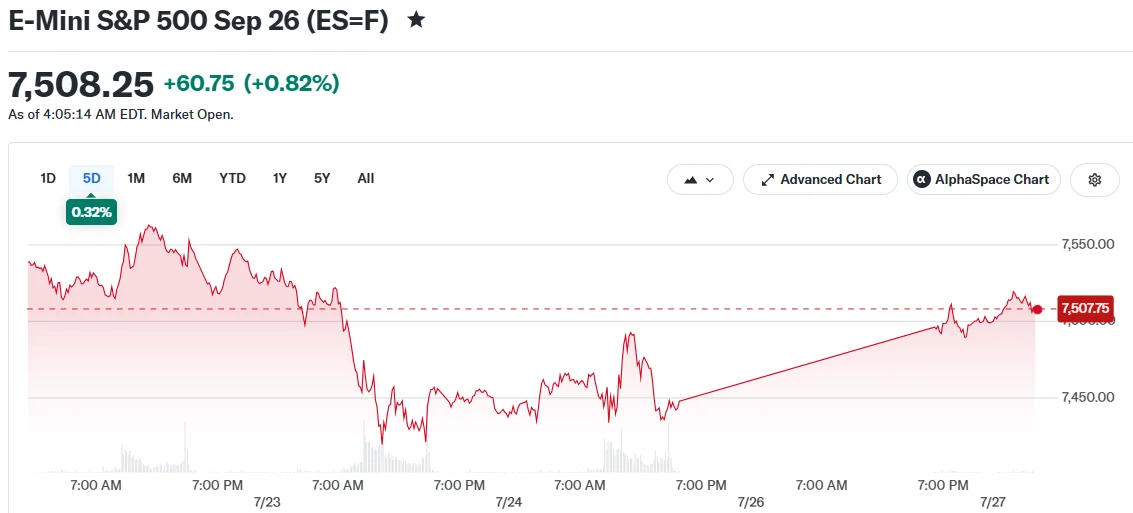
U.S. equity futures rose sharply in early Monday trading as crude oil prices fell and investors prepared for a busy week featuring a Federal Reserve interest rate decision and quarterly earnings from several major technology companies.
Dow Jones Industrial Average futures advanced 1.1%, or about 551 points. S&P 500 futures gained roughly 1%, while Nasdaq 100 futures climbed 1.6%. The gains followed a week of declines across all three major benchmark indexes, as escalating geopolitical tensions in the Middle East pushed oil prices higher and intensified concerns about inflation.
The move in equities came as crude prices pulled back significantly following diplomatic developments involving the United States and Iran. The decline in oil helped ease some inflation-related pressure in financial markets, with Brent crude retreating to about $87 per barrel. Energy prices are closely watched because they can feed into headline inflation, transportation costs and corporate margins, making oil swings a key input for both bond and equity investors.
Oil Prices Drop as Geopolitical Risk Premium Eases
Market conditions shifted over the weekend after President Donald Trump halted U.S. military strikes against Iran, creating room for renewed diplomatic engagement. According to reporting by The Wall Street Journal, which cited U.S. officials familiar with the matter, the decision represented a notable de-escalation.
BREAKING: Iran directly rejects Trump‘s claims of ongoing negotiations, with Iran's Foreign Ministry declaring it is "not engaged in any negotiations with the United States" and says Iran has not requested to restart talks because "it's not in our DNA," instead the US has… — The Hormuz Letter (@HormuzLetter) July 27, 2026
https://x.com/HormuzLetter/status/2081708280053662055?ref_src=twsrc%5Etfw
Brent crude futures fell approximately 5% to $87.13 per barrel, while West Texas Intermediate declined 5.5% to $84.37. The source also cited a more than 7% drop in crude oil following the diplomatic developments.
The selloff in energy markets was accompanied by a move lower in government bond yields. The benchmark 10-year U.S. Treasury yield fell 4 basis points to 4.64%. Treasury yields often move with expectations for inflation and Federal Reserve policy, so the simultaneous decline in oil and yields underscored how quickly geopolitical risk can filter across asset classes.
Kathleen Brooks, research director at XTB, said the cessation of hostilities had “dramatically reduced the geopolitical risk premium” reflected in asset prices.
Federal Reserve Decision Due Wednesday
The Federal Reserve’s monetary policy committee is scheduled to announce its interest rate decision on Wednesday. Market pricing through the CME FedWatch tool showed a 66% probability that rates would remain unchanged and a 34% probability of a rate increase. Those probabilities are derived from interest rate futures and can shift as incoming data and market conditions change.
Lower oil prices could give the Federal Reserve more flexibility as policymakers continue to monitor inflation data before deciding on any policy adjustment. Wall Street analysts described the upcoming decision as one of the most opaque Federal Reserve outcomes in recent memory, leaving market participants facing significant uncertainty.
Major Technology Earnings Set for Release
The Federal Reserve meeting coincides with a heavy corporate earnings calendar, led by several of the largest technology companies. Microsoft, Meta Platforms, Apple and Amazon are all scheduled to report quarterly results this week.
Analysts are expected to focus on capital expenditure plans and updates on revenue tied to artificial intelligence. The focus on AI-related spending follows recent capital investment announcements from Alphabet and Tesla that contributed to volatility across the technology sector. For the largest technology companies, investor attention has increasingly centered on whether higher infrastructure spending can translate into measurable revenue growth from AI products and cloud services.
Other companies scheduled to report quarterly results this week include Coca-Cola, Starbucks, Procter & Gamble and Arm Holdings. Energy majors ExxonMobil and Chevron are set to close out the week’s earnings releases, while AstraZeneca and Nucor Corporation begin Monday’s reporting calendar.
The combination of Federal Reserve policy deliberations, lower energy prices and concentrated Big Tech earnings makes the week one of the quarter’s most closely watched periods for financial markets.

