US Dollar Weakens Ahead of NFP Report as Fed Rate Hike Expectations Ease
Key Takeaways
- •Traders have scaled back expectations that the Federal Reserve will deliver two rate hikes before the end of the year.
- •Iran and Oman agreed to create a shipping corridor through the Strait of Hormuz, easing disruption concerns and weighing on oil prices.
- •July non-farm payrolls came in below forecasts at 57,000 but remained positive, while June unemployment unexpectedly declined.
- •EUR/USD has stabilized around $1.155 as expectations for Fed and ECB policy paths have become more aligned.
- •USD/JPY has held near ¥157.50 after coordinated intervention by the United States and Japan, with Japan spending more than ¥5 trillion on yen support.
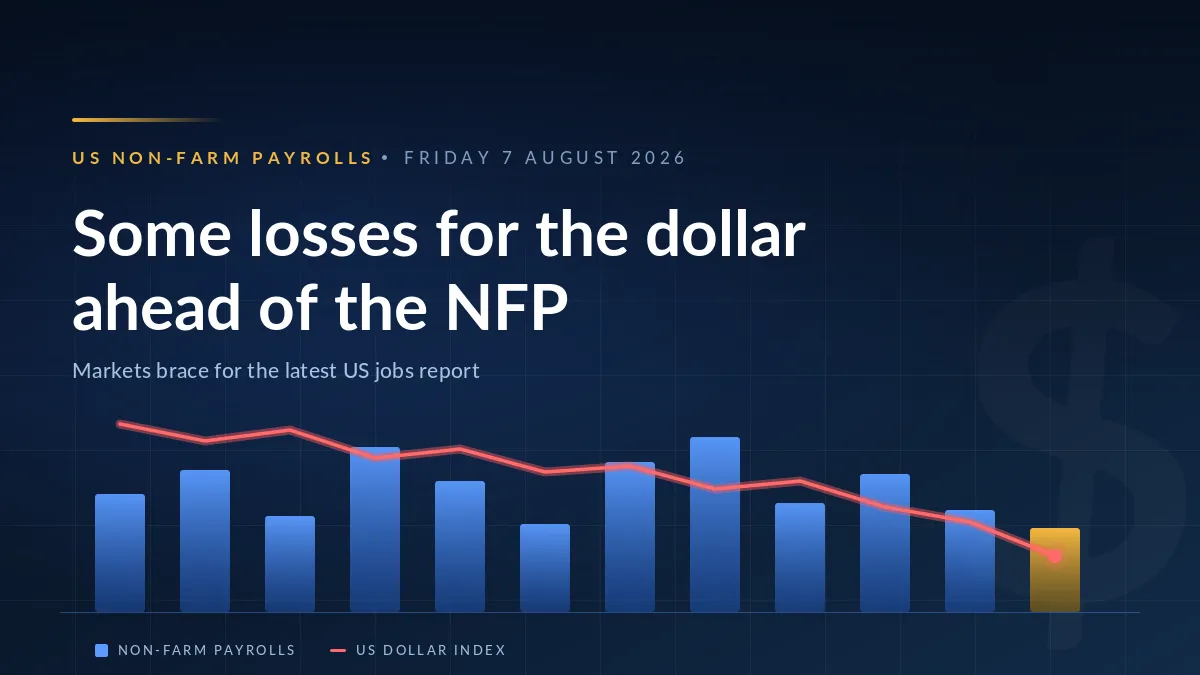
Dollar Declines Amid Gulf Deescalation and Shifting Fed Expectations
The US dollar has weakened against most major currencies in recent days, with the notable exception of the Japanese yen, as traders scaled back expectations that the Federal Reserve will deliver two rate hikes before year-end. Higher interest rates typically support a currency by attracting capital inflows, so the dialling-back of hawkish bets has naturally reduced the dollar's appeal. Market attention now turns to the upcoming Non-Farm Payrolls (NFP) report scheduled for release on 7 August, one of the most closely watched monthly US economic indicators and a recurring input for Fed policy decisions.
On 6 August, news broke that Iran and Oman had agreed to establish a shipping corridor through the Strait of Hormuz. The strait is a critical artery for global crude shipments, so any reduction in perceived disruption risk tends to ripple across commodity-linked and risk-sensitive assets. The development weighed on oil prices and bolstered risk appetite across financial markets. Traders are also anticipating a potential lull in hostilities during August, along with the possible resumption of active negotiations between the United States and Iran in the coming weeks.
Inflation in the US and other major economies has risen less than some market participants feared around the end of the first quarter. June's annual headline inflation came in significantly below expectations. According to CME FedWatch, approximately 45% of traders at the time of writing expect a single hike between now and the end of 2026. The probability of a hike occurring next month declined over the past week to roughly 55%.
Labour Market Picture Remains Complex
July's NFP, reflecting June data, came in significantly weaker than expected but remained in positive territory at 57,000 — roughly half the consensus forecast. While this was somewhat negative for the dollar, it is rare for a single NFP print to exert a lasting effect beyond a few days. The figure was still considerably better than the 12-month average. Unemployment unexpectedly declined in June.
It remains too early to determine whether this marks the beginning of a downward trend in unemployment. Given the relatively low rate and broadly less positive economic conditions, a significantly improved job market seems unlikely at this stage. Nevertheless, the combination of recent NFP results and low unemployment reinforces the general impression of a robust labour market for the time being.
Decent but unremarkable GDP and labour market performance, combined with inflation that has not surged dramatically, suggests the Fed faces limited pressure to hike rates immediately. Political pressure on the Fed to cut rates has not been prominently visible recently but remains a background factor.
A significantly stronger NFP for July would typically suggest inflation could exceed current expectations of 3.4% for the annual headline figure. However, energy costs are likely to be a key driver in the 12 August inflation report, potentially pushing the reading higher given oil's overall gains last month. Stronger results from both the NFP and inflation data could increase the probability of two Fed hikes before year-end and provide a boost to the dollar.
Euro-Dollar Hovers Around $1.155 Ahead of NFP
EUR/USD has rebounded since late last month as the most hawkish Fed scenarios for year-end appear to have been ruled out for now and Gulf conflict intensity has diminished. The European Central Bank is also likely to signal a single hike by year-end, with approximately a 40% probability of two hikes. The relative convergence between Fed and ECB policy paths helps explain why the pair has found a range rather than trending sharply in either direction. Recent eurozone data has been mixed overall, though sentiment received a lift from German factory orders on 6 August, which came in well above expectations.
The 100-period simple moving average (SMA) slightly below $1.157 appears to be the primary dynamic resistance, ahead of a possible test of the 23.6% weekly Fibonacci retracement near $1.16. However, the slow stochastic oscillator is clearly signalling buying saturation, meaning any immediate upside reaction to a weak NFP could prove short-lived.
A stronger NFP broadly in line with expectations could push the price down to retest $1.15 in the short term. Looking further ahead, robust results from both the NFP and US inflation on 12 August could drive the pair toward the confluence of the 20 and 50 SMAs around $1.145. The golden cross formation at that level can likely be discounted given the magnitude of upcoming US economic data.
Dollar-Yen Holding Above ¥157
Following what represents the largest coordinated intervention in decades by both the American and Japanese governments, USD/JPY appears to have stabilised around ¥157.50. According to official data, Japan spent more than ¥5 trillion on 31 July supporting the yen, supplementing US operations conducted earlier in the week. Below-target inflation and sluggish GDP growth in Japan in recent months raise questions about further rate hikes by the Bank of Japan in the coming months. At the same time, diminished expectations for two Fed hikes before year-end could delay the next push toward ¥160.
The absence of major shifts in underlying fundamentals, combined with a spike in buying around last week's interventions, suggests the general uptrend may continue, albeit with less momentum than earlier this summer. The ¥160 level remains an evident potential target, though both the 200 and 100 SMAs serve as likely dynamic resistance levels before that point. Strong oversold signals from both the slow stochastic and Bollinger Bands indicate an ongoing bounce.
The large tail observed on 3 August demonstrated a clear rejection of a move below ¥157. Another serious attempt to breach that level would likely require a weaker NFP and potentially lower inflation figures next week as well. However, the possibility of further intervention — however unlikely it may seem at present — could invalidate this analysis, and traders should remain vigilant for additional operations.
Follow Michael on X: @MStarkExness.
The opinions expressed in this article are personal to the writer and do not represent those of Exness. This is not a recommendation to trade.
