The Sea Acquires Its Gates: How Converging Pressures Are Reshaping Global Shipping
Key Takeaways
- •Iran and Oman are negotiating arrangements to channel Strait of Hormuz traffic through separately managed routes, potentially politicizing transit through the world's most critical energy chokepoint.
- •Houthi attacks have made the Bab el-Mandeb strait commercially unusable for many carriers, forcing diversions around the Cape of Good Hope since late 2023 with cascading effects on supply chains and commodity markets.
- •Sweden's Supreme Court cleared the transfer of the cargo vessel Caffa to Ukraine, establishing a legal precedent that extends the reach of wartime sanctions to vessels trading in commodities from Russian-occupied territory.
- •The Panama Canal Authority issued its fifth and sixth draft restrictions of the year due to El Niño, forcing operators to reduce cargo loads and compounding cost pressures on shippers.
- •A Spanish government study found that EU carbon pricing has reduced direct container connectivity at European ports, with declines of 5% at northern EU ports and 18% in the eastern Mediterranean between January 2023 and March 2026.
For centuries, the commercial case for maritime trade has rested on a straightforward premise: once beyond territorial waters, vessels could transit with relatively few physical impediments. The world's oceans functioned as the great open infrastructure of globalisation, carrying roughly 90% of all traded goods.
That assumption is now eroding, as this week's coverage by Splash makes clear.
Strait of Hormuz: Navigation as a Managed Proposition
The most striking illustration is the Strait of Hormuz. Around a fifth of the world's daily oil consumption passes through this narrow passage at the mouth of the Gulf, making it the single most important energy chokepoint on the planet. Iran and Oman are currently discussing arrangements that would channel inbound and outbound traffic through separately managed routes, following months of disruption and attacks in the Gulf region. While specifics remain contested, the underlying principle is significant: transit through one of the world's most critical energy corridors is being framed not merely as a navigational right, but as something that can be organised, supervised, and potentially leveraged for political ends.
"Once such a precedent is established, it becomes increasingly difficult to resist similar measures elsewhere," eight of shipping's largest trade groups warned this week in an open letter to the United Nations.
Red Sea: Legally Open, Commercially Unusable
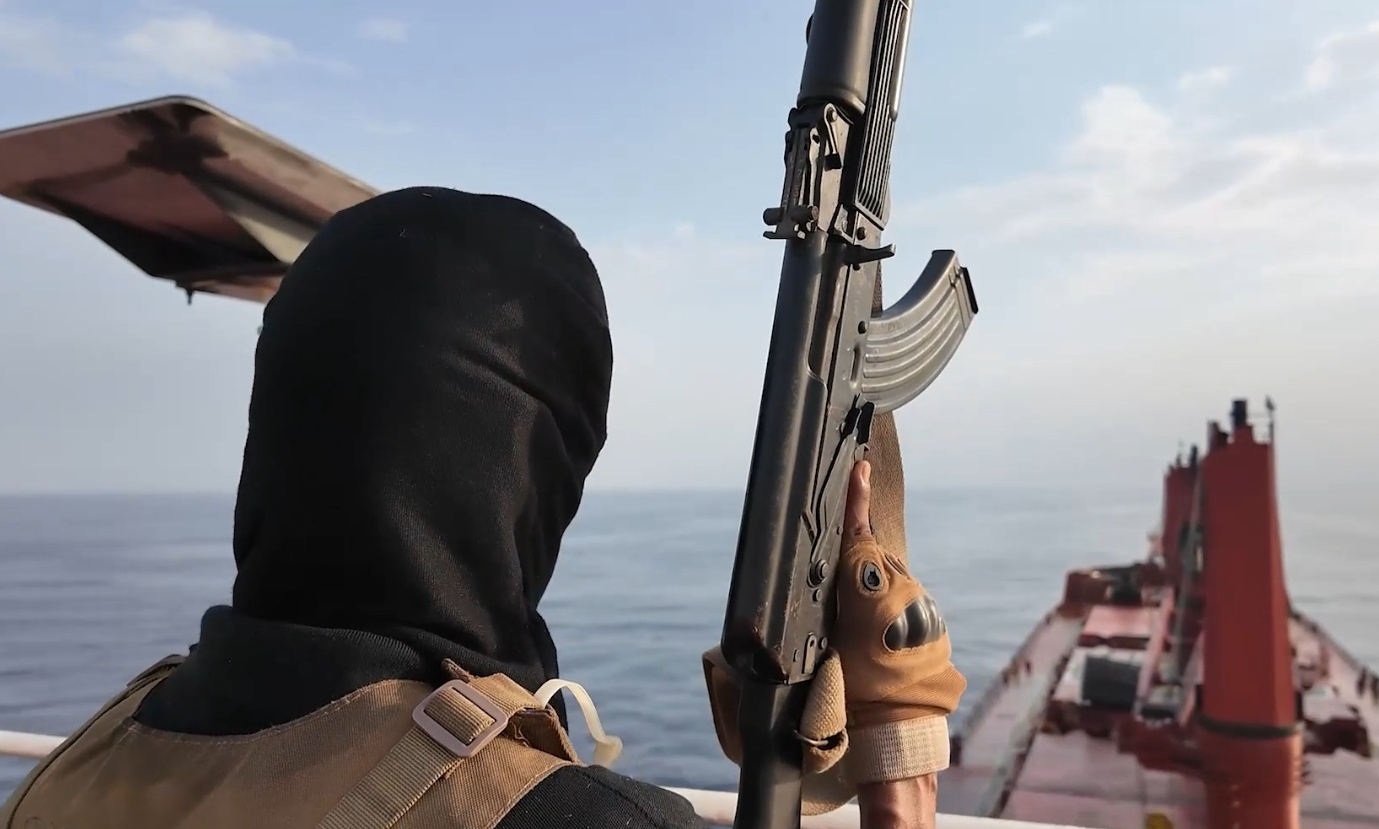
The Red Sea presents a starker manifestation of the same trend. The Bab el-Mandeb strait and the Suez Canal together form a corridor that normally carries roughly 12% of global trade, linking Asian manufacturing centres to European consumers. Renewed Houthi attacks in recent weeks have again demonstrated that a waterway can remain legally accessible while becoming commercially impractical. The decision to transit the Bab el-Mandeb strait is no longer driven primarily by distance and bunker fuel consumption. Instead, it is shaped by vessel nationality, ownership links, war-risk insurance premiums, naval protection availability, intelligence assessments, and the shifting targeting criteria of an armed non-state actor. Since major carriers began diverting around the Cape of Good Hope in late 2023, the added voyage time and fuel costs have reverberated through container supply chains and commodity markets alike.
Black Sea: A Growing Legal and Physical Battleground
Ships face seizure risks from ever greater distances. Sweden's Supreme Court cleared the way this week for the cargo vessel Caffa to be transferred to Ukraine, establishing a potentially significant legal precedent for vessels accused of trading in stolen commodities sourced from Russian-occupied territory. The ruling could embolden Kyiv to pursue additional vessels when they call at countries willing to enforce Ukrainian court orders, extending the legal reach of wartime sanctions well beyond the conflict zone itself.
Meanwhile, the escalation of maritime attacks between Kyiv and Moscow over the past six weeks has made the Black Sea the world's most dangerous operating environment for commercial shipping, with more than 30 seafarers killed in the past month alone. The disruption strikes at a basin through which Ukraine and Russia collectively export tens of millions of tonnes of grain, coal, and iron ore annually — cargo flows that are central to global food security and industrial supply chains.
Climate: When Water Itself Becomes Scarce
Climate introduces an entirely different category of gatekeeper. The Panama Canal handles roughly 5% of global maritime trade and connects more than 1,700 ports across nearly 170 countries. It has demonstrated how a shifting hydrological environment can turn water into a scarce operational resource, placing mounting pressure on critical chokepoints. This week, the canal's authority issued its fifth and sixth draft restrictions of the year as concerns over the ongoing El Niño weather phenomenon continue to intensify. Each draft restriction forces operators to load less cargo per vessel or risk grounding, compounding the cost pressures already layered on shippers.
Regulation: Carbon Costs Reshape Trade Routes
Regulatory frameworks add yet another layer of control. In Europe, carbon already carries a direct price for shipping through the EU Emissions Trading System, which extended to maritime CO₂ emissions from January 2024, while FuelEU Maritime dictates the fuels and energy sources permissible on voyages touching European ports.
As Splash Ports reported this week, EU carbon pricing is prompting container lines to restructure their networks around non-EU hubs, reducing direct connectivity at European ports and producing what a Spanish government study terms a structural shift in maritime traffic patterns. Research by Spain's Puertos del Estado found that direct container connectivity declined 5% at northern European Union ports and 18% in the eastern Mediterranean between January 2023 and March 2026, with carriers increasingly redirecting calls and transhipment operations to ports in the UK, Egypt, and Morocco.
At the global level, the International Maritime Organization (IMO) continues to negotiate its Net-Zero Framework, centred on a fuel standard and a greenhouse gas pricing mechanism. The organisation's member states agreed in July 2023 to a revised strategy targeting net-zero emissions from international shipping around or by 2050. If the framework is ultimately adopted, the environmental profile of a voyage will increasingly shape its economics as decisively as canal tolls or bunker fuel costs.
The Convergence Problem
None of these forces is entirely novel in isolation. Chokepoints have always carried political risk, canals have always levied tolls, and coastal states have always exercised regulatory authority over their waters. What is unprecedented is their simultaneous convergence. A single voyage can now be exposed to geopolitical risk, climate constraints, carbon costs, and security mandates all at once.
This convergence also makes it extraordinarily difficult for even the most advanced machine-learning models to produce accurate freight-rate predictions, as an in-depth investigation by sister title SplashTech demonstrated this week.
Freedom of navigation is not disappearing as a legal principle, at least not yet. What is changing is the commercial reality that surrounds it. The sea is acquiring a growing number of invisible gates — some controlled by states and armed groups, others imposed by drought, emissions regulations, security zones, sanctions regimes, insurance requirements, digital booking systems, and environmental restrictions. Each one adds another condition to what was once the straightforward act of sailing from port to port. For an industry that operates on thin margins and long lead times, the cumulative effect is a structural rise in the cost and complexity of moving goods by sea — with consequences that ultimately flow through to manufacturers, retailers, and consumers worldwide.
Industry Insights This Week
In this week's Maritime CEO interview, Splash spoke with Callum Beaumont, who has just released The Modern Shipbroker: How to Build a Successful Career in a Changing Industry. Splash Ports also sat down with Dr Noel Hacegaba, head of the Port of Long Beach, one of America's largest cargo gateways.
The standout Contribution of the week came from Steven Jones, founder of the Seafarers Happiness Index. His article, headlined "Futility is the enemy of everything at sea", warned that seafarers are losing faith in an industry that continually imposes additional training, technology, and compliance demands while leaving their physical safety largely to chance.
Finally, the weekly Splash Wrap podcast revisited a familiar question: how will shipping go about predicting its fortunes in the years ahead? Machine-learning models are demonstrating growing potential to improve freight-rate forecasting, with new research indicating that combined approaches can outperform standalone systems in shipping's notoriously volatile markets. Yet the deeper question remains whether such models can genuinely replace human judgement — and what happens if the entire industry comes to rely on the same forecasting tools.
"Will the most profitable shipping strategy of the 2030s be to let the AI make a perfect prediction and then intentionally bet entirely against it? It just might be the only way to beat the card counter at their own game," this week's Splash Wrap podcast posited.

