US Charts Multi-Pronged Plan to Promote Dollar-Backed Stablecoins Globally
Key Takeaways
- •The GENIUS Act, signed into law on July 18, 2025, created the first comprehensive federal regulatory framework for payment stablecoins and requires issuers to maintain at least 1:1 backing with high-quality liquid assets.
- •More than 98% of the global stablecoin supply is pegged to the US dollar, a dominance Washington aims to make permanent and use as a channel for foreign capital into US Treasuries.
- •Federal Reserve Governor Christopher Waller argued on May 31, 2026, that dollar-denominated stablecoins extend US monetary policy conditions internationally in a manner analogous to fixed exchange rate regimes.
- •A consortium of 21 global banking institutions announced in September 2026 that it plans to launch a new dollar stablecoin in the first half of 2027 as the Treasury Department finalizes implementing rules.
- •Stablecoin issuers already hold tens of billions of dollars in US Treasuries, and the 1:1 reserve mandate is expected to add structural demand for US government debt, though the framework has yet to be tested under market stress.
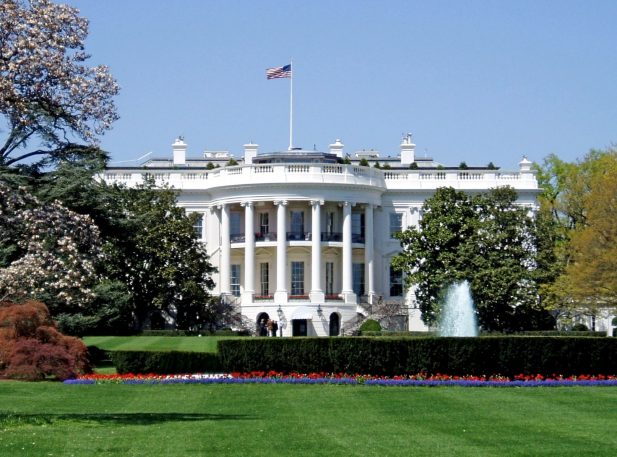
The US government is assembling a multi-pronged strategy to push dollar-backed stablecoins into global markets, treating the technology less as a crypto curiosity and more as an instrument of economic statecraft. Executive orders, federal legislation, and central bank rhetoric are converging on a single thesis: if the world's money is going digital, Washington intends to keep it denominated in dollars.
Stablecoins are digital tokens designed to hold a stable value against a reference asset, most commonly the US dollar, and they settle around the clock on public blockchains. The dollar's lead in this market is already overwhelming — more than 98% of the global stablecoin supply is pegged to the greenback. The remaining objective, from Washington's vantage point, is to make that dominance permanent and to use it as a channel for funneling foreign capital into US Treasuries.
The regulatory scaffolding takes shape
The groundwork was laid on January 23, 2025, when President Trump signed the "Strengthening American Leadership in Financial Technology" executive order explicitly calling for the promotion of lawful dollar-backed stablecoins. The directive framed stablecoins not as a peripheral fintech product but as infrastructure critical to maintaining US dollar sovereignty in a rapidly digitizing global economy.
The order gained its legislative counterpart in the GENIUS Act (Guiding and Establishing National Innovation for U.S. Stablecoins), signed into law on July 18, 2025. The statute created the first comprehensive federal regulatory structure for payment stablecoins, requiring issuers to maintain at least 1:1 backing with high-quality liquid assets. In regulatory parlance, high-quality liquid assets are instruments such as cash and short-term government securities that can be converted quickly with minimal loss of value.
The 1:1 mandate carries a built-in fiscal effect: Treasury bills are the most obvious way for issuers to satisfy the liquid-asset requirement, so the rule simultaneously creates structural demand for US government debt. Stablecoin issuers already hold tens of billions of dollars in US Treasuries.
The Fed's strategic framing
Federal Reserve Governor Christopher Waller delivered what may be the clearest articulation of the strategy on May 31, 2026. In his remarks, Waller argued that dollar-denominated stablecoins effectively extend US monetary policy conditions internationally, functioning in a manner analogous to fixed exchange rate regimes. The comparison is instructive: countries that peg their currencies to the dollar effectively import the Federal Reserve's policy conditions, and stablecoins extend that same logic to individual wallets holding digital dollars.
Institutional players move in
In September 2026, a consortium of 21 global banking institutions announced plans to launch a new dollar stablecoin in the first half of 2027. Involvement of traditional banks at that scale would have been unthinkable just a few years ago, when major financial institutions treated stablecoins as a reputational risk. The shift in posture tracks the new legal landscape: with the GENIUS Act in place, regulated institutions have, for the first time, a federal framework under which to issue payment stablecoins.
The Treasury Department is currently in the rulemaking phase to implement the GENIUS Act's provisions, with the full regulatory framework expected to take shape through 2027 and into 2028 — a timeline that, coincidentally or not, aligns with the banking consortium's planned launch. For the consortium and any prospective issuer, the final calibration of reserve and redemption rules will define the operating conditions at launch.
What it means for the market
In emerging markets, dollar stablecoins already serve as informal savings vehicles and payment rails, with adoption accelerating in regions where local currencies are volatile and banking infrastructure is thin. The dynamic amounts to digital dollarization: dollars accumulate in local economies through phone wallets rather than local bank branches, a channel for dollar access that operates outside the traditional correspondent banking system.
For the US government itself, the math is straightforward: every dollar held in stablecoin reserves represents a dollar of demand for Treasuries at a time when the government's borrowing needs show no signs of shrinking.
The risk is concentration. A financial system in which a significant share of global payments runs on dollar stablecoins backed by Treasuries creates new vectors for contagion — a run on a major stablecoin issuer could force rapid liquidation of Treasury holdings. Run dynamics around stablecoins are not hypothetical: in March 2023, Circle's USDC, the second-largest dollar stablecoin, briefly lost its dollar peg after the collapse of Silicon Valley Bank, where part of its reserves were held, and recovered only after federal regulators moved to guarantee the failed bank's depositors. The GENIUS Act's reserve requirements are designed to mitigate this, but the framework has yet to be tested under genuine market stress. How the framework performs the first time markets put it under that kind of pressure is the sector's clearest open question.

