US and Canada Race to Close Auto Tariff Gaps Ahead of August 19 Deadline
Key Takeaways
- •The US proposal would cut the tariff on Canadian-made vehicles and parts from 25% to 15%, with vehicles containing higher levels of US content eligible for an effective rate as low as 7.5%.
- •Canadian officials view the offer as insufficient, warning that rewarding US-sourced content could gradually erode Canada's auto manufacturing base, which is concentrated in Ontario.
- •New 50% tariffs on a range of Canadian goods, including automobiles, are scheduled to take effect on August 19, 2026, unless the two countries reach a broader trade agreement.
- •The negotiations extend beyond autos to include dairy supply management, alcohol sales restrictions, and steel and aluminum tariffs.
- •Canada currently maintains reciprocal 25% tariffs on certain US products, and the USMCA joint review scheduled for 2026 adds further complexity to the talks.
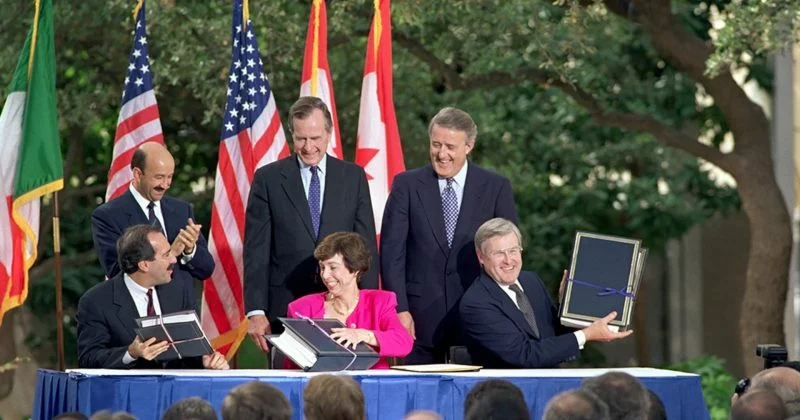
Washington and Ottawa are locked in tense negotiations over auto tariffs, with the United States offering to cut its 25% levy on Canadian-made vehicles and parts to 15%. The concession looks like movement on paper, but Canadian officials have described the proposal as underwhelming, pointing to the razor-thin margins that already define the auto industry.
The stakes extend well beyond cars. Unless the two countries reach a broader trade agreement, new 50% tariffs on a range of Canadian goods — automobiles included — are scheduled to take effect on August 19, 2026.
Those stakes are magnified by how North American auto production is built: it operates as one integrated system rather than two parallel national industries, with components routinely crossing the US-Canada border several times before a finished vehicle rolls off the line. A tariff that looks manageable at each step can compound across the chain. Canada's assembly capacity is concentrated in Ontario, anchored by plants in Windsor, Oshawa, Cambridge, Alliston and Oakville that depend on cross-border parts flow in both directions.
Inside the US proposal
The American offer carries a wrinkle that could appeal to some manufacturers: vehicles with higher levels of US content would qualify for an effective tariff rate as low as 7.5%, effectively rewarding carmakers that source more of their components from American suppliers.
The content-based tiers echo mechanics that already exist under USMCA, which requires 75% North American content for vehicles to enter duty-free and mandates that 40–45% of vehicle content be made by workers earning at least US$16 an hour. The difference is geography: USMCA credits North American content broadly, while the proposed structure would credit US content specifically — the asymmetry at the center of Ottawa's hesitation.
That structure creates an incentive for manufacturers to shift production inputs south of the border — precisely why Canadian negotiators are not thrilled. A tariff regime that rewards US content integration could gradually hollow out Canadian auto manufacturing, even if the headline rate looks better.
Canada, for its part, currently maintains its own reciprocal 25% tariffs on certain US products. The retaliatory measures give Ottawa some leverage at the negotiating table, but they also raise costs for Canadian consumers and businesses importing American goods.
A wider set of disputes
Auto tariffs may be the headline issue, but they are tangled up in a much broader set of disagreements. The negotiations also cover dairy supply management, a perennial sore point for US producers who want greater access to Canada's protected market. Alcohol sales restrictions, another longstanding irritant, are likewise in the mix.
Steel and aluminum tariffs, which predate the current round of disputes and carry their own complicated political dynamics in both countries, are also part of the picture.
All of this is unfolding against the backdrop of the US-Mexico-Canada Agreement (USMCA), the trade pact that replaced NAFTA in 2020 and is itself scheduled for a joint review by the three member governments in 2026 — the same year as the tariff deadline. Canadian auto sector representatives have warned that making concessions now could complicate future renegotiations under USMCA, effectively locking in unfavorable terms that would be difficult to unwind later.
Market and supply chain implications
Agricultural commodities deserve attention as well. Dairy is a politically charged issue in Canada, where supply management protects domestic farmers through production quotas and import controls. Any concession on dairy access could move prices in that sector while creating political headwinds for Canadian officials at home.
The current standstill in negotiations suggests neither side is ready to blink. Canada views the US offer as insufficient protection for its manufacturing base, while the US appears to be using the threat of the August 2026 deadline as leverage. For readers tracking how this resolves, the concrete markers to watch are the August 19, 2026 tariff trigger, the USMCA joint review scheduled for the same year, and any adjustment to Ottawa's retaliatory tariff list — each an indicator of whether the talks are converging toward a package deal or settling into a longer standoff.

