UPS Announces $2 Billion Global Investment Aimed at Healthcare and International Growth
Key Takeaways
- •UPS announced a $2 billion investment on Aug. 24, with spending beginning in 2024 and continuing through 2028, focused on supply chain, healthcare, and international operations.
- •Planned projects include airport hubs in the Philippines and Hong Kong plus a facility in Canada, intended to increase capacity and speed deliveries globally.
- •UPS has built healthcare-specific capabilities such as cold-chain handling, a segment with higher margins and steadier demand than standard parcel delivery, and rivals FedEx and DHL are also expanding in this area.
- •The company's return on equity stands at 37.5%, its profit margin is just above 6%, and the stock trades at less than 15 times forward earnings.
- •Analyst price targets for UPS range from $76 to $135 per share, and the author says the stock is near the top of his watch list.
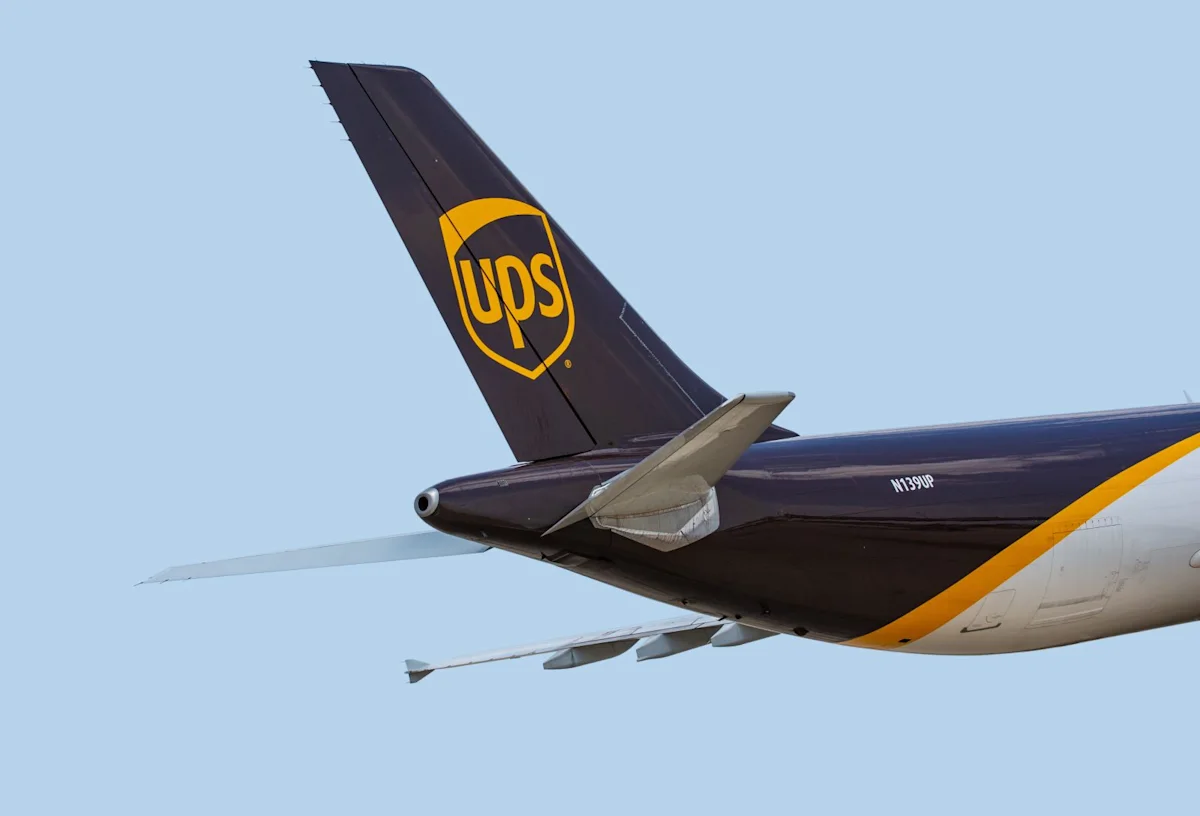
United Parcel Service (UPS) has drawn renewed investor attention after announcing a $2 billion investment targeting its supply chain, healthcare, and international businesses — areas of the market that have attracted investors seeking more defensive exposure amid a bifurcated investing landscape. While much of the market remains focused on the semiconductor and artificial intelligence (AI) trade, others are looking more closely at companies with defensive positioning in supply chain and healthcare, and UPS is one name that has recently caught a bid.
Details of the $2 Billion Investment
UPS announced the investment on Aug. 24, reporting that the spending "began in 2024 and will continue through 2028." The initiative is aimed at improving the company's footprint around the world with a focus on the healthcare space. Projects include an airport hub in the Philippines, a facility in Canada, and a Hong Kong airport hub — all intended to bolster the company's overall capacity and delivery times globally.
The healthcare logistics focus is a deliberate strategic priority for UPS. The company has built out dedicated capabilities such as cold-chain handling for temperature-sensitive pharmaceuticals and medical devices — a segment of the logistics industry generally associated with higher margins and steadier demand than standard parcel delivery. Rivals including FedEx and DHL have likewise expanded their healthcare logistics offerings, making the Asia-Pacific facility buildouts part of a broader industry push into the region and the medical supply chain.
Given the industry shift toward same-day delivery, these moves are positioned to enhance the company's reach, scale, and ability to grow market share. As one of the dominant players in the global freight market, UPS is expected by the author to see a strong return on investment over the long term.
Fundamentals and Valuation
The company's fundamentals support this view. With a return on equity (ROE) of 37.5%, UPS has demonstrated an ability to return shareholder capital in a meaningful way over the long run. The company's profit margin is relatively low at just above 6%, though the author notes that figure is not bad for the delivery space.
On valuation, the stock trades at less than 15 times forward earnings, which the author describes as compelling relative to the balance sheet strength and free cash flow yield UPS offers. The article characterizes UPS as a blue chip stock that could continue to rally, particularly if more investors seek out more defensive portfolio exposure in the current environment.
UPS's strategic investments in its expanding reach and core capabilities could prove beneficial, especially if other players in the market choose not to make similar investments. Capital expenditures have become a focal point for investors, with many in the market believing that keeping more cash on hand is better than spending aggressively right now. The article notes, however, that with a strong interest coverage ratio and a reasonable debt load given its capital-heavy business model, UPS stock looks compelling.
Wall Street's View
UPS is one of the more divisive names on Wall Street. With a Street-high price target of $135 per share and a low target of $76, analysts are clearly split on where the stock is headed. The author suggests the stock could trend toward the upper bound Wall Street has set — or potentially higher — if operating leverage improves and UPS is able to effectively make the case to investors that the capital being spent is paying off. For readers tracking the story, the milestones to watch going forward include progress updates on the 2024–2028 investment program and evidence that the healthcare and international segments are contributing to margins and market share.
The author states that UPS stock is near the top of his watch list right now.
On the date of publication, Chris MacDonald did not have (either directly or indirectly) positions in any of the securities mentioned in this article. All information and data in this article is solely for informational purposes. This article was originally published on Barchart.com and syndicated via Yahoo Finance.

