UEFA and 55 Member Nations Move to Boycott All FIFA Tournaments Over $20 Billion Private Equity Plan
Key Takeaways
- •UEFA and its 55 member nations are preparing to boycott all FIFA tournaments, including the World Cup, in response to FIFA's plan to sell commercial rights to private investors.
- •FIFA's proposed FIFA Forward Enterprise would target a $20 billion valuation and raise up to $4.2 billion by allowing private equity firms to purchase stakes in World Cup and Club World Cup commercial rights.
- •FIFA has offered to increase annual funding to each of its 211 member associations from $8 million to $20 million, a move viewed as strategically targeting votes from smaller nations under its one-country, one-vote system.
- •JP Morgan and Thrive Capital are reportedly interested in the deal, with JP Morgan's previous involvement in the failed 2021 European Super League drawing particular scrutiny.
- •UEFA's primary leverage stems from European clubs and national teams being the main attraction for global audiences and sponsors, meaning a World Cup without them would suffer dramatically reduced commercial value.
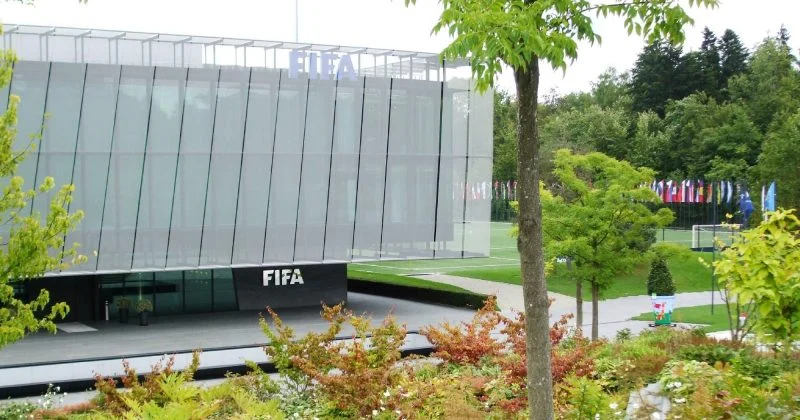
UEFA and its 55 member nations are preparing to boycott all FIFA tournaments, including the World Cup, in response to FIFA's plan to sell commercial rights to private investors at a targeted $20 billion valuation.
The proposed deal would establish a new entity called the FIFA Forward Enterprise (FFE), a vehicle designed to raise up to $4.2 billion in its initial phase by allowing private equity firms to purchase stakes in the commercial rights of the men's World Cup, the women's World Cup, and the Club World Cup. The proposal arrives as FIFA prepares to launch an expanded 32-team Club World Cup in 2025, a competition that has already generated friction with European leagues over fixture congestion and player workload.
FIFA's Financial Pitch
FIFA's proposal to its 211 member associations centers on a significant increase in financial support. Annual funding distributions would rise from $8 million to $20 million per member, with the possibility of further increases in subsequent funding cycles.
UEFA, however, has firmly rejected the plan. The European governing body described the proposal as crossing an impassable line for football's governing structures and has convened an emergency virtual meeting of all 55 member nations to coordinate a unified response.
UK Prime Minister Andy Burnham publicly criticized the initiative, stating: "Football does not belong to investors."
This is not the first time FIFA President Gianni Infantino has pursued private investment in the sport. In 2018, he attempted a similar arrangement for an expanded Club World Cup, but that effort collapsed under European opposition.
Major Financial Players Involved
The $20 billion valuation FIFA is targeting for FFE would rank it among the largest sports commercialization vehicles ever created. Entities reportedly eyeing the deal include JP Morgan and Thrive Capital, the venture firm led by Josh Kushner. JP Morgan's participation would mark a return to European football investment after its role in financing the 2021 European Super League, a breakaway project that unraveled within 48 hours following widespread fan protests, political pressure, and unified opposition from UEFA and domestic federations. Thrive Capital, best known for early-stage technology investments, would be entering an entirely different asset class.
Governance Dynamics
FIFA's governance structure operates on a one-country, one-vote system, giving small island nations the same voting power as football powerhouses like Germany or Brazil. The proposed funding increase from $8 million to $20 million per member appears strategically designed to secure votes from those smaller associations.
UEFA's leverage, by contrast, lies not in vote count but in football's core product. European clubs and national teams serve as the primary attraction for global audiences and sponsors. A World Cup without France, Germany, Spain, England, and Italy would carry dramatically diminished broadcast value and sponsorship appeal. The confrontation also reflects a broader wave of private capital flowing into global sports, with investment firms and sovereign wealth funds acquiring stakes in clubs and leagues across football, basketball, and other major sports. In 2023, the NBA became the first major North American league to permit private equity funds to hold passive minority equity in its franchises, a model FIFA's proposal would extend to the sport's most-watched tournament property.

