Philippines' Trade Deficit Widens to $4.94 Billion in June as AI Boom Drives Double-Digit Export and Import Growth
Key Takeaways
- •The Philippines' merchandise trade deficit reached $4.94 billion in June, according to data released by the Philippine Statistics Authority.
- •Both exports and imports experienced double-digit growth, driven by rising global demand tied to the artificial intelligence boom.
- •Electronics and semiconductors account for the majority of the country's merchandise exports, linking its trade performance closely to global technology cycles.
- •The Philippines functions as a key Southeast Asian hub for semiconductor assembly, testing, and packaging within global supply chains.
- •AI-related procurement by global technology companies simultaneously boosted Philippine electronics exports and the imports of inputs needed for their production.
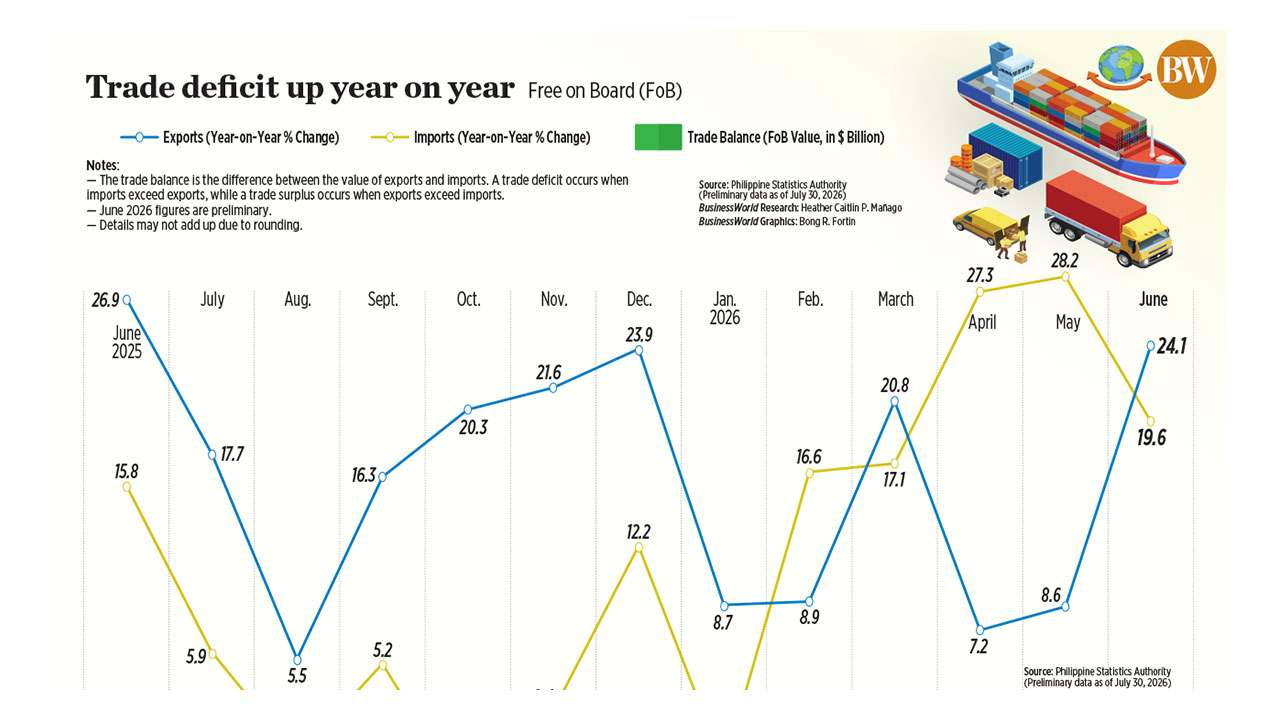
The Philippines' trade deficit in goods reached $4.94 billion in June, driven by double-digit growth in both exports and imports amid the global boom in artificial intelligence (AI), according to data released by the Philippine Statistics Authority (PSA).
The PSA, the country's official statistical authority, regularly compiles and publishes monthly merchandise trade figures based on customs records and administrative data. A trade deficit occurs when the value of a country's imports exceeds the value of its exports over a given period.
The Philippines has historically posted merchandise trade deficits, as the country imports significant volumes of raw materials, intermediate goods, and fuel to support its domestic industries. Electronics and semiconductors have long been the country's top export products, with the nation serving as a key link in global supply chains for components used in consumer electronics, automotive systems, and computing hardware. Much of this trade reflects the Philippines' role as a major Southeast Asian hub for semiconductor assembly, testing, and packaging, where imported components are processed and re-exported, inherently driving large two-way trade volumes.
The surge in AI-related demand has contributed to robust growth in trade flows, as global technology companies increase procurement of semiconductors, electronic components, and data center equipment. This trend has boosted both Philippine exports of electronics-related goods and imports of inputs required for their production. The electronics sector accounts for the majority of the country's merchandise exports, making the trade balance sensitive to cycles in global technology demand.
Full coverage of the June trade data is available at BusinessWorld.

