UAE Crude Exports Recover as Iranian Shipments Nearly Disappear
Key Takeaways
- •The UAE’s crude shipments nearly returned to pre-conflict levels by early September 2026.
- •Iranian exports dropped to roughly 220,000–260,000 barrels per day in August from 1.7–2 million previously.
- •The UAE’s Habshan-Fujairah pipeline and Mandous storage facility enabled exports without relying on the Strait of Hormuz.
- •A US naval blockade imposed in April and reinstated in July reduced Iranian international tanker traffic to near zero.
- •Gulf exports stabilized at approximately two-thirds of pre-war levels, with oil prices near $70 per barrel.
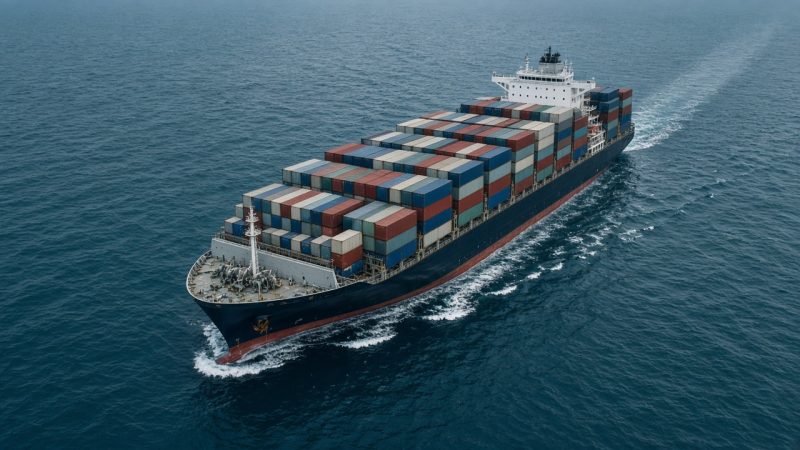
The UAE’s crude oil exports have recovered to nearly pre-war levels, while Iranian shipments have almost disappeared, according to tanker-tracking data from TankerTrackers.com.
By early September 2026, UAE crude shipments had returned to within 0.02% of their pre-war volumes. Iranian crude exports, by contrast, had declined by as much as 100% from pre-conflict levels.
A tale of two exporters
The conflict involving Iran, the US, and Israel erupted in late February 2026, sending shockwaves through global energy markets. The Strait of Hormuz, a narrow waterway through which roughly one-fifth of the world’s oil supply typically passes, became a major chokepoint.
UAE crude exports fell to approximately 1.9 million to 2.13 million barrels per day in March 2026. From June through September, however, UAE shipments ranged between 3.7 million and 4.3 million barrels per day, nearly matching pre-war output.
The UAE’s 380-kilometer Habshan-Fujairah pipeline connects Abu Dhabi’s inland oil fields directly with the port of Fujairah on the Gulf of Oman, entirely outside the Strait of Hormuz. The Mandous underground storage facility, which holds roughly 42 million barrels, provides an additional buffer.
A US naval blockade, first imposed in April 2026 and reinstated in July, effectively sealed off Iranian tanker traffic through the strait. By August, Iran’s crude exports had fallen to between 220,000 and 260,000 barrels per day, down from a pre-war range of 1.7 million to 2 million barrels per day.
Iran has been left relying on minimal floating storage and domestic distribution channels. International tanker traffic from Iranian ports has fallen to near zero.
The contrasting export figures show how alternate transport infrastructure can affect a producer’s ability to maintain overseas shipments during a chokepoint disruption. For the UAE, the pipeline and Fujairah access provided a route that did not depend on tanker passage through the strait; Iran’s principal export terminals did not have an equivalent alternative once the blockade was established.
Impact on global oil markets
Exports from the Gulf region as a whole have stabilized at roughly two-thirds of pre-war levels. Oil prices have settled near $70 per barrel after a peace deal was reached in mid-June 2026, close to their pre-conflict level.
The export recovery gap leaves tanker-tracking data as an important measure of how quickly regional flows continue to normalize. UAE shipments had returned close to their pre-war level by early September, while Iranian traffic remained near zero, making the condition of the Strait of Hormuz and the availability of alternative routes central to the next assessment of Gulf supply.
Infrastructure as geopolitical insurance
Completed in 2012, the Habshan-Fujairah pipeline was originally conceived as a hedge against this type of disruption. Iran’s major export terminals at Kharg Island and Bandar Abbas both require vessels to pass through or near the Strait of Hormuz. As a result, Iran had no alternative route for moving crude to international markets once the US Navy established its blockade.

