Twiga Foods places GT Flow unit into statutory administration amid debt pressure
Key Takeaways
- •GT Flow Limited, a unit of Twiga Foods, entered statutory administration on August 17, 2026, under Kenya's Insolvency Act, with an administrator taking control of its assets and operations.
- •Creditors and suppliers have 30 days to submit claims, and the move does not mean Twiga Foods as a whole has stopped operating.
- •Since its 2014 founding, Twiga has raised more than $160 million from investors including Goldman Sachs, the IFC, Creadev, and TLcom, with the funds spent on warehouses, distribution infrastructure, new markets, farmer support, and operating costs.
- •Facing narrow margins, significant fixed costs such as its Tatu City fulfilment centre, delayed supplier payments, and reduced venture capital availability, Twiga cut costs, laid off employees, acquired distributors including Jumra, Sojpar, and Raisons, and outsourced more of its logistics.
- •In a separate action, creditors have petitioned Kenya's High Court to liquidate Twiga Tatu SEZ Limited over unpaid debts tied to the company's Tatu City operations.
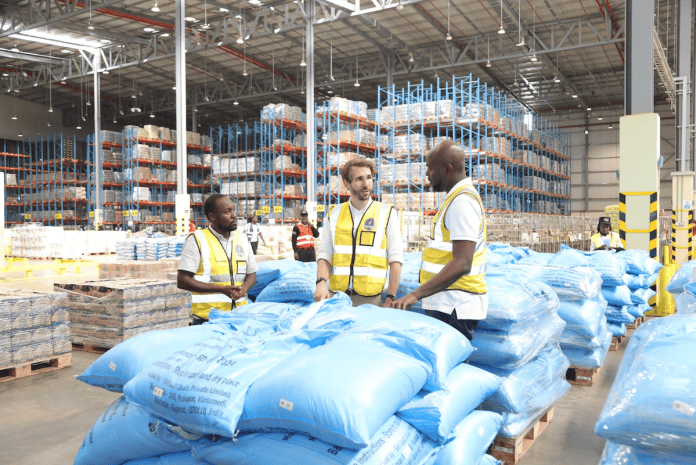
Twiga Foods, one of Africa’s leading agritech startups, has placed part of its business, GT Flow Limited, into statutory administration amid continuing financial difficulties and creditor claims. The process took effect on August 17, 2026, after Twiga’s board initiated it under Kenya’s Insolvency Act.
An administrator has taken control of GT Flow’s assets and operations. Creditors and suppliers have 30 days to submit claims for amounts they believe they are owed. The action does not mean that Twiga Foods as a whole has ceased operations. Statutory administration allows a financially troubled business to assess its position and determine whether parts of it can be preserved, restructured, sold, or eventually closed.
Twiga Foods was founded in 2014 and has raised more than $160 million across multiple funding rounds. Its investors have included Goldman Sachs, the International Finance Corporation (IFC), Creadev, and TLcom.
The company’s major financing events included a $30 million debt-and-equity round in 2019, which supported the expansion of its distribution network and supply chain. In 2021, Twiga raised $50 million in a Series C round to extend its reach across East Africa and develop additional food and consumer products.
In 2023, the company secured roughly $35 million in convertible financing as it sought to refinance the business and address outstanding supplier obligations. The more than $160 million raised over the years was used to build warehouses, expand distribution infrastructure, enter new markets, support farmers, and cover operating costs rather than being held as unused cash.
Twiga’s expansion also brought higher costs and made profitability more difficult to maintain. The company invested in warehouses, logistics networks, and other physical infrastructure while operating in a market with relatively narrow profit margins. Its fulfilment centre at Tatu City became a significant fixed expense as the business faced cash-flow pressure.
By 2023, Twiga had begun cutting costs and laying off employees while also dealing with delayed supplier payments. It subsequently changed its operating strategy, moving away from owning as much infrastructure. The company acquired distributors including Jumra, Sojpar, and Raisons, and began outsourcing a larger share of its logistics operations.
The shift came as global venture capital became less readily available. Twiga could no longer rely on securing large funding rounds to cover the gap between its expenses and the cash generated internally.
The administration process gives Twiga’s creditors a formal mechanism for registering their claims while the financial position of GT Flow is assessed. Separately, creditors petitioned Kenya’s High Court to liquidate Twiga Tatu SEZ Limited over unpaid debts connected to the company’s Tatu City operations.
The key developments will be the claims submitted during the 30-day period, the administrator’s assessment of GT Flow’s assets and obligations, and whether any restructuring or sale can preserve affected operations. Twiga must address whether it can restructure its operations and liabilities while maintaining a viable business model. If it cannot, creditors could seek asset sales or liquidation. The administration process will determine how the company’s obligations and affected operations are handled.
Source: TechNext24

