Trump Biographer Michael Wolff Says White House Ballroom Project Driven by Desire for Big Audiences, Not National Security
Key Takeaways
- •The DC Circuit Court of Appeals ruled that construction of Trump's proposed White House ballroom requires congressional approval to proceed.
- •Trump posted a nearly 500-word response on Truth Social calling the ruling politically motivated and unlawful while citing national security as justification.
- •Michael Wolff characterized the national security rationale and additional features such as a bunker and medical facilities as rhetorical scaffolding to justify the ballroom.
- •Wolff argued that Trump's core motivation is a desire for a large venue capable of hosting big audiences for public events.
- •The case is expected to proceed to the Supreme Court, where conservative justices hold a 6-3 majority including three Trump appointees.
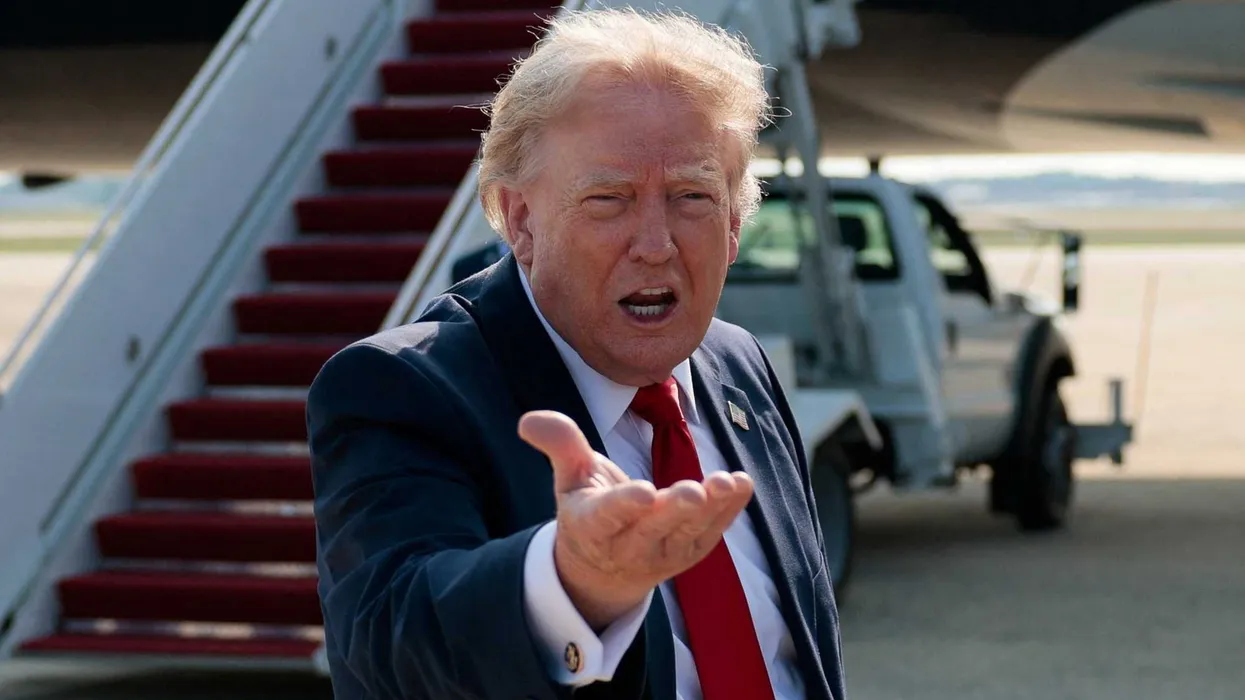
President Donald Trump launched an extensive Truth Social tirade following a significant legal setback to his proposed White House ballroom, and according to his former biographer, the underlying motivation is far more straightforward than the president has publicly suggested.
On Friday, the U.S. Court of Appeals for the DC Circuit ruled that construction of the ballroom could not proceed without congressional approval, delivering what may be the most consequential legal blow yet to the project. The decision underscores Congress's authority over modifications to federal property and spending on public buildings, placing the ballroom plan among several high-profile executive actions during Trump's presidency that have met judicial friction. As The Daily Beast reported on Sunday, Trump responded with a nearly 500-word post on Truth Social in which he called the ruling "horrendous, politically motivated and unlawful" and reiterated his claim that the structure serves a "national security" purpose.
Michael Wolff, a veteran journalist and author who has written extensively about Trump, argued on the latest episode of his Daily Beast podcast, "Inside Trump's Head," that the national security rationale and other附加 features are merely cover for the president's core desire.
"In fact, he just wants the ballroom and is trying to say, 'Well, if there's this and there's this and there's this, it's not just the ballroom,'" Wolff explained. "But Trump just wants the ballroom."
Wolff addressed additional components of the construction project that have been cited to broaden its justification, including a proposed bunker and a suite of medical facilities beneath the ballroom. He characterized these elements as rhetorical scaffolding, saying Trump is "adding on these things as justifications for the ballroom."
At its core, Wolff argued, the ballroom project reflects Trump's well-documented affinity for large crowds and public attention. The White House already contains the East Room, its largest reception space, which has hosted ceremonies, press conferences, and social events for over two centuries, though Trump has previously expressed dissatisfaction with the scale of available venues for official functions. "He wants the ballroom because he wants, you know, big audiences. Essentially what he's creating is a venue. That's what he wants. He likes big events. He likes big audiences. The bigger the better," Wolff continued. "The more people, the more opportunities for Donald Trump to appear before an audience. So this is not about national security. This is about Donald Trump."
Looking ahead to the legal trajectory of the project, Wolff suggested Trump may already sense the momentum has shifted beyond what is recoverable. "I'm sure Trump already has the satisfaction of knowing that this has all gone too far, that he is already significantly ahead of any decision that is going to be made," he said. "And now this goes, of course, to the Supreme Court. This is in the hands of Trump's judges. And the Supreme Court is going to be, I think, pretty reluctant to make this decision." Trump appointed three of the nine current justices — Neil Gorsuch, Brett Kavanaugh, and Amy Coney Barrett — giving conservatives a 6–3 majority on the Court, though the justices have not uniformly ruled in the administration's favor on separation-of-powers disputes.

