Legal Scholars Warn Trump’s Reported Iran Strike Plan Could Backfire
Key Takeaways
- •Trump is reportedly reviewing options for a major new attack on Iran after a recent peace effort fell apart.
- •Critics have warned that threats to strike civilian infrastructure, including bridges and power stations, could raise war-crimes concerns.
- •International law bars intentional attacks on civilian infrastructure, though some dual-use sites may be targeted if a definite military advantage is shown.
- •David Wippman and Glenn C. Altschuler argued that bombing civilian infrastructure is unlikely by itself to compel Iran to capitulate.
- •The scholars warned that escalation could widen the Middle East conflict and create broader economic consequences.
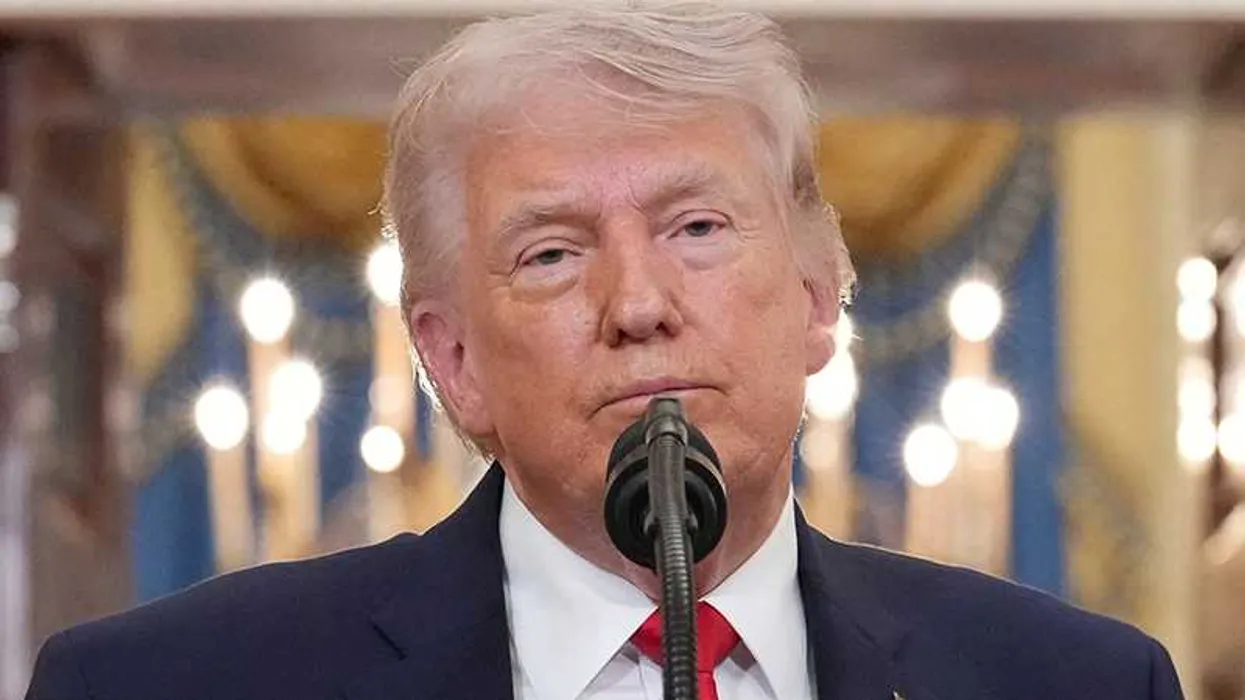
President Donald Trump is reportedly reviewing plans for a “massive” new attack on Iran, while two legal scholars have warned in The Hill that his pattern of threatening “apocalypse now, or in a few hours” is likely to fail again.
The Trump administration’s widely promoted “memorandum of understanding” peace deal with Iran has fallen apart in recent weeks, pushing the two countries back toward a possible military confrontation. As reports say Trump is weighing available options and considering a large new wave of airstrikes against Iran, he has also returned to a familiar tactic: threatening to strike major civilian infrastructure, including bridges and power stations. Critics have again warned that such attacks could amount to war crimes.
David Wippman, emeritus president of Hamilton College, and Glenn C. Altschuler, Emeritus Professor of American Studies at Cornell University, published a piece on Sunday arguing that the strategy is likely to backfire. The two legal scholars acknowledged that escalation from military targets to civilian infrastructure “is not unusual” in modern conflicts. Their warning focuses on both the legal threshold for such strikes and the practical question of whether widening the target set actually advances a war aim.
International law prohibits the intentional targeting of civilian infrastructure. However, some sites, including train lines or airports, may be considered “dual use” if they also serve military purposes. In those circumstances, a military force would need to demonstrate the “definite military advantage” of a strike in order to avoid legal consequences. That distinction is central to debates over infrastructure attacks because damage to civilian systems can spread beyond the immediate target, affecting hospitals, water treatment, transportation and daily economic life.
Writing about Trump and Iran, Wippman and Altschuler said that while such a plan may not be unprecedented, striking civilian infrastructure alone is unlikely to be an effective strategy. They cited experts who have argued that “bombing alone rarely compels capitulation.”
“Instead, attacks that inflict widespread civilian suffering often strengthen national resolve, as Britain’s response to the Blitz, North Vietnam’s endurance during Operation Rolling Thunder, and Ukraine’s response to Russia’s attacks on its electrical grid all illustrate,” they wrote. “During the 1991 Gulf War, coalition forces attacked Iraq’s electrical grid, bridges and transportation networks, oil facilities and defense industries. Although most of these installations supported Iraq’s military, their destruction also crippled food systems, hospitals, water treatment facilities, sewage plants and economic life, at enormous long-term cost to civilians. But it took a ground invasion to force Iraq out of Kuwait.”
They concluded: “U.S. policymakers would do well to ask whether upping the ante with bombs is likely to end this conflict, or deepen it by dragging in other countries in the Middle East and dragging down the global economy. And even though Iran’s government, which is no stranger to war crimes, may not care if its own civilians suffer, we should.”

