Trump Voters Acknowledge Economic Pain but Still Plan to Vote Republican in the Midterms
Key Takeaways
- •A Fortune investigation conducted with The Associated Press found that some Trump voters admit his policies have hurt them financially but still intend to back Republicans in the midterm elections.
- •Dan Lloyd, a 63-year-old carpenter in Mesa, Arizona, criticized paying $4.39 per gallon for gasoline yet said he remains committed to voting Republican because he views the Democratic Party as having lost its direction.
- •Kristin Jimenez of Edinburg, Texas, said prices have risen under presidents of both parties and plans to vote Republican, whom she considers the lesser of two evils.
- •Cult expert Dr. Steve Hassan and cognitive scientist Dr. Stephan Lewandowsky told AlterNet that demonizing rhetoric and troll-like behavior associated with the 'dark triad' personality cluster help explain supporters' continued loyalty despite personal costs.
- •Conservative commentator Jonathan V. Last of The Bulwark argued that many Trump supporters are driven by cultural grievances and a preference for minority rule rather than economic conditions, complicating Democratic efforts to win them over.
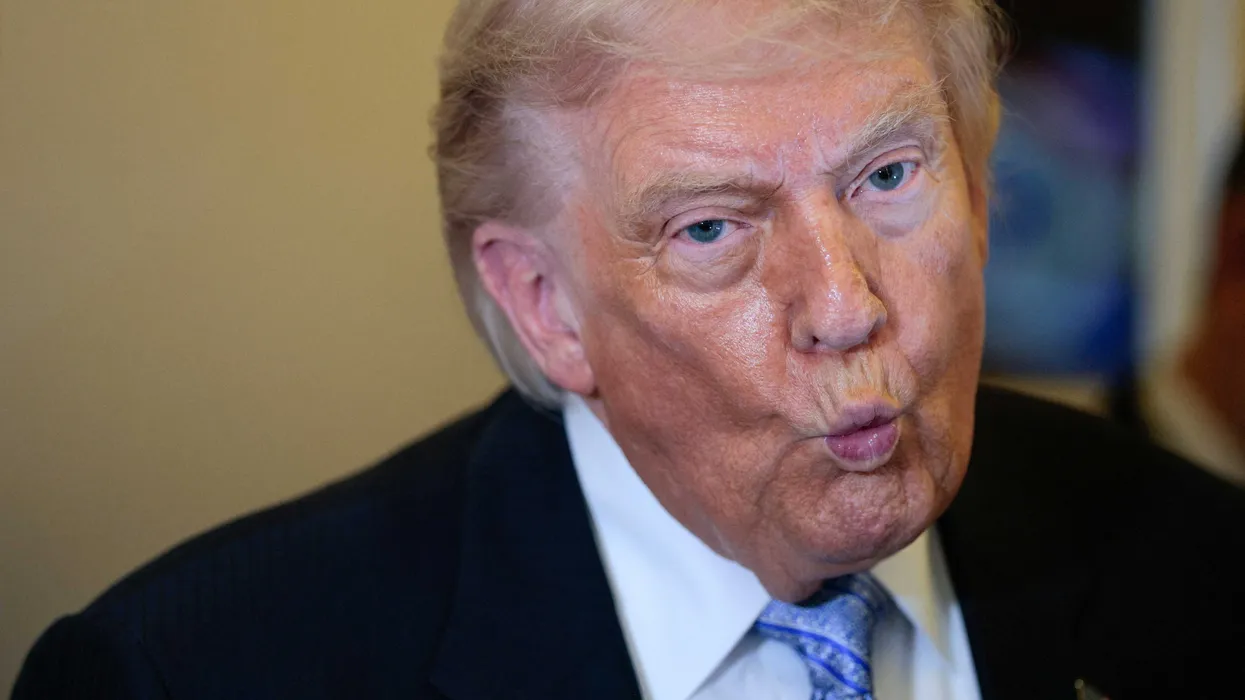
Some backers of President Donald Trump acknowledge that his economic policies are straining their own finances — yet many still intend to vote Republican in the upcoming midterm elections, contests that will determine control of Congress. That is the picture that emerged from a report published Sunday by Fortune, whose reporters Steve Peoples, Jesse Bedayn and Jonathan J. Cooper worked in partnership with The Associated Press. The voters' accounts capture the tension now running through this year's midterm campaign: pocketbook frustration coexisting with firm partisan loyalty.
Among those interviewed was Dan Lloyd, a 63-year-old carpenter in Mesa, Arizona, who voted for Trump and voiced frustration with the president's leadership as he paid $4.39 a gallon to fill up his pickup truck.
“He hurt himself stepping into this,” Lloyd said of Trump. “Where's all this oil from Venezuela? I thought we were flush with gas and everything, but no. The American people eat it every time, whether it's interest rates, food, gasoline.”
Despite that frustration, Lloyd said he still expects to vote Republican in the midterms. “I think the Democratic Party has lost its way,” he said. “I just feel like the whole system's on the verge of collapse.”
Kristin Jimenez of Edinburg, Texas, expressed a similarly cavalier attitude toward rising prices. “We've paid the same price under Republican presidents, we've paid this price under Democrat presidents,” she said, adding that she will vote Republican because they are the “lesser of two evils.”
“We don't mind paying $8 for a cup of coffee at Starbucks, but we have a problem paying four bucks at the pump? Make it make sense,” she added.
Analysts who have studied the movement point to deeper psychological currents behind that loyalty. Cult expert Dr. Steve Hassan told AlterNet in August that cult-like dynamics help explain why some Trump supporters keep backing him even when doing so is personally harmful — in part because his opponents are so thoroughly demonized.
“I emphasize how these destructive groups, like the Trump movement, are lying all the time,” Hassan told AlterNet. “And part of the appeal is really about using emotionally leading rhetoric to scare people, to create 'the other,' to demonize. I'll quote Eric Hoffer's 1951 book, 'The True Believer.' He said, 'The strength of a mass movement is proportionate to the vividness and tangibility of its devil.' We know that, evolutionarily, we're going to overreact to anything that's a perceived danger or threat to us. So 'owning the libs' means that they are a danger, and he's going to save people from them.”
Dr. Stephan Lewandowsky, a cognitive scientist at the University of Bristol, told AlterNet in August that a “dark triad” of psychological forces — a personality cluster combining narcissism, Machiavellianism and psychopathy — fuels the trollish behavior of some of the president's most combative supporters.
“The dark triad — that's what it's called,” Lewandowsky told AlterNet. “So we know that trolls take pleasure in trolling, which means getting other people upset. And I think that's what we're observing here — this is basically trolling behavior. So would these people score high on the dark triad? I would think yes, but I don't know of any data that's done a personality profile specifically of MAGA voters. We do have it for trolls, though — I have data on that. People have published research on it, and the similarities are just overwhelming. So I'd be very surprised if these were well-adjusted, nice people.”
In June, conservative commentator Jonathan V. Last of The Bulwark analyzed an ethnographic study of Trump voters that explored the rationalizations they use to justify supporting policies that harm them. Trump supporters, he argued, “very explicitly do not want majority rule. They want minority rule,” and tend to back the president because they oppose Democratic advocacy of racial diversity, women's rights, LGBTQ equality and secularism. They are also alarmed, he said, by young people turning away from intolerance toward racial minorities, women, LGBTQ people and non-Christians.
“I'm not sure how Democrats win over a voter who's not by unemployment, or the Iranian nuclear program, or the price of eggs — but is rather lashing out because they're angry that their children rejected their political views,” Last said.
“We are firmly out of the realm of policy here. Or reality, even,” he continued. “So long as there is a trans activist in San Francisco posting on BlueSky, these people will be aggrieved. Even if their preferred political party holds the presidency, controls Congress, and has an openly corrupt majority in the Supreme Court. Domination of the political system is not enough; they want the people who disgust them to disappear.”
His question — how, or whether, Democrats can reach voters whose grievances are not primarily about prices or policy — frames one of the open questions of the final stretch before Election Day in November.
Source: Alternet

