Trump's Venezuela Oil Grab Echoes a Century of Intervention — and Risks Another Backlash
Key Takeaways
- •The reported deal covers about 65 billion barrels across 17 fields, roughly one-fifth of Venezuela's 303 billion barrels in proven reserves, the largest of any country.
- •Trump negotiated a 100-year lease with Delcy Rodríguez, who remains in office with backing from the Venezuelan army and the U.S. Navy and Air Force despite the government losing an election.
- •The U.S. collected roughly $13 billion selling seized Venezuelan crude, but the funds' whereabouts are unclear and were not provided when Venezuela requested them after June earthquakes killed 2,595 people.
- •The oil-handling contract reportedly went to Alejandro Betancourt López, a billionaire previously subject to a Swiss arrest warrant that was closed after intervention by Trump administration officials.
- •Exxon and ConocoPhillips are reportedly staying away from the arrangement, and industry experts estimate meaningful increases in Venezuelan production could take a decade.
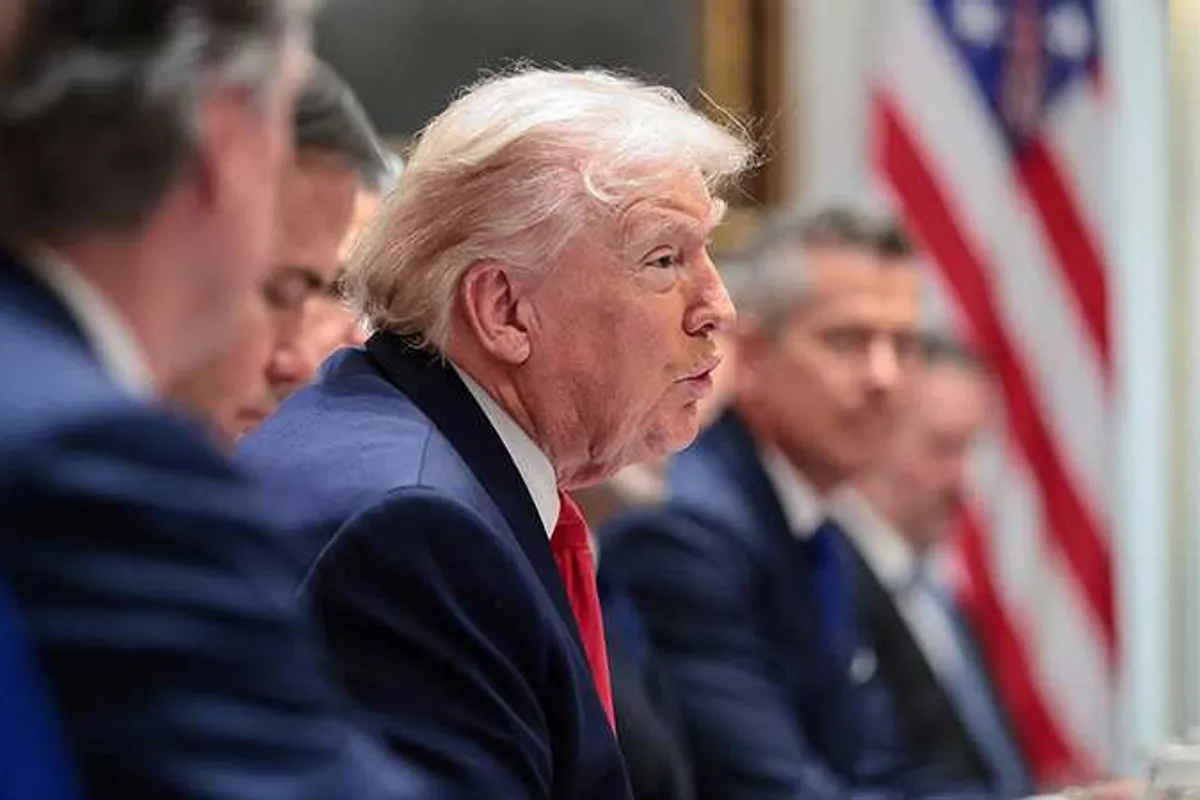
President Donald Trump is calling his latest oil arrangement in Venezuela "the biggest oil deal in world history," but critics — including a senior energy analyst — say it amounts to something far older: colonialism. "If the U.S. scheme in Venezuela sounds colonial, that's because it is," Gregory Brew, senior energy analyst with the Eurasia Group, told Fortune.
The deal reportedly covers some 65 billion barrels of oil across 17 fields — roughly a fifth of Venezuela's estimated 303 billion barrels in total reserves, which are the largest proven oil reserves of any country in the world. Trump has said the oil will be used to refill the U.S. Strategic Petroleum Reserve, which he has drawn down to 286 million barrels, its lowest level since 1982, in an effort to lower gasoline prices. But that claim is disputed on technical grounds: the SPR's salt caverns and pumping equipment were designed for light, sweet crude, not Venezuela's thick, heavy sour crude, which analysts say would gum up the infrastructure and permanently damage it.
The U.S. Gulf Coast does have massive refineries — built by the Koch brothers and others — specifically designed to process heavy Venezuelan crude from the era when it flowed easily to the United States. Those facilities currently process more expensive Canadian tar sands oil, and could benefit from a return of Venezuelan supply. For Venezuela itself, the stakes are enormous: output from state oil company PDVSA collapsed from around three million barrels a day in the late 1990s to a fraction of that after years of underinvestment, mismanagement, and U.S. sanctions, leaving whatever deal takes shape starting from a diminished production base.
A 100-Year Lease with an Un-elected Government
Trump says he has negotiated a 100-year lease with Delcy Rodríguez, the "acting president" of Venezuela who served as Maduro's vice president when the two lost an election but remained in power. She is kept in office — after a majority of voters rejected the government — by the Venezuelan army and the U.S. Navy and Air Force.
The contract to handle the oil has reportedly gone to Alejandro Betancourt López, a billionaire wanted for arrest in Switzerland. According to a Washington Post report, when British police arrested Betancourt López in London in November 2025, Trump's senior officials intervened, pushed Swiss authorities to close the case without charges, declined to act on the arrest warrant, and gave him a U.S. visa. Transparency International's Venezuelan chapter estimated he overcharged the Venezuelan government by $2.9 billion through insider no-bid power plant contracts under Chávez, and American prosecutors identified him as an "unnamed co-conspirator" in a scheme they say embezzled more than a billion dollars, prompting Swiss authorities to freeze his assets. Rudy Giuliani, who argued in U.S. courts that Betancourt López should not face embezzlement charges, was staying at one of Betancourt López's Madrid mansions at the time.
The Missing $13 Billion
According to The Financial Times, the U.S. collected roughly $13 billion selling seized Venezuelan crude after the invasion, routed at first through a bank account Trump controlled in Qatar. Six months later, the money's whereabouts are unclear, and it has not returned to Venezuela. Senator Elizabeth Warren has called the seizure and sale a crime, a view echoed by Democratic Representative Joaquin Castro and Republican Representative María Elvira Salazar. The funds did not appear when Venezuela requested them in June, after two earthquakes killed 2,595 people and the country needed cash for rescue and reconstruction.
"President Trump's effort to turn the U.S. military into an investor in Venezuelan oil is a blatant abuse of power and taxpayer dollars," said Senator Jack Reed, the top Democrat on the Armed Services Committee.
A Long History of Intervention
The article's author draws a direct line from the current arrangement to earlier episodes of U.S. intervention — a pattern with deep roots in the region, where U.S. military deployments and oil interests have repeatedly intertwined over the past century. In 1953, the CIA overthrew Iran's democratically elected president, Mohammad Mossadegh, after he nationalized the country's oil, installing the rule of the Shah — a decision whose consequences, he argues, the United States is still paying for.
He also recounts witnessing the 1989 Caracazo in Venezuela firsthand. After President Carlos Andrés Pérez — who campaigned against the Reagan/Bush IMF-backed austerity program, calling it "a neutron bomb that kills people but leaves buildings standing" — took office on February 2, 1989 amid a $33 billion debt left by his predecessor Jaime Lusinchi, he raised bus fares under pressure from the Bush administration and the IMF. Within 25 days, millions protested, Pérez suspended the constitution, and his army killed at least 276 civilians and wounded 1,500 more. Human rights groups said thousands died, with bodies dumped into unmarked pits in Caracas's Cementerio General del Sur in an area known as La Peste, "the plague." The state of emergency, endorsed by President George H.W. Bush, lasted another month.
Industry Reluctance and a Long Timeline
Exxon and ConocoPhillips, which are still owed billions from Chávez's nationalization, are reportedly staying away from the arrangement — Trump reportedly dismissed ConocoPhillips's CEO when he sought reparations. Oil industry experts say meaningfully increasing Venezuelan production will take years, perhaps a decade — well beyond the political lifetimes of both Trump and Rodríguez. What to watch next is whether major international oil companies eventually participate, whether Congress moves on accounting for the seized oil revenue, and whether the legal status of the 100-year lease survives challenges in U.S. or international forums.
The author argues that the arrangement risks producing a repeat of the backlash that followed earlier interventions, and questions why Republicans in Congress have remained largely silent. He urges readers to contact their senators and representatives at 202-224-3121 to ask what happened to Venezuela's $13 billion and to support a war powers resolution regarding military actions in Iran and Venezuela.
Source: Alternet
