Trump gives evangelical Christians 'the middle finger' after 2026 election failures, commentators say
Key Takeaways
- •Commentators Greg Sargent and Holly Berkley Fletcher argued on the 'Daily Blast' podcast that Trump's relationship with white evangelical Christians, long his core base, appears to be deteriorating.
- •The discussion followed Trump's on-air remarks to '60 Minutes' concerning the state of his eternal soul.
- •Fletcher said Trump's statements clash with foundational evangelical beliefs such as loving one's enemies, repenting, and forgiving, leaving his evangelical supporters in a difficult position.
- •Sargent theorized that Trump's comments were a form of retribution against evangelical voters who turned out in lower-than-needed numbers in the 2026 midterms, though Fletcher doubted Trump was being that calculating.
- •Both commentators expressed the view that Trump is not genuinely religious, with Fletcher asserting he has used religion to take advantage of evangelical voters throughout his political career.
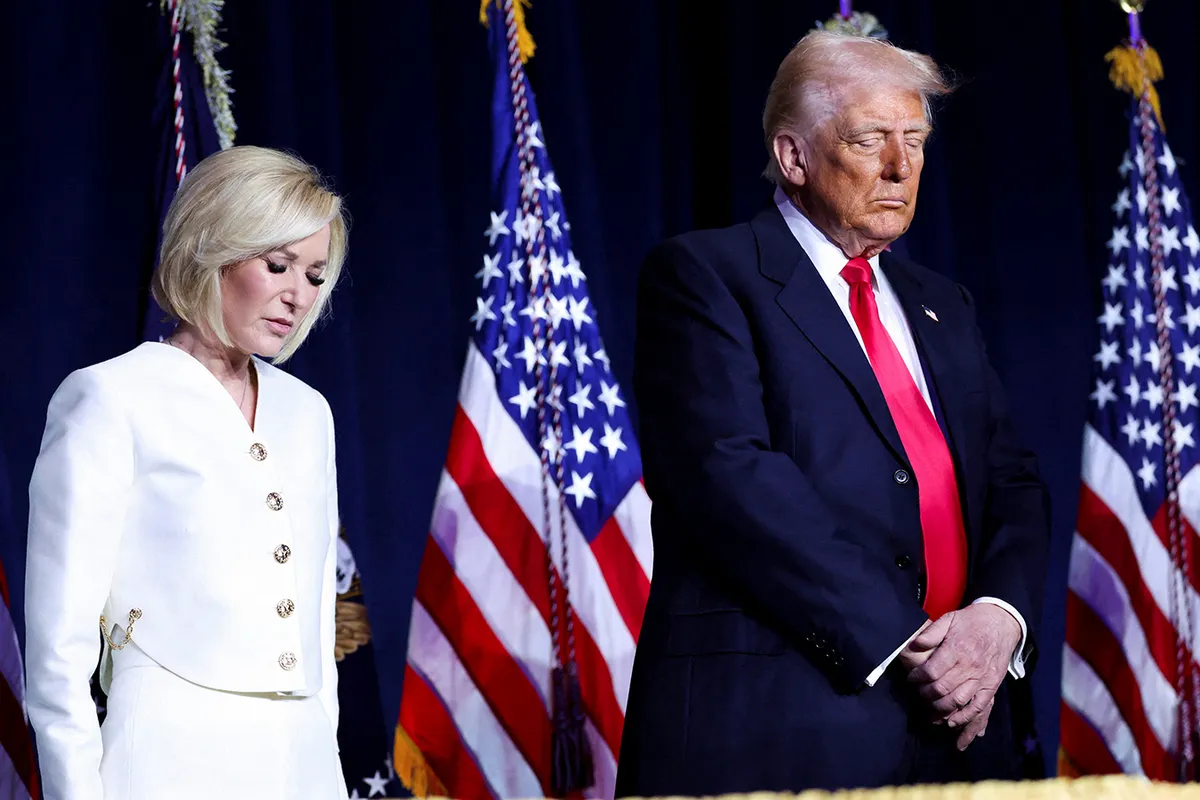
President Donald Trump appears to be turning on the white evangelical Christians who have long formed the core of his political base, according to two commentators — and his recent on-air remarks about his own soul may be accelerating the rift.
On Thursday's episode of his "Daily Blast" podcast, The New Republic's Greg Sargent spoke with Holly Berkley Fletcher, who writes about right-wing Christianity on her Substack, about evangelical voters and their influence within the Republican Party. Both argued that while Trump has managed to manipulate white evangelical Christians for years, that dynamic no longer appears to hold. The stakes of that shift extend well beyond one podcast exchange: white evangelical Christians have ranked among the most reliable Republican voting blocs for decades, and their turnout has been central to the party's electoral coalition in recent cycles.
The exchange followed Trump's awkward conversation with "60 Minutes" over the state of his eternal soul. Sargent called it "a little remarkable for him to talk this way after such a dramatic national repudiation of him."
Fletcher agreed, noting that if Trump were a smart political leader, he would be working to shore up whatever is left of his crumbling base of supporters, which is made up largely of White evangelical Christians. "And this is certainly not the way to do it," she said.
"Whenever he puts them on the spot by countering explicitly a really foundational evangelical Christian belief like loving your enemies or repenting or forgiving, these types of things, it really puts them in a very tough spot and sort of sends them scrambling," Fletcher said. "And that's not what they want and need at this time when they're feeling deflated. And that's not what he should really be doing at this time. But, again, not a rational actor."
Sargent offered his own theory about the comments, linking them to Trump's blame for the 2026 election failures. "I think Trump is essentially giving his evangelical supporters the middle finger in some sense," he said. "He knows they didn't show up in quite the numbers that he needed in this election, we'll get to that in a second. But he was very much out there in red America saying you've got to turn out for us. You've got to turn out and save us and they didn't. And I just wonder on some level if he's basically saying, you know what? I really don't give a s—— about your Heaven." The 2026 election he pointed to was the first nationwide vote since Trump returned to the presidency, a midterm round in which the party holding the White House has historically lost ground.
Fletcher was not certain she bought that theory. Laughing, she said she is not sure Trump is capable of being that calculating. "He usually tells us what he's thinking," she explained. "I think he's long worried about the eternal destination of his soul and he lets that slip a lot of times. I don't know if he's that calculating. But he's got to be upset with them right now. And we know he sort of lashes out when he's upset."
Sargent said he does not buy that Trump has a religious bone in his body. Fletcher agreed, saying she thinks he is "without belief of any kind."
"I think he's amoral. I think he believes in his own narcissism and I think he's been using religion this entire time. They're a very easy mark for a conman," she said. "Because they have very deeply held, easily hijacked beliefs. You say certain things. You champion the issues that you want. ... He's been using them the whole time. They've been a very cheap date, and he's taken advantage."
How evangelical leaders and rank-and-file voters respond to the friction — and what it means for Republican turnout coalitions heading into future election cycles — remains an open question.

