New York Times Reports Security Omissions in Trump-Backed Temporary Air Force One Retrofit
Key Takeaways
- •The retrofitted Boeing 747-8 is intended as a temporary Air Force One substitute rather than a permanent replacement for the current presidential aircraft.
- •The New York Times reported that the plane lacks a lower-level emergency exit, a second auxiliary power unit, and an infrared missile countermeasure system.
- •Former Air Force Secretary Frank Kendall said the omitted equipment creates shortfalls compared with the current Air Force One fleet and adds risk.
- •The Times reported that project costs were routed through the classified Sentinel nuclear modernization budget, raising congressional oversight concerns.
- •White House press secretary Karoline Leavitt said the aircraft is fully mission-ready and safe for presidential travel.
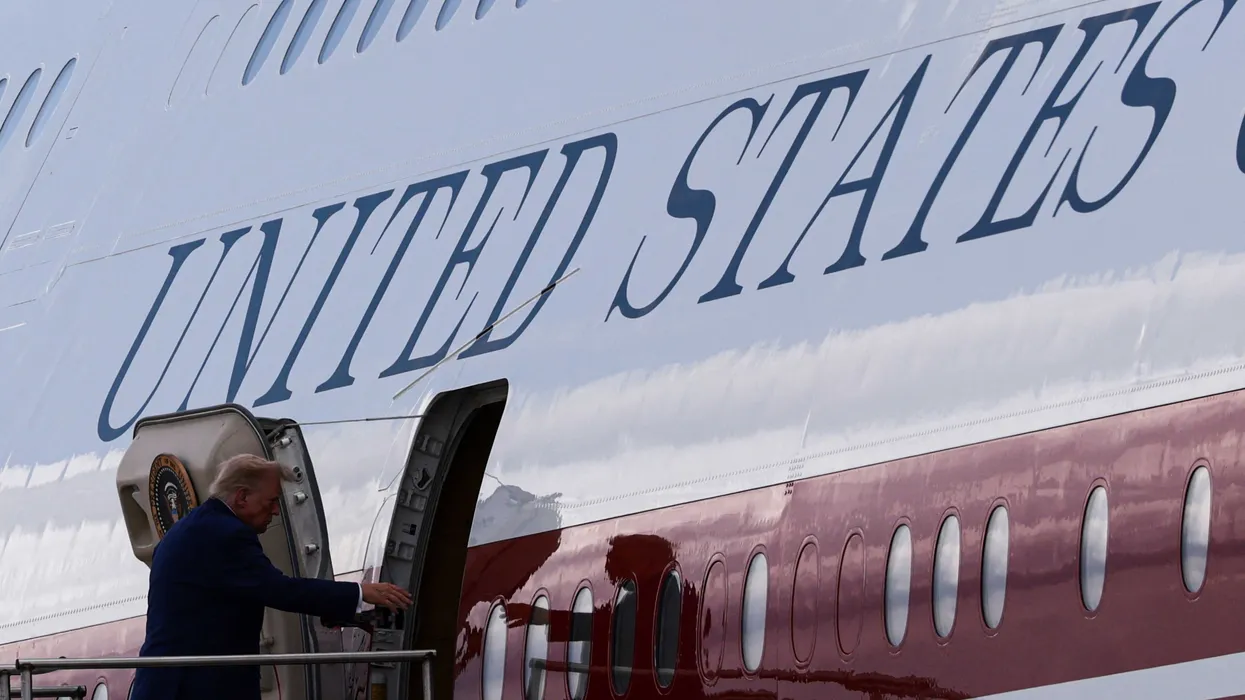
President Donald Trump’s push to have a Qatari-donated jumbo jet ready to operate as a temporary Air Force One by the nation’s 250th birthday resulted in the omission of several major security features included on the current presidential aircraft, according to a New York Times investigation published Friday.
The Times reported that Trump required the retrofitted Boeing 747-8 to be completed by July 4, shortening a security overhaul that would typically take several years into an eight-month schedule. People familiar with Trump’s role, who spoke to the Times on condition of anonymity, said he personally approved the plane’s features and security measures.
The aircraft is described as a temporary substitute rather than the permanent replacement for the existing presidential fleet, making the scope of its retrofit central to the dispute. Air Force One is the call sign used when the president is aboard an Air Force aircraft, but the current presidential planes are specially modified for secure communications, survivability, and continuity of government during emergencies.
“President Trump was entranced,” the Times report said, describing what it characterized as the president’s extensive personal involvement in the project. The newspaper reported that Trump gave “final approval on features and security measures that would be included.”
According to public Air Force records and photographs reviewed by the Times, the retrofitted aircraft lacks a lower-level exit door used in high-risk situations, a second auxiliary power unit, and an infrared countermeasure system designed to detect and jam incoming missiles. Those omissions are significant because each feature addresses a different category of risk: emergency evacuation, backup power, and protection from certain missile threats.
Frank Kendall, who oversaw the Air Force One modernization program while serving as Pentagon acquisition chief and later as Air Force secretary under President Joe Biden, said the missing equipment presents a genuine concern.
“People need to be aware it has a lot of shortfalls compared to Air Force One; they do add a measure of risk,” Kendall said.
The Times also reported that the Pentagon has sought to obscure the project’s full cost, including from Congress, by using funds from a classified nuclear modernization budget known as Sentinel. Sen. Chris Murphy (D-CT) said the administration was using the arrangement to avoid oversight.
“They have declared this work to be a national security secret that cannot be divulged even to appropriators,” Murphy said. “That is absolutely unacceptable.”
The funding claim adds a separate oversight issue to the security debate: whether lawmakers responsible for appropriations can fully review the cost and scope of a presidential aircraft project if expenses are routed through a classified budget account.
White House press secretary Karoline Leavitt defended the aircraft, saying it is “fully mission-ready and safe for presidential travel today.”

