Trump’s Tariffs an ‘Epic Political Blunder’ as Polls Show Broad Voter Backlash Before Midterms
Key Takeaways
- •A new survey found 75 percent of registered voters consider tariffs important to their midterm vote, while 74 percent said the levies have raised store prices.
- •Only 21 percent of respondents accepted the position that foreigners primarily pay tariffs, and 49 percent said tariffs had made their own lives worse.
- •Independent voters, who often decide elections, viewed Trump's handling of trade policy unfavorably by 73 percent, and 64 percent said tariffs would matter to their midterm vote.
- •Support for tariffs was highly conditional, with Republican backing dropping from 70 percent to 39 percent when a $1,000 annual household cost was cited, against an actual cost of roughly $1,100 per household.
- •Democrats are campaigning against the tariffs while some Republicans are quietly pursuing legislative action to end them, amid what the columnist describes as widespread voter distrust of the GOP on the economy.
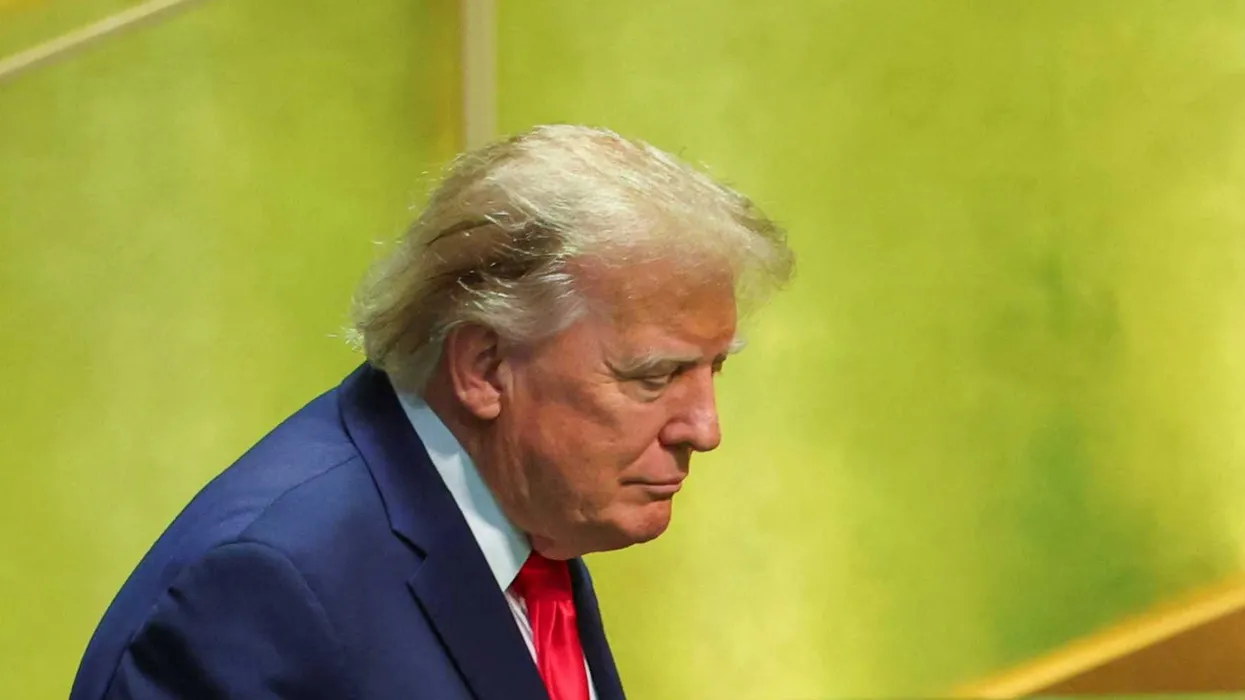
In 2024, President Donald Trump declared that “tariff” was not only a “beautiful word,” but his “favorite” in the dictionary. More than a year and a half into his ever-shifting, often illegal tariff regime, however, American voters do not share the president’s enthusiasm — and they may take their frustration out on the GOP in November.
That is the assessment of Scott Lincicome, Vice President of General Economics and Trade at the Cato Institute, who wrote in a Washington Post opinion column on Tuesday that new survey data reveal Americans’ anger at Trump’s beloved word — and its potential political cost for Republicans.
According to a new survey of registered voters, Lincicome writes, “a startling 75 percent said tariffs will be important to their vote in the midterms this November, including 35 percent who said the issue is very important.” The negative readings extend across nearly every measure: “Among respondents, 74 percent said tariffs raised prices at the store. Fifty-three percent said tariffs weakened the U.S. economy, versus 33 percent who said they strengthened it. Forty-nine percent said tariffs made their own lives worse; just 23 percent said better. Only 21 percent accepted President Donald Trump’s position that foreigners primarily pay tariffs.”
The findings spell particular trouble for the GOP because the tariffs have alienated a pivotal voting bloc. “Given the president’s affection for tariffs, Democrats unsurprisingly led the opposition, but independents — who often decide elections — weren’t far behind,” Lincicome explains. “Seventy-three percent of independents had an unfavorable view of Trump’s handling of trade policy, and opposition to broad tariffs tilted 47 percent to 28 percent. Fifty-two percent of independents said tariffs weakened the economy, and just 11 percent said the measures improved their quality of life — even lower than the 16 percent of Democrats who said the same. Sixty-four percent of independents said tariffs would be important to their midterm vote.”
Nor has the policy won over the voters it was billed to champion. “The current trade policy also lacks support from the working-class voters that Trump claims his tariffs champion,” Lincicome writes. “Across numerous questions, the views of both non-college-educated respondents and those whose households make less $50,000 per year were within a few percentage points of the population overall. More than 70 percent of each group thought tariffs raised prices.”
Support for taxing imports is also highly conditional. While nearly 45 percent of respondents said there was some justification for levies on imports, backing fell sharply as the personal cost rose: 38 percent were willing to pay $100 per household, but just 29 percent would pay $1,000 — and Republicans were no exception. “Their support dropped from 70 percent to just 39 percent when asked to pay $1,000 per year to fund their guy’s signature policy,” Lincicome writes. The actual cost of Trump’s tariffs so far, he notes, is roughly $1,100 per household annually.
Politicians have taken notice. Democrats are campaigning against the tariffs, while Republicans are quietly taking legislative action to stop them. “In their words and deeds, American politicians of both parties have confirmed what the polls show: Trump’s ‘populist’ tariffs are historically unpopular,” Lincicome observes. As a result, he adds, “Voters now widely distrust Republicans’ handling of the economy.”
“After winning on an affordability message in 2024, Trump’s early-term decision to repeatedly embrace a policy that, in both design and result, raises domestic prices was an epic political blunder,” Lincicome concludes. “American voters now overwhelmingly agree” — and the GOP appears poised to pay the price in November.
This article was originally published by Alternet.

