Tony Elumelu Foundation's 15-Year Report Tallies 27,000+ Entrepreneurs Funded, $4.2 Billion in Revenue and 1.5 Million Jobs Created
Key Takeaways
- •Beneficiaries of the Tony Elumelu Foundation have generated $4.2 billion in revenue, created .5 million jobs, and lifted 2.1 million Africans out of poverty across all 54 African countries.
- •Since 2015, the Foundation's flagship programme has provided more than 27,000 African entrepreneurs with $5,000 in non-refundable seed capital along with structured training and mentorship.
- •Women account for 48 per cent of programme beneficiaries, a share that rose to as much as 70 per cent in certain annual cohorts, including 2021.
- •The TEFConnect digital platform has delivered business management training to 2.5 million Africans in English, French, Portuguese and Arabic, extending the Foundation's reach well beyond its directly funded cohort.
- •TEF's forward agenda includes a 2025 artificial intelligence push aimed at closing digital capability gaps for rural and marginalised entrepreneurs, building on a green enterprise initiative that has already trained over 1,600 young people across four countries.
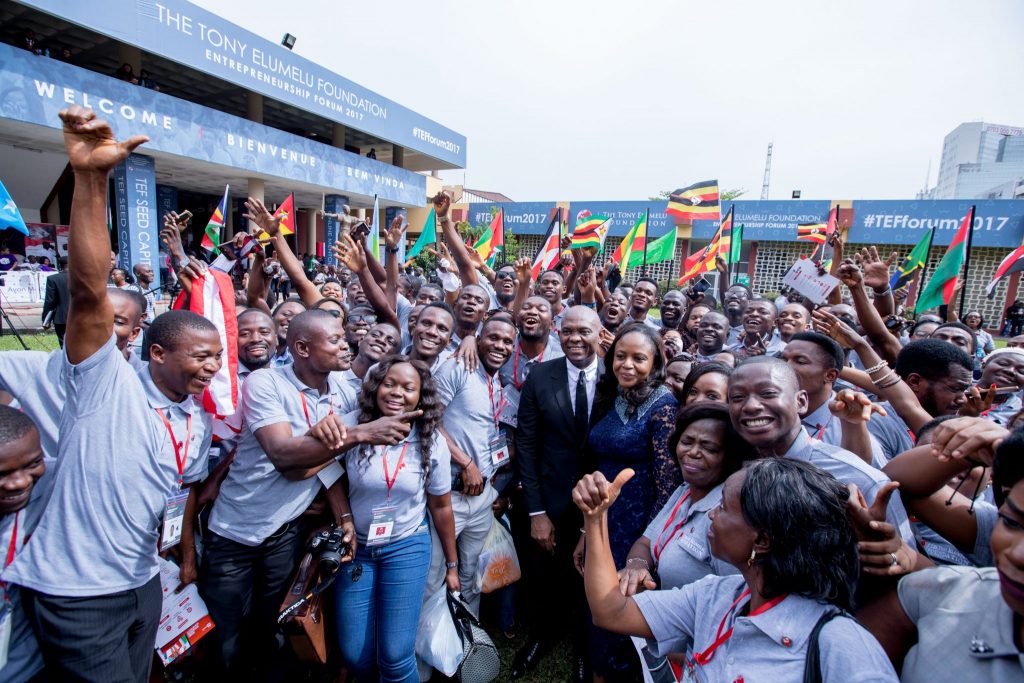
The Tony Elumelu Foundation (TEF) has released its 15-Year Report, a detailed accounting of a philanthropic wager that direct investment in young African founders, rather than aid delivered through governments or intermediaries, can move a continent's economics. The figures at the centre of the document are large enough to command attention on their own: $4.2 billion in cumulative revenue generated by beneficiary entrepreneurs, 1.5 million direct and indirect jobs created, 2.1 million Africans lifted above the poverty line, and more than 4 million households reached across all 54 African countries. Taken together, they provide the fullest numeric backing to date for the argument the Foundation has advanced since 2010: that entrepreneurship-led development can stand alongside conventional aid channels as a measurable route to economic change. The full report is available via the Foundation.
From Experiment to Flagship Programme
TEF was founded in 2010 by Tony and Awele Elumelu on premise of Africapitalism — the idea that the private sector, and entrepreneurs in particular, should serve as the primary engine of Africa's development rather than a byproduct of it. The Foundation's first five years were exploratory, built around scholarship programmes, professional fellowships and early partnerships with organisations such as CcHub.
The decisive turn came in 2015, when TEF launched its flagship Entrepreneurship Programme and committed to funding, training and mentoring entrepreneurs at scale every year. Each recipient received $5,000 in non-refundable seed capital alongside structured business training and mentorship. Because the capital carries no repayment obligation, it removes debt service from founders at the earliest and most fragile stage of building a business — a structural difference from lending-based approaches to small-enterprise finance. That commitment produced the report's most striking claim: since 2015, more than 27,000 entrepreneurs across every African country have been funded through the programme.
A Pan-Continental Footprint
The programme's reach extends well beyond a handful of major cities. According to the report, TEF has backed entrepreneurs in fragile and conflict-affected states, including Mali, the Democratic Republic of Congo and the wider Sahel region, alongside more established markets such as Nigeria, Kenya and Ghana. Women account for 48 per cent of those supported, a share that climbed as high as 70 per cent of beneficiaries in some annual cohorts, including 2021.
TEFConnect: The Digital Backbone
Behind the funding sits TEFConnect, the Foundation's proprietary digital platform and, arguably, the infrastructure that makes its scale claims credible rather than aspirational. Applications, training, mentorship matching, verification and disbursement all run through the platform, which the report credits with extending the Foundation's reach into remote, low-connectivity regions that a purely in-person programme could not serve. Training materials are delivered in English, French, Portuguese and Arabic, with downloadable, low-bandwidth content designed for entrepreneurs without reliable internet access.
The Foundation reports that 2.5 million Africans — a figure far beyond the 27,000 who received direct funding — have used TEFConnect to access business management training, making the platform a considerably broader entrepreneurial education tool than the funded cohort alone.
The Partnership Architecture
The report also documents how TEF assembled the partnerships required to sustain a commitment of this size. The European Union, the United Nations Development Programme, the African Development Bank, the US African Development Foundation, Germany's DEG and GIZ, Google.org and UNICEF's Generation Unlimited all appear as co-funders across different years and regions. That mix spreads the cost of annual cohorts across institutions with distinct mandates rather than concentrating it on the Foundation's own resources. These sit alongside bilateral agreements with national governments, from Benin's Seme City partnership to programmes run with Rwanda, Botswana and the DRC. Harvard Business School and the University of Cambridge's Judge Business School have both produced independent case studies on TEF's model — a level of academic engagement that few entrepreneurship programmes of any size attract.
Where the Next Bets Are Placed
Sections of the report outline TEF's forward agenda. A green entrepreneurship focus, developed with partners including UNICEF GenU and the IKEA Foundation, has already trained more than 1,600 young people in green enterprise skills across Kenya, Senegal, South Africa and Nigeria. A 2025 push into artificial intelligence aims to close the digital capability gap for marginalised and rural entrepreneurs, positioning AI as what the report calls a force multiplier for small businesses rather than a threat to them. How far that push extends the Foundation's reach will be measurable against the baselines this report establishes: 27,000 funded entrepreneurs and 2.5 million TEFConnect trainees.
The Ventures Behind the Totals
Case studies scattered through the report give texture to the aggregate numbers. A Malian food-processing entrepreneur who received TEF seed funding grew her mango nectar business from one production cycle a month to three, creating five direct jobs and nine indirect ones along a local supply chain. A Zimbabwean agritech founder used her $5,000 in seed capital to formalise a poultry technology business, secure regional intellectual property protection for her inventions and expand her reach to farmers across the country.
These are small enterprises by global standards, but they are precisely the kind of business from which the $4.2 billion revenue figure is built: thousands of modest, local ventures compounding into a continental total, rather than a handful of unicorns carrying the average.
Governance and Scrutiny
TEF's governance structure — a Board of Trustees alongside an Advisory Board drawing on figures from business, philanthropy and academia — sits behind the scale of disbursement described in the report and appears to have held up to enough scrutiny to attract national governments willing to co-fund cohorts of hundreds of entrepreneurs at a time.
A Fifteen-Year Operating Model
Taken as a whole, TEF's 15-year report reads as an operating manual for what scaled entrepreneurship philanthropy in Africa can look like when sustained across fifteen years rather than a single funding cycle. The $4.2 billion in generated revenue and 1.5 million jobs are not one-off figures tied to a single flagship cohort; they are the cumulative product of a model TEF has run, refined and expanded continuously since 2015.
For a continent where youth unemployment remains one of the defining economic challenges, a foundation able to point to 2.1 million people lifted out of poverty through entrepreneurship has assembled a genuinely significant body of evidence for how that challenge might be tackled.

