Anti-Trump Republicans cite job losses to attack Trump’s tariff claims
Key Takeaways
- •The Lincoln Project cited Department of Labor data showing a decline of 75,000 manufacturing jobs since Trump's inauguration, alongside $60 billion in lost annual factory construction.
- •Economist Robert Shapiro, a former Clinton administration official, stated that tariff-driven uncertainty is harming American workers and investment decisions.
- •The Center for American Progress estimated in February that the United States lost more than 100,000 manufacturing jobs over the prior year, contradicting Trump's claims of a manufacturing resurgence.
- •The United States-Mexico-Canada Agreement, which took effect in July 2020, was designed to provide cross-border trade stability that experts say Trump's tariff policies now undermine.
- •U.S. trading partners including Canada, India, Japan, South Korea, and the European Union have begun seeking new trade agreements without American participation.
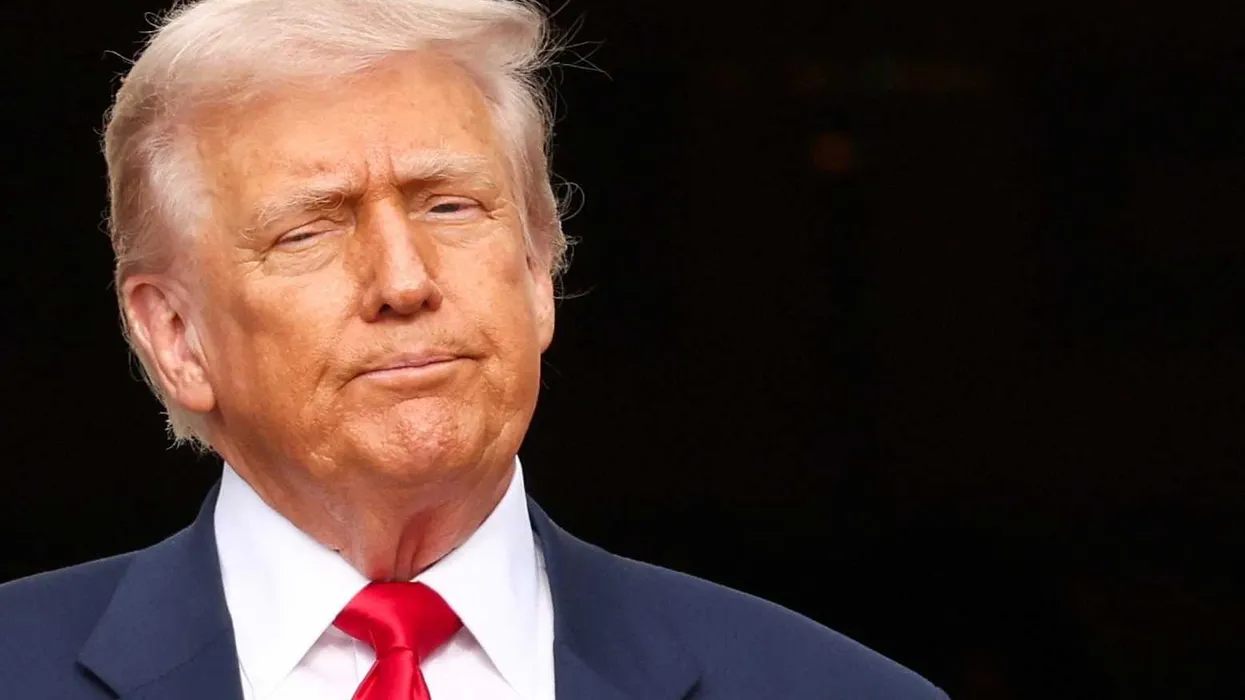
Even as 63 percent of Americans oppose President Donald Trump's tariffs, the Republican president recently portrayed himself as "The Jobfather," with a parodied poster of the 1972 film The Godfather distributed through the Department of Labor.
Trump's tariff policies represent a sharp departure from the free-trade approach pursued by Democratic and Republican administrations alike over recent decades, with duties imposed on imported steel and aluminum as well as hundreds of billions of dollars in Chinese goods during his first term.
A group of anti-Trump Republicans is now accusing Trump of misleading the public about the state of the American economy after he claimed tariffs would drive a manufacturing boom.
"Since his re-election, we've lost 75,000 manufacturing jobs and $60 Billion in annual factory construction," The Lincoln Project posted on X on Wednesday. "Over the same period, Biden had created 625,000."
The Lincoln Project cited recent Department of Labor figures showing that manufacturing employment has fallen by 75,000 since Trump's inauguration. Earlier in July, economist Dr. Robert Shapiro told AlterNet that Trump's tariffs have broadly created an atmosphere of economic volatility.
"It's about uncertainty," said Shapiro, who served as undersecretary of commerce for economic affairs in the administration of President Bill Clinton and was the principal economic adviser to Clinton's 1992 campaign. "Every investment is based on an assessment of the likely future demand for whatever you're investing in, and how much it's going to cost to produce it. So there are assumptions about labor costs, material costs and other input costs — and again, about demand. If you have a set of arrangements that give you some confidence about the price of your inputs coming from Mexico or Canada, or about demand for goods in Canada — and don't forget, we have virtually no trade deficit with Canada; we have enormous trade, and it goes in both directions — so it's certainly right, and it's not just about investments based on these probabilities that the trade agreement can help reduce uncertainty about."
The United States–Mexico–Canada Agreement, negotiated during Trump's first term as a replacement for NAFTA, took effect in July 2020 and established updated trade rules among the three North American economies. The pact was intended to provide precisely the kind of cross-border stability that Shapiro describes as essential for business planning and investment.
Shapiro added, "It's also about how much you're going to produce today, apart from investment, because you've got thousands of companies selling goods or services into Canada. And so there's uncertainty about whether this will lead to more conflict with Canada, which would hurt Canadian demand for US goods, or whether Canada will impose a new tariff in retaliation for ours that makes my goods less competitive there. Of course it's bad — it's bad for American workers, it's bad for American investment."
In February, the liberal-leaning Center for American Progress estimated that Trump's tariffs had already cost Americans manufacturing jobs in the six figures.
"Far from the manufacturing sector 'roaring back' as Trump promised, the United States has lost more than 100,000 manufacturing jobs over the past year," Allison McManus and Dawn Le wrote for the think tank. "These actions have pushed the country's closest trading partners to seek deals elsewhere, including with China: Canada, India, Japan, South Korea, and the European Union have all recently sought new agreements without the United States."

