Trump Draws Conservative Pushback for Blaming Biden as Labor Department Reports 75,000 Manufacturing Jobs Lost
Key Takeaways
- •The Labor Department reported 75,000 manufacturing jobs lost during Trump’s second term.
- •Erick Erickson said Trump should not blame Joe Biden for the economic problems tied to tariffs.
- •Erickson argued that Trump could lower prices and help markets by ending the tariffs.
- •Robert Shapiro said tariff-related uncertainty is discouraging investment and production decisions.
- •Shapiro said the trade dispute could hurt U.S. workers, investment, and demand for American goods in Canada.
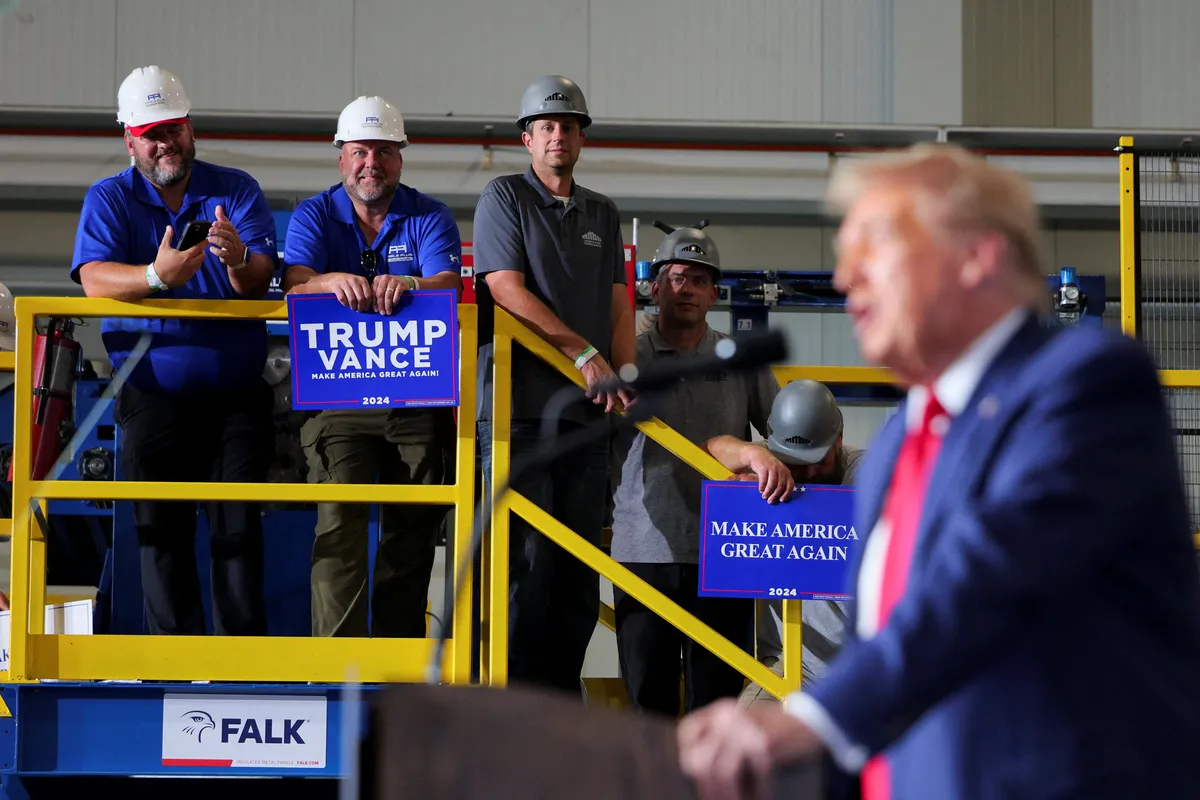
President Donald Trump made tariffs the signature economic initiative at the start of his second term. Now that his own Department of Labor has reported 75,000 manufacturing jobs lost during that same period, Trump is attempting to shift responsibility onto his predecessor, President Joe Biden — but one of his fellow conservatives is telling him, not so fast.
"Is this all being framed as Joe Biden's fault?" NewsNation's Leland Vittert asked conservative commentator Erick Erickson on Thursday. "Does that make people say, 'I get it, it's Joe Biden's fault, I'm going to give him more time,' or does it seem like, after two and a half years, Republicans are passing the buck?"
Erickson rejected the suggestion that Biden is to blame out of hand.
"[Trump] came in, in '25, and what was the major economic initiative?" Erickson asked. "Tariffs. Americans understand that taxes and prices went up afterward — whether it's the war, whether it's tariffs, whether it's something else, the president could, with the stroke of a pen tomorrow, get rid of the tariffs, start bringing prices down, and cause a market rally. But he won't do that, because you can't teach an old dog new tricks — he's an old believer in tariffs. That was the fundamental economic issue when they came into office, and people can put their finger on that and say, 'That's when things started to go bad.' So you can't keep passing the buck to the Democrats."
Erickson's analysis also finds agreement on the other side of the political aisle, underscoring that criticism of tariffs has come from both conservative and Democratic-aligned voices as the manufacturing sector continues to watch trade policy closely. Speaking with AlterNet in July, Dr. Robert Shapiro — who served as President Bill Clinton's undersecretary of commerce for economic affairs — broke down how Trump's tariffs are hurting the economy.
"It's about uncertainty," Shapiro told AlterNet. "Every investment is based on an assessment of the likely future demand for whatever you're investing in, and how much it's going to cost to produce it. So there are assumptions about labor costs, material costs and other input costs — and again, about demand. If you have a set of arrangements that give you some confidence about the price of your inputs coming from Mexico or Canada, or about demand for goods in Canada — and don't forget, we have virtually no trade deficit with Canada; we have enormous trade, and it goes in both directions — so it's certainly right, and it's not just about investments based on these probabilities that the trade agreement can help reduce uncertainty about."
Shapiro concluded: "It's also about how much you're going to produce today, apart from investment, because you've got thousands of companies selling goods or services into Canada. And so there's uncertainty about whether this will lead to more conflict with Canada, which would hurt Canadian demand for US goods, or whether Canada will impose a new tariff in retaliation for ours that makes my goods less competitive there. Of course it's bad — it's bad for American workers, it's bad for American investment."
Video: https://youtu.be/lC0v_Y1n_xU
