Inside Trump's Hail Mary Pass to the Supreme Court
Key Takeaways
- •The Trump administration filed an emergency Supreme Court application seeking to stay a federal appeals court injunction that blocked key portions of his executive order on mail-in voting.
- •The government's primary legal argument is that the lawsuit is unripe because the order is framed as internal policy guidance, leaving agencies discretion over implementation.
- •The Constitution grants states primary authority over federal elections, with Congress holding a secondary role and the executive branch playing only a limited part.
- •Trump's political action committee has raised over $400 million since the 2024 election, and Republican super PACs hold nearly twice the cash on hand of Democratic super PACs.
- •A Supreme Court ruling in Trump's favor would contradict recent precedent affirming that states, not the president, control election procedures.
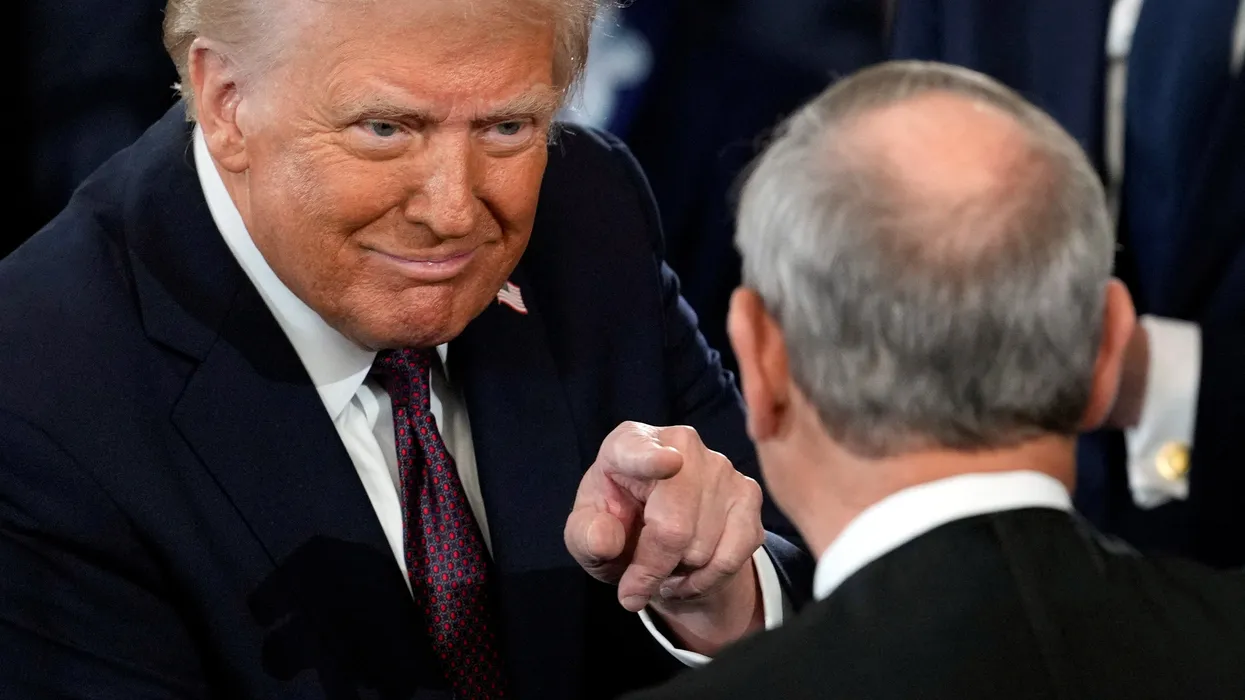
Last Monday, days after a federal appeals court blocked and enjoined key parts of Trump's executive order restricting mail-in voting, Trump again turned to the Supreme Court for help in his effort to influence the midterms. Solicitor General John Sauer filed an emergency application for a stay of that injunction, arguing that the appellate court prematurely "interfered with" Trump's efforts to "promote election integrity."
The Constitution gives control over federal elections to the states, assigns Congress a secondary role, and gives the executive branch an even more limited role. Under Article I, Section 2, and the 10th Amendment, states — not the president — determine who is eligible to vote. The Elections Clause in Article I, Section 4 reinforces this framework, empowering state legislatures to set the "time, place, and manner" of congressional elections while giving Congress a backstop authority to alter those rules — a role it has rarely exercised expansively.
By constitutional design, the executive branch has only a limited role in federal elections. The founders built a decentralized system because they understood that placing control over federal elections in the hands of the executive branch would be like letting the fox guard the henhouse. Trump, following that logic without respecting the design behind it, has continued trying to override it.
Trump's election-related actions
After Trump lost the 2020 election, he was recorded pressing Georgia officials to "find" an extra 11,000-plus votes. Since returning to office, he has continued an unprecedented effort to shift control of federal elections away from the states through a series of actions intended to centralize power.
According to the source material, Trump has sought to do this by:
- Pressuring the Senate to pass the SAVE Act — the Safeguard American Voter Eligibility Act — which has already passed the House, and would prevent more than 21 million Americans without a current passport or birth certificate from voting.
- Threatening to imprison Democratic elections officials who refuse to turn over confidential voter rolls.
- Demanding that red states gerrymander to eliminate Black voting majorities and defeat Democratic candidates with former strong leads in Texas, Florida, Missouri, Tennessee, Louisiana, and Alabama.
- Threatening to station armed, masked ICE agents at polling places to intimidate women and minority voters.
- Raiding election offices in Fulton County, Georgia, and seizing reams of sensitive voting records.
- Ordering the U.S. Post Office not to deliver mail-in ballots to addressees he does not approve.
Beyond those actions, the article says Trump's allies are spending hundreds of millions of dollars to elect candidates who will not tax their wealth and will not enforce corporate, financial, AI, and environmental regulations they oppose. Trump's political action committee has raised more than $400 million since the 2024 election. Republican super PACs, meanwhile, have nearly twice as much cash on hand as Democratic super PACs.
The article also says Elon Musk has become one of the largest individual donors to Republican candidates in the upcoming midterms. It says Musk has donated $90 million to date, with more expected, despite a felony probable-cause finding of election bribery.
Trump's executive order on mail-in voting
The midterms are less than 100 days away. Polls on the congressional generic ballot show Democrats with an advantage, but only a slight one. The article argues that Republican gerrymandering, the fundraising advantage enjoyed by Republican-aligned groups, and Trump's attacks on free and fair elections are affecting the political landscape ahead of November.
Mail-in voting has become a central feature of American elections, with tens of millions of voters across both parties relying on absentee or mail-in ballots in recent cycles. Any executive action constraining how those ballots are handled or delivered could affect a substantial share of the electorate in competitive districts.
The administration's main legal argument before the Supreme Court is that the lawsuit challenging Trump's executive order on mail-in voting is premature, or unripe. Under the federal ripeness doctrine, courts generally decline to review challenges to policies that have not yet been enforced against anyone, requiring instead a concrete, imminent injury. The government contends that the order is only "internal policy guidance" for agencies, leaving them discretion over implementation. On that view, the administration says, there is no present harm and no standing to challenge it.
Trump's emergency application says the injunction is premature because the order "merely sets forth general policy guidance, leaving substantial discretion to agencies about how to implement the Order while admonishing them that they may do so only consistent with applicable law."
The article characterizes that argument as an effort to run out the clock. It says Trump is trying to create voter disruption before the November midterms while claiming that agencies can act only "consistent with applicable law" under his order. The article argues that what counts as consistent with the law would depend on who is doing the interpreting. Under the administration's theory, the order would not be reviewable until states had begun implementing it and the U.S. Post Office had stopped delivering ballots. By then, the election would already be underway.
A ruling for Trump would mark a major break from recent Supreme Court precedent affirming that states, not the president, control elections. The article also notes that the emergency application is pending on the shadow docket — the Court's docket of procedural and emergency matters typically resolved on an accelerated schedule without full briefing or oral argument — where rationale and precedent are often subordinated to partisan results.
Sabrina Haake is identified as a political analyst and a federal trial attorney with more than 25 years of experience specializing in First Amendment and Fourteenth Amendment defense. She writes the free Substack, The Haake Take.

