Trump Faces a 'Slow Death' of His Presidency as Blunders Mount, Analysis Argues
Key Takeaways
- •Independent columnist Chris Stevenson argued that President Trump's long-standing strategy of overwhelming scandals with new distractions is weakening as pressure from his own consequential decisions builds.
- •Ukrainian President Volodymyr Zelensky said Kyiv is finished with Trump's energy ceasefire proposal after Russia ignored it entirely and continued striking Ukraine's power and energy infrastructure.
- •Stevenson identified the war in Iran and its damaging economic effects as an issue Trump cannot shift onto predecessors, since he personally gave the order to strike the country.
- •Trump withdrew his approval of plans to livestream the firing squad execution of Nidal Malik Hasan, the Army major convicted of killing 13 people in the 2009 Fort Hood attack, after objections from both parties and warnings it could make Hasan a martyr.
- •With every House seat and roughly a third of the Senate on the in November, Trump's 'collateral damage' remark at an Arizona rally and projects such as the White House ballroom renovation are viewed as compounding Republican concerns.
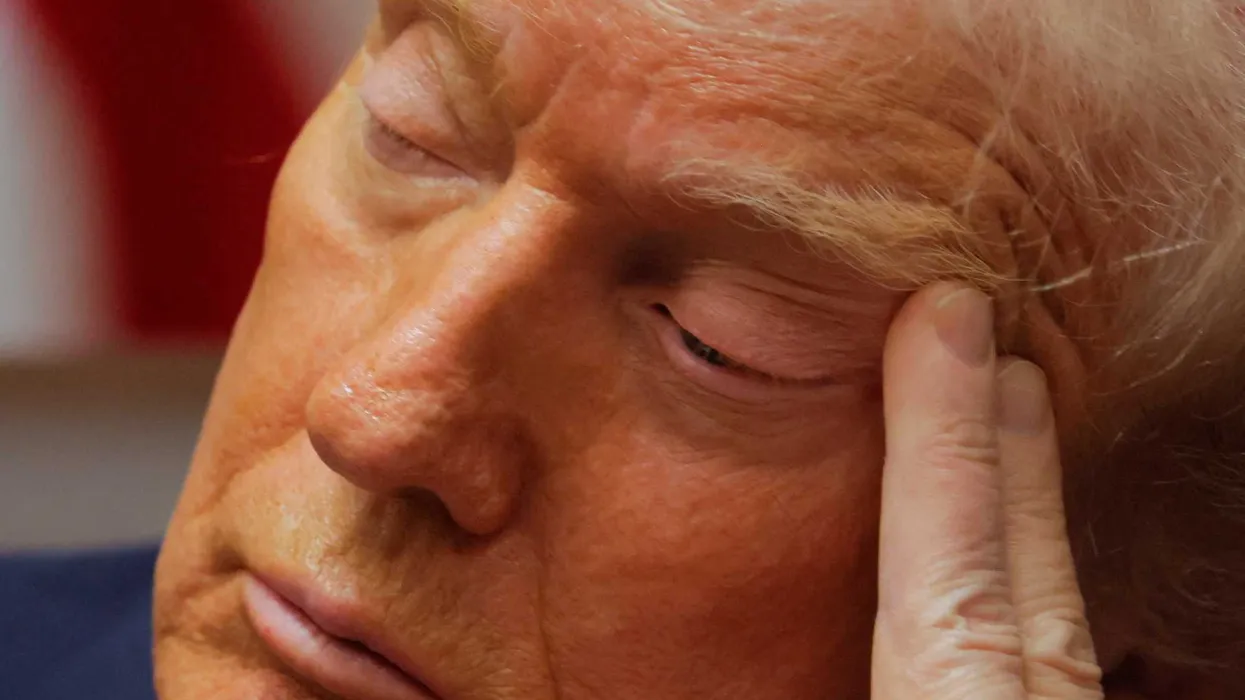
President Donald Trump may be witnessing the "slow death of his presidency," with unpopular foreign policies feeding economic trouble at home and increasingly bizarre public appearances threatening to overwhelm his political survival strategy, according to a new analysis.
Writing in The Independent on Friday, columnist Chris Stevenson argued that Trump's long-standing ability to bury endless controversies under fresh distractions is losing its power. Stevenson wrote that Trump has historically managed scandals by attacking critics, shifting blame onto others and lurching from one headline-grabbing confrontation to the next. The mounting pressure generated by his own consequential decisions, however, may prove harder to escape.
Trump's bid to cast himself as a peacemaker is a difficult sell, the column noted, after the president recently described Ukraine's attacks on Russia's oil refineries as a "disgrace" because of their potential to push up global energy costs. The analysis called Trump's proposed energy ceasefire a massive failure. Ukrainian President Volodymyr Zelensky said Kyiv is "done" with the president's proposal after Russia ignored Trump entirely and continued striking Ukraine's power and energy infrastructure — in a war that has ground on since Russia's full-scale invasion of Ukraine in February 2022.
Stevenson identified Trump's war in Iran, and its devastating economic consequences, as an issue the president cannot pin on his predecessors or present as beyond his control, since Trump personally gave the order to strike the Middle Eastern nation. With Americans facing higher fuel costs, rising inflation and a worsening economy, the columnist argued, the president is confronting dissatisfaction at home while offering voters little reassurance that he can fix the problems.
In another controversy, Trump was forced to backpedal on his approval of plans to livestream the firing squad execution of Nidal Malik Hasan, the U.S. Army major convicted of killing 13 people in the 2009 Fort Hood attack, one of the deadliest mass shootings on an American military base. The move would have placed the United States alongside only Iran and Afghanistan in broadcasting such an execution, and it drew swift criticism from Democrats and Republicans alike. The president initially defended the proposed live execution before acknowledging the wave of objections and warnings that it could make Hasan a martyr.
Stevenson also pointed to Trump's campaign-trail conduct as another sign of political strain. At a recent Arizona rally, Trump referred to audience members as "collateral damage" if they were to require emergency healthcare at the event — a remark unlikely to help Republicans as they head into tough races ahead of the November midterm elections, when every seat in the House of Representatives and roughly a third of the Senate will be on the ballot.
The columnist further questioned whether Trump's renovation projects convey the message he intends, writing: "Trump's other empty gestures and political sleight of hand – renovating the White House ballroom, lining Washington's Reflecting Pool – are adding to the malaise, rather than providing the 'Make America Great Again' narrative he needs. It all adds up to a picture of an administration struggling under the weight of one man's ego."
With Republicans nervous about potential losses in November, Stevenson suggested that Trump's television appearances may ultimately be remembered as the "slow death of his presidency" — a claim that will be put to the test by the midterm campaigns already taking shape.

