Trump’s Saudi Nuclear Agreement Shift Draws Questions Over Conditions and Consequences
Key Takeaways
- •The announced agreement would permit Saudi Arabia to use American nuclear technology and position the kingdom to enrich its own uranium fuel.
- •Trump added a requirement for Saudi recognition of Israel 24 hours after the deal was signed, a condition that did not appear in the original document.
- •Saudi Arabia has historically refused to recognize Israel or join the Abraham Accords unless Israel agrees to a pathway toward Palestinian statehood.
- •Critics argue that allowing Saudi uranium enrichment under relaxed safeguard terms could enable a Saudi nuclear weapon and trigger a Middle East arms race.
- •Saudi Arabia has not indicated whether it would proceed with the agreement under the revised conditions Trump described.
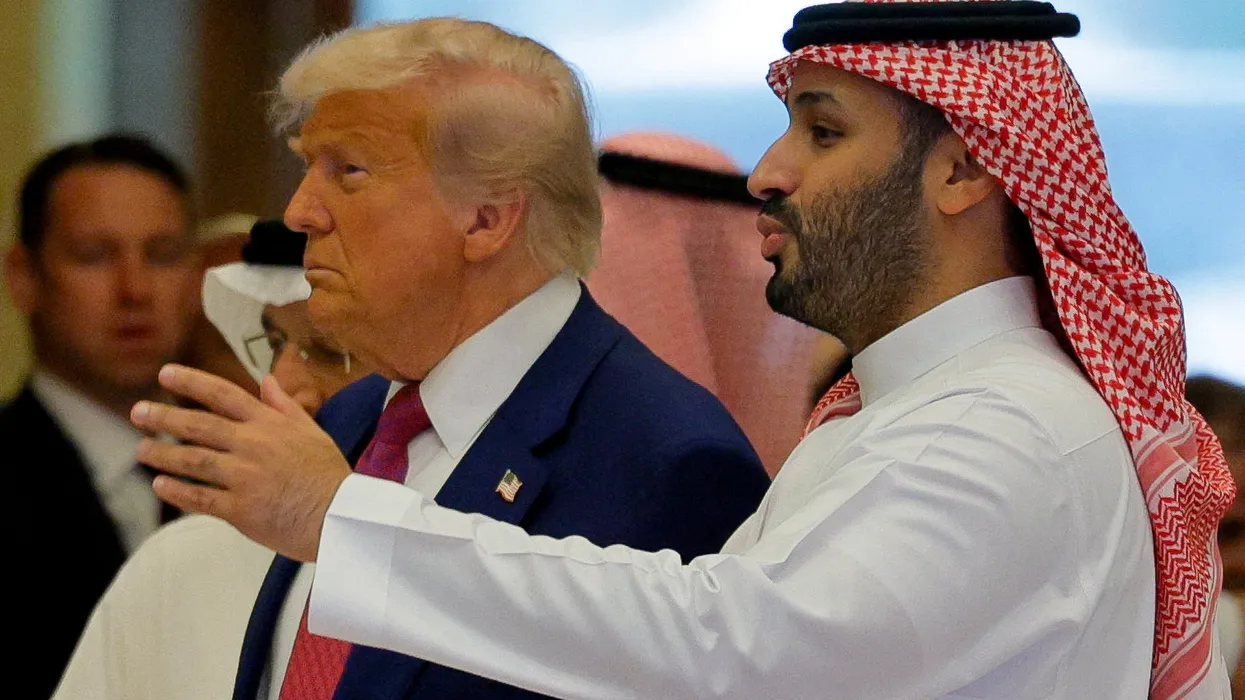
Donald Trump's handling of a reported nuclear cooperation agreement with Saudi Arabia has raised questions about whether the terms of the arrangement were clear before it was signed and announced.
The agreement, announced on Wednesday, would allow Saudi Arabia to use American nuclear technology and put the kingdom in a position to enrich its own uranium fuel. Such agreements, known as Section 123 pacts under the U.S. Atomic Energy Act, require congressional review and typically include stringent non-proliferation commitments. According to the source article, Trump then said 24 hours later, in a social media post, that Saudi recognition of Israel would be a precondition for the deal.
Saudi recognition of Israel and entry into the Abraham Accords—the 2020 normalization framework that established diplomatic ties between Israel and several Gulf states—are conditions that Saudi Arabia has long rejected unless Israel agrees to a pathway toward Palestinian statehood. The article noted that those requirements did not appear in the agreement signed and announced on Wednesday, making Trump's subsequent statement a late change to the publicly described terms.
The source article argued that the episode leaves two possibilities: either Trump failed to include what he intended in a formal agreement, or his administration did not fully understand the terms of the document it had signed. It questioned what kind of "master dealmaker" would change rules after a written agreement was already in place.
The article also compared the episode to the war in Iran, saying that repeated changes over what a "memo of understanding" supposedly contained have contributed to chaos and combat. It said the Saudi shift raises renewed questions about whether Trump understood that Iran could retaliate by closing the Strait of Hormuz—a chokepoint through which roughly a fifth of global oil supplies transit—and launching missiles at U.S. bases and the territory of Gulf neighbors, or whether he chose to ignore an outcome that had long been predicted.
As of the previous day, the article said, Trump may have eased Israeli concern about the Saudi agreement, but there had been no indication from Saudi Arabia that the deal would continue under the newly stated conditions.
Domestic and international critics have argued that allowing Saudi Arabia to enrich nuclear fuel, under a side "safeguard" document that the article said waived scrutiny applied in other countries, could lead to a Saudi nuclear weapon and trigger a nuclear arms race in the Middle East. The debate echoes long-standing tensions in U.S. non-proliferation policy, which has historically sought to limit enrichment capabilities even among partners, as seen in the more restrictive terms of the U.S. nuclear agreement with the United Arab Emirates.
The article concluded by asking how the Saudis, Israelis, Iranians, Congress, NATO allies, rivals and adversaries could be expected to honor a deal whose conditions were not fully established in the signed agreement.
Terry H. Schwadron retired as a senior editor at The New York Times, served as Deputy Managing Editor at The Los Angeles Times, and held leadership roles at The Providence Journal-Bulletin in Rhode Island. He was part of a Pulitzer Gold Medal team in Los Angeles, and his team in New York was part of several Pulitzer-winning efforts. As an editor, Schwadron developed new newsroom approaches, built technological tools and digital media, and worked on recruiting and training minority journalists and scholarship programs. A Harlem resident, he volunteers in community storytelling, arts-in-education programs and tutoring, and is an active freelance trombone player.

