Alternet Columnist Urges Democrats to Demand Trump’s Resignation After Historic Midterm Repudiation
Key Takeaways
- •President Donald Trump declared Thursday that impeachment and removal would destroy the Democratic Party, asserting the country is more successful than at any time in its history.
- •An Alternet columnist describes Tuesday's midterm elections as a generational wipeout larger than any wave election in the past 50 years, reversing a Republican trend dating to the 2010 congressional elections.
- •Cook Political Report editor-in-chief Amy Walters said the Democratic gains at both federal and state levels represent a seismic change not seen in 50 years, noting it took 15 years for Democrats to recover from 2010.
- •After the midterms, Trump replaced White House chief of staff Susie Wiles with immigration adviser Stephen Miller, a move the columnist says signals the administration intends to double down on policies voters rejected.
- •According to AP figures cited in the column, 68 percent of Hispanic voters disapprove of Trump's deportation policies, and Hispanic voters were key to flipping a Kansas Senate seat and turning Texas blue.
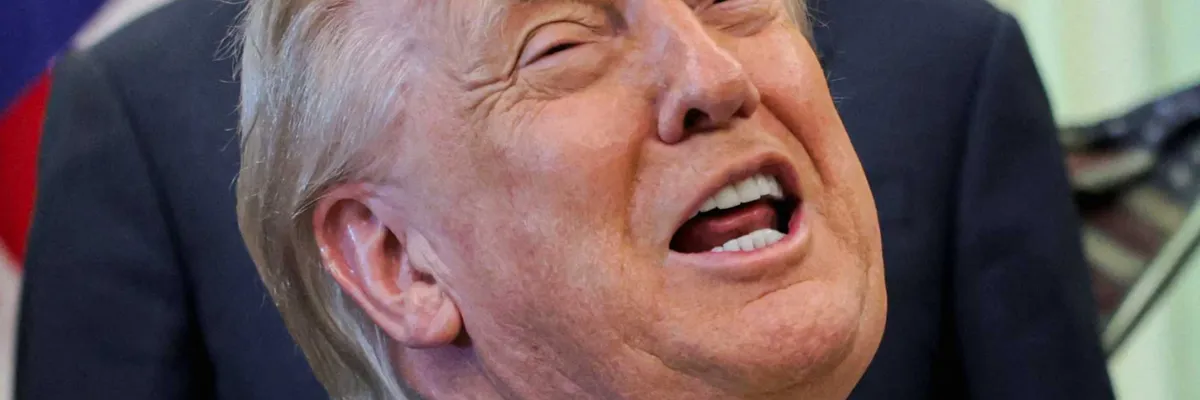
President Donald Trump declared Thursday that any attempt to impeach and remove him from office “would destroy the Democrat Party,” adding that it would amount to “impeachment for no reason, what for having a successful country? Our country is more successful now than at any time in its history.” In a new column for Alternet, a progressive political news outlet, however, the author argues that the president almost certainly does not believe his own claims. Tuesday’s midterm elections — the first nationwide vote since Trump returned to the White House — the piece contends, amounted to a generational wipeout, larger, in the author’s assessment, than any wave election going back half a century, leaving Trump’s name, as the column puts it, effectively “mud.” “While his delusions know no bounds,” the columnist writes, “I don’t think even an old scammer like him believes it.”
The damage described runs deeper than a single election night. The Democratic Party, the columnist notes, has reversed a decade-and-a-half trend that began with the 2010 congressional elections, when Republicans took control of the House. Over that period, Republicans repeatedly routed Democrats not only in races for national office but in state and local contests as well, down to the level of comptroller, boards of education and county commissioners. An entire generation of sheriffs, the piece observes, was swept into office amid the backlash to Barack Obama’s election. Tuesday’s midterms, by this account, rolled back all of it — returning Democrats to the position they held before 2010.
“We really haven’t seen anything like this in 50 years,” Amy Walters, the editor-in-chief of the nonpartisan Cook Political Report, told New York magazine, noting that it took 15 years for the Democratic Party to come back from the “shellacking” of 2010 — the word President Barack Obama used for that result. “We’re talking about the federal level, but it’s the state level as well. And so that is also a seismic change.”
The reversal carries particular weight for Trump personally. His grip on the Republican Party grew out of the backlash against America’s first Black president in 2008 — the context, the columnist argues, in which conservatism became MAGA. Trump, the piece recalls, was one of the original “birther” conspiracy-mongers, promoting the false claim that Barack Obama was not born in the United States. Tuesday’s elections restored the Democrats to the early years of Obama’s first term, suggesting that the backlash has now finally been spent — and, by extension, that Trump has been spent as well. “Exhaustion begets exhaustion,” the columnist writes: whatever his posturing of untouchability, the “wholesale collapse of his coalition” means Trump is “very much touchable.”
Some Senate Republicans, the author concedes, may still be willing to defend the president. But in the columnist’s judgment, the contest is now the Democrats’ to win or lose, not Trump’s — which raises the question of how they should proceed. One option, the piece argues, is obvious once considered: ask Trump to resign.
The columnist describes Trump as a “demented narcissist” with no political future, likening him to a “suicide bomber” who would rather blow up his own party than allow any Republican to contemplate succeeding him. That trait, the argument goes, is precisely why his party might prefer his departure to be a consequence of choice rather than of impeachment. Defending the president against Democratic pressure would force Republicans to spend capital they do not have — a prospect that might please GOP voters still clinging to the glory days, but one that a party hoping to avoid going down with a sinking ship could avoid by letting him leave on his own, “in service to the nation.” The columnist admits to not knowing what incentives might be offered, but insists that things will not get better for Republicans as long as Trump remains in the White House.
Trump’s own response to the midterms, in the author’s view, “pretty much justified their outcome.” Where previous presidents acknowledged defeat and their own role in it, Trump denied having anything to do with the wipeout and spent Wednesday giving reporters a tour of the White House ballroom construction, the project built on the site of the demolished East Wing — conduct the columnist frames as blind to the “open corruption” that the new ballroom represents. It was enough for one CNN commentator to wonder aloud whether the president was “dissociating.” “This is how he wants to spend his time in Washington and now, because he has only two years left, he thinks he can focus even more on some of these vanity projects,” the commentator said.
The most urgent reason for Republicans to consider asking the president to go, the column argues, came when Trump replaced White House chief of staff Susie Wiles with Stephen Miller, the administration’s longtime immigration adviser. The columnist calls Wiles “chaos incarnate,” but points out that she is not directly responsible for dispatching a paramilitary police force to harass, terrorize and murder immigrants and citizens around the country — a responsibility the columnist assigns squarely to Miller. Along with the economy, the piece contends, ICE — U.S. Immigration and Customs Enforcement, the federal agency that carries out deportations — is why Hispanic voters revolted against the Republicans: sixty-eight percent of Hispanic voters disapprove of Trump’s deportation policies, according to the AP. Hispanic voters were key to flipping a Senate seat in Kansas and to turning all of Texas blue. In the columnist’s judgment, Trump should have fired Miller to show he had learned a lesson from the results. Elevating him instead, the author writes, tells the world — and especially Trump’s own party — that the president intends to double down on the worst of what America rejected.
For Democrats, the columnist argues, the ask carries no downside and no cost. All they need do is point out how much better it would be for everyone if a president with “no interest in being president, not to mention being commander-in-chief” were to leave on his own. “The American people have spoken,” the column says of the results. “A new era has come. The old days are over.” Yet Trump is clearly not hearing it, which means, in the author’s view, that it falls to his party to step up and explain what is happening. Democrats can frame it as a simple choice for Trump and the Republicans: the easy way or the hard way.
As for Vice President JD Vance, the columnist is dismissive: “no one likes JD Vance,” who “has humiliated himself so often, he can’t be trusted or taken seriously by anyone.” Even so, pressing for Trump’s resignation would allow Democrats to exploit Vance’s cynicism and ambition. Vance has already blamed Trump’s war for the midterm losses — and, the columnist notes, Trump agreed. If a path to the presidency opens for Vance before the 2028 election, he may take it, a development the columnist argues would hasten the unwinding of the Trump era.
The Democrats, the piece concludes, have spent enough time on defense. This is a rare chance to go on offense — at no cost to them. Whether Democratic leaders make the ask, and how Republicans answer it, is the open question the column leaves behind.

