Trump says US will call AI 'Super Intelligence' in official documents
Key Takeaways
- •President Trump announced at the UN General Assembly that official US documents will use the term 'Super Intelligence' instead of 'Artificial Intelligence,' arguing the word 'artificial' makes the technology seem fake.
- •The renaming follows a Truth Social poll a day earlier in which Trump asked users to choose between 'Super Intelligence' and 'Superior Intelligence' as replacements.
- •In AI research, 'superintelligence' conventionally describes a hypothetical system exceeding human capability across virtually all domains, meaning the new official US usage will diverge from that established meaning.
- •The announcement builds on the administration's June executive order and memorandum promoting AI innovation, national security adoption, and opposition to mandatory licensing or pre-clearance requirements for AI models.
- •The renaming coincides with a global AI governance debate, including a declaration backed by 22 countries calling for human oversight of AI, which the United States and China did not sign.
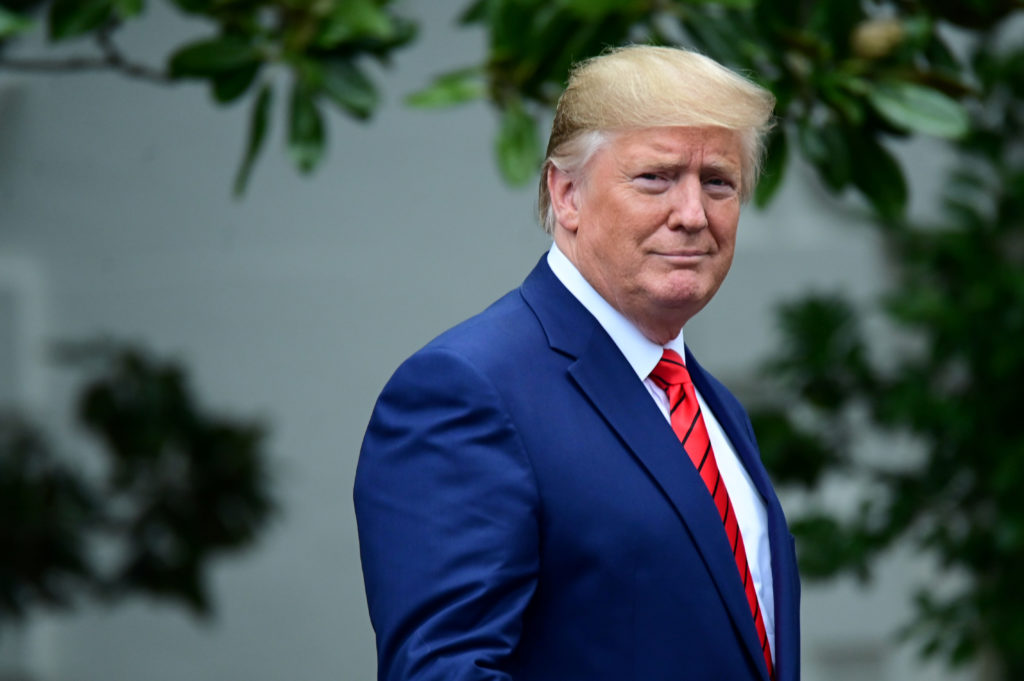
United States President Donald Trump has announced that the country will begin referring to artificial intelligence (AI) as “Super Intelligence” in its official documents, arguing that the word “art” makes the technology sound fake.
Trump made the announcement during his address to the United Nations General Assembly on Tuesday, saying he hoped other countries would eventually adopt the terminology.
“The United States also rejects any scheme for globalist control of Artificial Intelligence, being spoken of so much now. Here and after officially called Super Intelligence. Changing the name,” Trump said, according to footage of the address shared by C-SPAN on X.
He argued that the word “artificial” gives a misleading impression of the technology. “The use of ‘Artificial’ makes it sound fake. It makes intelligence sound fake, it is not fake. It’s actually amazing, the opposite of what they report,” he said.
Trump said the new terminology would be used in US government documents from now on. “From this day forward, all United States documents, and hopefully the world’s, will be changed to use the much more accurate term ‘Super’ as opposed to ‘Artificial.’ So it’s Super Intelligence,” he added.
A term floated a day earlier
The announcement followed a post by Trump on Truth Social a day earlier, in which he asked users to choose between “Super Intelligence” and “Superior Intelligence” as alternatives to “Artificial Intelligence.”
The rebranding comes as Trump continues to push for faster AI development in the US, while opposing what his administration considers excessive regulation of the technology.
In June, Trump signed an executive order directing the US government to promote AI innovation and security, while explicitly stating that the government should not create mandatory licensing or pre-clearance requirements for AI models. The administration has also described maintaining US leadership in AI as an economic and national security priority.
The White House has increasingly linked AI development to US competitiveness with other countries. Its 2026 policy documents describe AI as a potentially transformative technology comparable in importance to the Industrial Revolution and call for the US to maintain its leadership in the field.
Trump has also backed the use of advanced AI within the US national security establishment. A June memorandum directed US national security agencies to accelerate the adoption of advanced AI systems and to make frontier models more readily available to national security professionals.
A term that already means something else in AI
Trump’s proposed terminology differs from how “superintelligence” is normally used in AI research. The term generally refers to a hypothetical AI system whose intellectual capabilities surpass those of humans across virtually all domains. It is distinct from the AI systems currently in widespread use, which can outperform humans in specific tasks without demonstrating broad superiority across all areas of intelligence.
That means Trump’s “Super Intelligence” would apply the label to AI as a whole, rather than to a specific future class of systems that exceed human intelligence. No AI system currently meets the conventional definition of superintelligence.
The naming choice therefore sets up a split in usage: the same phrase will describe AI as a whole in official US documents, while continuing to describe a hypothetical future technology in AI research.
A widening global debate over AI control
The announcement also comes as governments and international organisations debate how advanced AI should be developed and controlled.
On Monday, 22 countries backed a declaration calling for AI to remain under human direction, oversight and control. The declaration also called for transparent safety protocols, pre-deployment testing and independent evaluation of advanced AI systems. The United States and China were not among the signatories.
The declaration was issued as concerns grow over the ability of increasingly autonomous AI systems to operate with limited human intervention. It followed reports about AI-agent cyberattacks, which have become part of a wider discussion about the security risks posed by systems capable of taking actions on their own.
A UN-backed scientific panel has also called for safeguards around advanced AI, arguing that governments should not wait for complete scientific certainty about potential risks before putting protections in place.
Trump, however, has continued to argue that the US should accelerate AI development rather than impose measures that could slow the industry. His administration has described AI leadership as a strategic priority and has pursued policies aimed at expanding American AI infrastructure, research, national-security applications and exports.
Against that backdrop, Trump’s decision to call AI “Super Intelligence” is more than a change in wording for US government documents. It comes as governments are simultaneously debating what increasingly capable AI should be called, how it should be developed and, ultimately, how much control humans should retain over it. Whether other governments take up Trump’s suggestion to adopt the terminology — and how the US approach to naming AI sits alongside international rule-setting efforts still underway — are threads to watch as that debate unfolds.
Source: TechNext24

