New York Times columnist argues Trump's push to rehabilitate Nixon is self-serving
Key Takeaways
- •The Justice Department is advancing an investigation into whether prosecutorial misconduct, rather than wrongdoing by Nixon, produced the Watergate inquiry that preceded his 1974 resignation.
- •New York Times columnist Jamelle Bouie argues the administration's effort to exonerate Nixon is motivated by self-interest as Trump's approval ratings decline.
- •Bouie notes Trump's average approval rating sits in the low 30s, with some polls in the high 20s, nearing Nixon's low point of about 25 percent.
- •According to Bouie, a significant Republican defeat in November could lead voters to disengage from politics and the party, intensifying the president's unpopularity.
- •Bouie connects the push to rehabilitate Nixon to a decades-long conservative emphasis on the unitary executive theory, which he characterizes as a framework permitting unilateral, even dictatorial, presidential action.
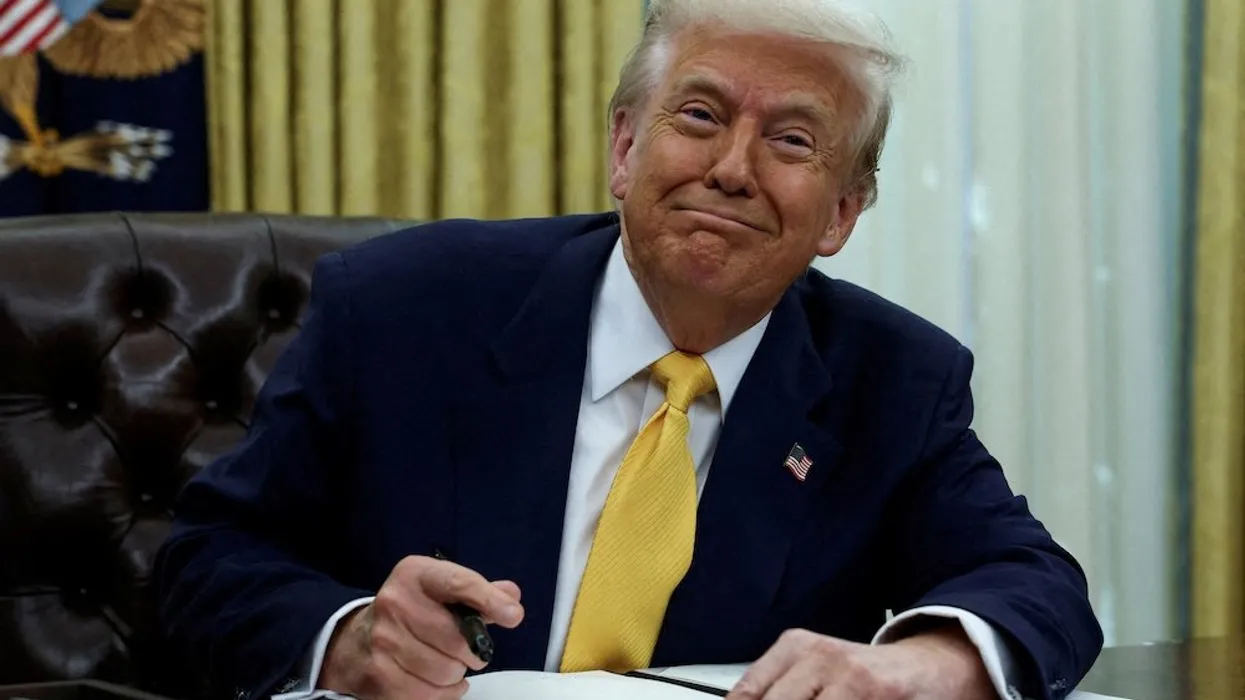
President Donald Trump and his administration have mounted a new effort to exonerate Richard Nixon — and New York Times columnist Jamelle Bouie argues that, like many things involving Trump, the real motive is entirely self-serving.
Reports emerged last week that the Department of Justice is advancing an investigation into whether the Watergate investigation that toppled Nixon's presidency was the product of prosecutorial "misconduct." The scandal, which began when Nixon directed operatives to spy on the Democratic National Committee's headquarters at the Watergate Hotel, spiraled into a years-long quagmire and ultimately led to his resignation from the presidency before impeachment proceedings could get underway. Nixon stepped down in August 1974, two years after the June 1972 break-in, and remains the only U.S. president to have resigned from office. In the half-century since, Watergate has served as a durable reference point in American political life for questions of presidential accountability — which is why efforts to recast its legacy tend to draw close scrutiny.
In his latest "Takes" video shared to YouTube, Bouie noted that it should go without saying that the Watergate scandal "was a series of quite serious crimes" — not a "coup" perpetrated by the "deep state" against Nixon, as some in Trump's orbit have suggested.
Even so, Bouie conceded that he was "not actually that surprised" to see the administration pursuing the matter, arguing that the move ties into Trump's current predicament as his approval ratings slide.
"Trump is reaching Nixon levels of approval," Bouie explained. "He's not quite there yet. Nixon, I believe, bottomed out at around 25 percent approval. But he's heading there. His average approval is in the low 30s, and we're getting polls that are in the high 20s at this point. Very low 30s, high 20s. Trump is not that far away from Nixon-level approval, and it wouldn't take much. Another price shock would do it."
Bouie added that a significant Republican defeat in November could accelerate the decline.
"If Republicans do suffer a big loss in November, then there'll be plenty of voters who ultimately decide that they just don't want anything else to do with the guy, and they'll register their disapproval," he continued. "It doesn't mean that they are no longer Republicans, that they wouldn't vote for a Republican candidate, but it does mean that they may be disengaged from both politics and the party. And so, as the president approaches Nixon levels of unpopularity, it checks out that both the administration and its allies would be trying to say, 'Well, no, actually Nixon was the victim of a horrific deep state conspiracy.'"
Bouie also situated the episode within a broader historical arc, arguing that the conservative political project of the last several decades has been aimed at preventing anything like Watergate from ever again happening to a Republican president — rejecting "the idea that a president or a Republican president would ever be held accountable for that abuse of power." That impulse, he said, has driven the movement's long-standing fixation on the "unitary executive theory," which he described as "a political and intellectual framework for allowing a president to act unilaterally, anarchical, even [with] dictatorial authority." The theory has been debated in legal circles for decades and has surfaced repeatedly in disputes over the limits of presidential power.
"You can really think of so much of the modern conservative movement as being an attempt get revenge for and vindicate Richard Nixon," Bouie said. "And so that's the other reason why none of this is surprising. Of course, Trump, who embodies the unitary executive, who is relying on these theories, who is trying to actualize them and bring about a presidency that is even more unaccountable and lawless than Nixon's, of course, the Trump administration and its allies would be looking for ways to rehabilitate Nixon."
For readers tracking where the story goes from here, the course of the Justice Department review and the November elections Bouie pointed to stand out as the clearest near-term markers for how the Trump-Nixon comparison — and the fight over Watergate's legacy — continues to unfold.
Source: Alternet

