Trump Signs National Security Memorandum Authorizing Vetted Private US Companies to Conduct Government-Directed Cyber Operations
Key Takeaways
- •The memorandum lets vetted private companies support offensive cyber operations only under federal direction and oversight.
- •The policy targets foreign transnational criminal organizations involved in ransomware, financial crime, and related cyber activity.
- •Participating firms are expected to be overseen through the Department of Homeland Security’s National Coordination Center and must maintain at least $1 million in bonding or escrow.
- •Authorized actions may include surveillance and efforts to manipulate, disrupt, or disable hostile computer systems.
- •The directive could expand opportunities for cybersecurity firms while raising legal, security, and accountability concerns.
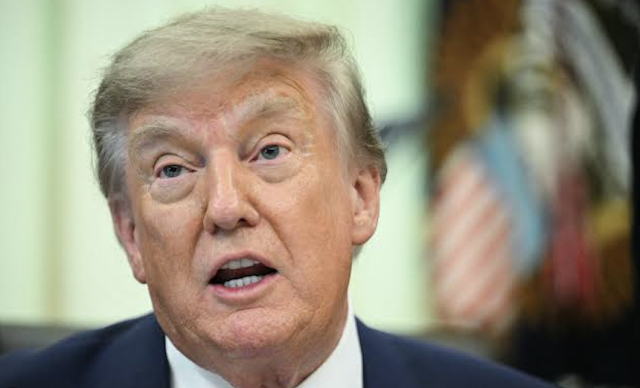
Trump Signs National Security Memorandum Authorizing Vetted Private US Companies to Conduct Government-Directed Cyber Operations
President Donald Trump has signed a national security memorandum that significantly expands the U.S. government's capacity to leverage private-sector companies in offensive cyber operations against foreign transnational criminal organizations. The directive represents a notable shift in Washington's approach to combating ransomware, financial fraud, and other forms of international cybercrime.
The memorandum, signed on Wednesday, August 12, establishes a framework enabling federal authorities to collaborate with vetted private companies that possess specialized cyber capabilities. These firms will not have unrestricted authority to launch cyber operations independently; rather, their activities will be conducted under federal direction and oversight.
The development was highlighted by the crypto and breaking-news account Watcher.Guru on X, which reported that Trump had signed the measure allowing private U.S. firms to participate in government-directed cyber operations. Source: X post
The policy targets foreign criminal networks that Washington identifies as threatening Americans through ransomware attacks, financial crimes, and other forms of international cyber activity. Under the new framework, authorized cyber operations could include surveillance as well as measures designed to manipulate, disrupt, or disable hostile computer systems.
Expanding Offensive Cyber Strategy
The memorandum marks another step in the Trump administration's broader push toward a more aggressive cybersecurity posture.
Historically, offensive cyber operations have been primarily conducted by U.S. intelligence agencies, military units, and federal law enforcement. The new policy formalizes a role for private companies, potentially providing the government with access to specialized technical expertise and operational capabilities already present within the cybersecurity industry. This builds on prior administrations' efforts to streamline offensive cyber authorities, including the 2018 National Security Presidential Memorandum 13, which reportedly eased interagency approval processes for Cyber Command operations. The latest directive extends the operational footprint by bringing vetted private firms directly into government-run missions.
The White House's wider cyber strategy has emphasized private-sector cooperation and the deployment of both defensive and offensive tools to counter cyber threats. The administration has stated that the United States should collaborate more closely with technology firms and other industry partners to identify, disrupt, and weaken hostile cyber networks.
This latest memorandum advances that strategy by creating a formal mechanism through which vetted companies can participate directly in government-controlled operations directed at foreign criminal organizations. It also resolves, at least partially, a longstanding policy debate over whether private companies should be permitted to conduct "active defense" or "hack back" operations. Prior legislative proposals, such as the Active Cyber Defense Certainty Act introduced in Congress in 2017, sought to give companies limited authority to access attacker systems to identify intruders, but those measures never became law. The memorandum takes a different approach: rather than authorizing unilateral private action, it channels private capabilities through government-controlled operations.
Private Companies to Operate Under Federal Control
Despite the policy's far-reaching implications, the memorandum does not grant private companies independent authority to conduct cyberattacks.
According to reporting on the directive, participating firms must operate within a government-authorized program. The Department of Homeland Security's National Coordination Center is expected to oversee the framework, while federal authorities retain operational control.
Companies seeking to participate must satisfy specific requirements. Reporting indicates that participating firms will be required to maintain at least $1 million in bonding or escrow, introducing an additional layer of financial and operational accountability.
This distinction is critical: the policy does not simply authorize American cybersecurity companies to independently hack foreign systems. Instead, it establishes a public-private model in which private-sector capabilities are deployed as part of government-directed operations. This stands in contrast to the existing intelligence community contracting model, where private firms have long supplied analytics, threat intelligence, and platform support but have typically not conducted offensive operations themselves.
Targeting Ransomware and Financial Crime
The memorandum arrives as ransomware groups and other cybercriminal organizations continue operating across international borders. Over the past several years, attacks on critical infrastructure — including the 2021 Colonial Pipeline outage and disruptions to healthcare systems — have underscored the difficulty of relying on extradition and traditional prosecution when suspects operate from territories outside U.S. legal reach.
Foreign-based criminal networks are able to target American businesses, financial institutions, and individuals while operating from jurisdictions where U.S. authorities possess limited ability to make arrests or seize infrastructure through conventional law enforcement means.
Cyber operations offer an alternative avenue for disrupting these organizations. Under the framework, authorities could deploy cyber tools to gather intelligence on criminal networks or interfere with the systems they depend on. In certain circumstances, that could include disrupting or disabling digital infrastructure used to facilitate cybercrime.
The administration has argued that traditional law enforcement instruments are not always adequate when criminal organizations operate internationally and rely heavily on digital infrastructure.
Implications for the Private Cybersecurity Sector
The decision could create new opportunities for American cybersecurity companies that have traditionally concentrated on defensive security, threat intelligence, and government contracting. Major firms such as CrowdStrike, Mandiant, and Booz Allen Hamilton already hold significant federal contracts and maintain deep expertise in adversary tracking. Integrating these capabilities into government-directed operations could enable federal agencies to respond more rapidly to sophisticated threats.
However, expanding the role of private companies in offensive cyber operations also raises significant legal and security questions. Cyberattacks can cross national borders almost instantaneously, and incorrectly identifying the infrastructure or individuals behind an attack could produce unintended consequences. A private company conducting an operation against a criminal network could also become a target for retaliation by the organization or government connected to that network. Under international law, state responsibility for cyber operations is an evolving area; frameworks such as the UN Group of Governmental Experts reports and the Tallinn Manual have attempted to clarify how established law of armed conflict applies to cyberspace, but attribution and proportional response remain complex.
These concerns make federal oversight a central component of the new framework.
Cyber Warfare Enters a New Phase
The policy reflects a broader transformation in how governments approach cyber conflict. Cybersecurity is no longer confined to protecting government websites and computer networks. Modern cyber operations can involve intelligence gathering, financial disruption, infrastructure attacks, and efforts to dismantle criminal networks operating thousands of miles away.
The Trump administration's cyber strategy calls for stronger cooperation between government agencies and the private sector, asserting that American companies possess capabilities that can bolster the country's ability to respond to cyber threats.
The latest memorandum could serve as a critical test of how far that public-private partnership can extend.
For now, the key constraint remains federal authorization and oversight. Private companies participating in the program are expected to operate on behalf of the U.S. government rather than independently determining when or where to launch offensive cyber operations.
The policy nonetheless represents a significant escalation in Washington's approach to international cybercrime. By combining government authority with private-sector expertise, the Trump administration aims to intensify pressure on foreign criminal networks responsible for ransomware, financial fraud, and other cyber threats.
As the program develops, questions regarding accountability, legal authority, international consequences, and the protection of private companies are likely to draw increased scrutiny from Congress, civil liberties groups, and foreign governments.
For the cybersecurity industry, the signal from Washington is already apparent: the private sector is being positioned to play a substantially larger role in America's offensive cyber strategy.
Source: Hokanews
