Espionage Expert Warns Trump's Mar-a-Lago Phone Habits Make Him Prime Target for Foreign Spies
Key Takeaways
- •Intelligence historian Calder Walton contends that Trump may be the most surveilled U.S. president by foreign intelligence services due to his phone accessibility and Mar-a-Lago's weak security.
- •Trump's personal mobile number is reportedly well known among Washington reporters, who have successfully reached him by cold-calling, and foreign intelligence services are presumed to be doing the same.
- •Mar-a-Lago functions as a private membership club where hundreds of paying members and guests circulate, creating a far less controlled environment than traditional government facilities.
- •During Trump's first term, classified documents were discovered in unsecured locations at Mar-a-Lago, including a bathroom, illustrating what experts describe as inadequate document-handling practices.
- •Walton identifies both U.S. adversaries such as Russia and China and allies such as Israel as likely monitoring Trump's communications, with hostile regimes potentially using espionage for influence operations rather than merely information collection.
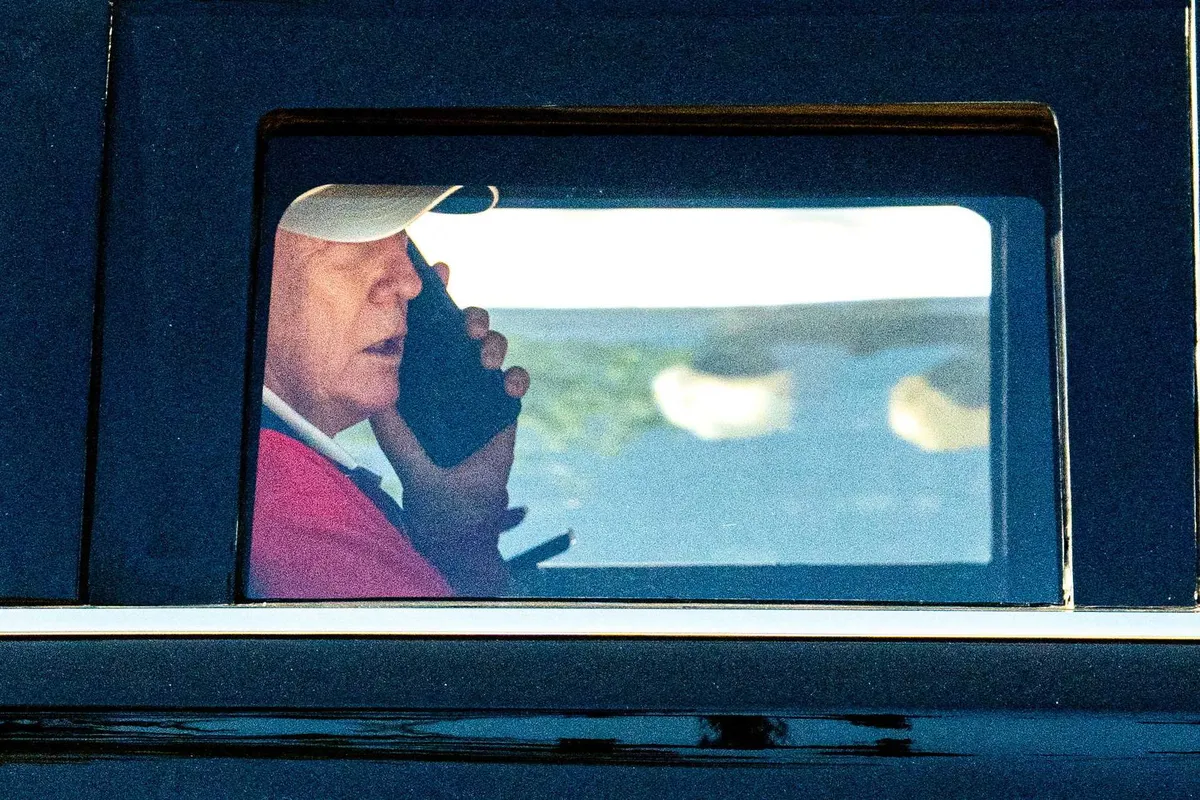
Donald Trump's casual habit of taking unsolicited phone calls from reporters, combined with the well-documented security lapses at his Mar-a-Lago estate in Florida, has intelligence experts worried that foreign powers are exploiting unprecedented access to the former president's private communications.
Presidential communications security has been a recurring concern across administrations. During Barack Obama's tenure, intelligence agencies raised alarms over his use of a personal smartphone, and during Trump's first term, multiple news outlets reported that he routinely used personal cell phones despite staff warnings. What distinguishes the current moment, according to experts, is the combination of that phone accessibility with the uniquely porous environment of a private club operating as a presidential residence.
In a column for iNews, Calder Walton, a historian of intelligence and author of SPIES: The Epic Intelligence War Between East and West, argued that Trump may be the most surveilled president in American history by foreign intelligence services.
Walton wrote that Trump's "unpredictability" has intensified the urgency among foreign governments — both allies and adversaries — to learn what he is thinking. His accessibility to journalists, Walton noted, effectively hands foreign intelligence agencies a windfall of information. Trump's personal mobile phone number is reportedly widely known among the Washington press corps, and reporters have successfully reached him for interviews simply by cold-calling. Foreign intelligence services, Walton suggested, are almost certainly doing the same.
"One can only imagine how many foreign spies are also listening in to his phone conversations," Walton wrote. "Any foreign intelligence service worth its name will have recruited agents at his Mar-a-Lago resort in Florida, where security is known to be pathetic."
Security vulnerabilities at Mar-a-Lago have been an ongoing concern. The estate functions as a private membership club where hundreds of paying members and their guests circulate, a setting fundamentally different from the controlled access of government facilities such as the White House or Camp David. Walton pointed out that during Trump's first term, classified documents were discovered in unsecured locations at the resort, including a bathroom, underscoring what he described as inadequate document-handling procedures.
Beyond traditional U.S. adversaries such as Russia and China, Walton identified Israel as "almost certainly" monitoring Trump's communications as well, citing the evolving conflict in Iran and what he characterized as shifting White House responses. Ally-on-ally intelligence collection is a well-documented practice in international relations; friendly governments routinely seek to anticipate policy shifts even from their closest partners, particularly during periods of geopolitical realignment in the Middle East.
"There is, of course, a fundamental difference between intelligence collection by friendly states and hostile regimes," Walton elaborated. "The latter will be using all of the dark arts not just to discover secrets but to influence a target – including espionage, subversion and sabotage."

