'Collision course': Experts warn Trump's 'last refuge' is his most dangerous
Key Takeaways
- •A Guardian report describes a widening gap between Trump's self-perceived invincibility and his declining influence 20 months into his second term.
- •Trump recently suffered defeats from independent institutions, including the Federal Reserve on interest rates, the Supreme on mail-in ballot restrictions, and lower courts on the Kennedy Center naming and a ban on three news outlets.
- •Former Republican strategist Rick Wilson said voter pessimism is unparalleled since the Carter era, pointing to Trump's roughly 29 percent approval in some polls and public association of Trump with the war, gas prices, and grocery prices.
- •Republican Party unity is showing cracks amid fears that Trump will cost the party seats in November's midterm elections.
- •Experts such as Charlie Sykes and Allan Lichtman warn that as Trump enters the lame-duck phase with weakened political leverage, he may resort to unchecked executive authority, a politicized Justice Department, and sweeping pardon powers.
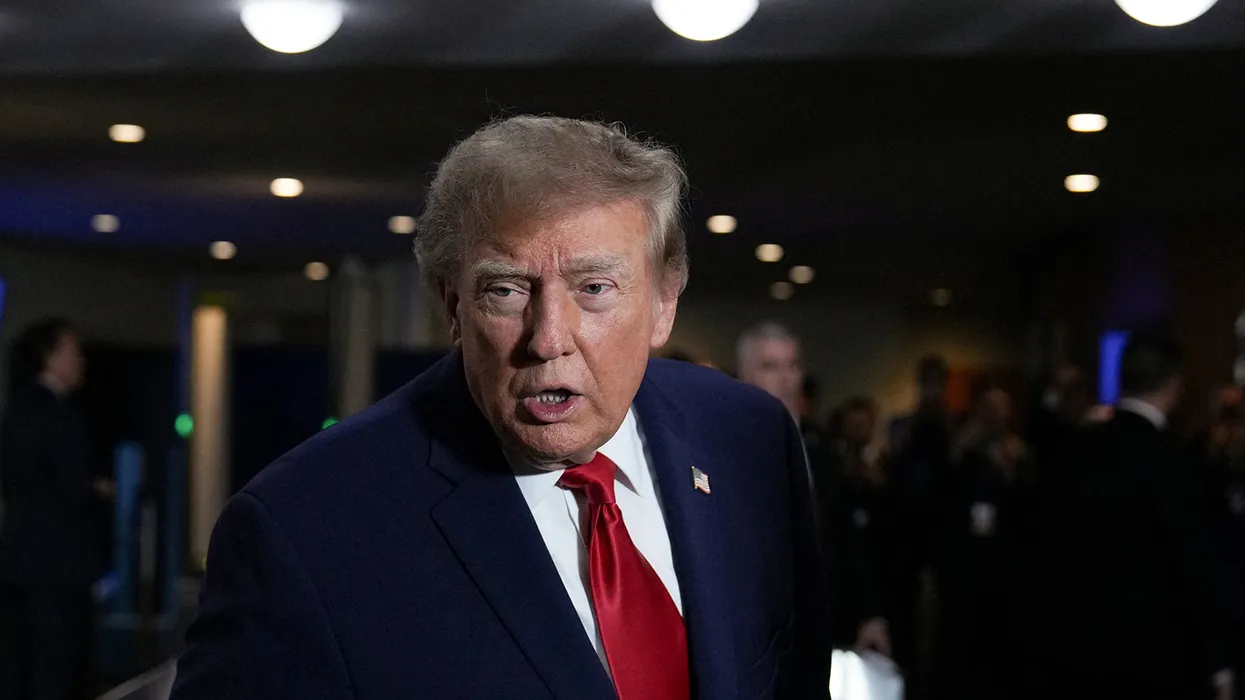
President Donald Trump is "lashing out" as his influence increasingly wanes — and, according to experts and historians who spoke with the Guardian, he has never been more dangerous.
In an article published early Saturday, the Guardian described Trump's verbal attack on CNN anchor Kaitlan Collins this week as "a reminder that even Trump, who has expanded executive power and dominated the national consciousness, finds some things beyond his control."
"Indeed, 20 months into his second term, there is a widening gap between the president's self-perceived invincibility and the reality of his waning influence," Guardian writer David Smith reported. "For the first time since his improbable political resurrection, Trump's aura of authority is fading."
'The beginning of the end'
Rick Wilson, a former Republican strategist, described the moment as "the beginning of the end" for Trump. "This is the decline," he said. "As powerful and transgressive as he's been, the country does not have a outlook right now. In fact, the negativity and pessimism among voters has reached a point that is unparalleled since Jimmy Carter."
Wilson compared the current mood among the Republican-led Congress to a wildlife documentary. "It needs a David Attenborough voiceover," he told the Guardian. "It's like the gazelles wandering the savannah. ... The risk factor that they face now is Trump."
In Wilson's view, voters are catching on to the president's cascading policy failures. "It's reached the point where the magic doesn't work any more," he said. "There's no political upside from a president who is at 29 percent approval rating in some polls, has presided over a disastrous war, and has ended up raising energy prices and food prices — all the things that they can't spin away."
"The voters now have very much put that together," he added. "They associate the war with Trump. They associate the gas prices with Trump. They associate the grocery prices with Trump."
Wilson argued that the more Trump "becomes a liability, the more he acts out" — and that his actions threaten the Republican Party as a whole. "Everything was handed to him for a decade by that party and, now that they're paying the price, they've decided this has got a little too hairy," he said.
A 'rough month'
As Smith reported, Trump has had a rocky stretch: "The Federal Reserve defied him on interest rates. The Supreme Court blocked his administration's attempt to impose new restrictions on mail-in ballots for November's midterm elections. One judge prevented him adding his name to the Kennedy Center ... another judge blocked his ban on three news outlets from the White House grounds."
The string of setbacks traced a common thread: each came from an institution that operates independently of the White House — the Federal Reserve, which sets interest rates, and the federal courts.
Even Trump's dependable power base is showing strain. According to Smith, "even Trump's dependable power base, the Republican party, is showing cracks amid fears that he will cost them seats in November."
Midterm elections fall at the midpoint of a presidential term, when every seat in the House of Representatives and a portion of Senate seats are on the ballot — and control of Congress shapes how much of a president's agenda can advance.
The spotlight problem
Bill Galston, a former adviser to President Bill Clinton, suggested the Republican Party's search for a post-Trump leader poses a particular threat to the president's psyche. "Nothing will drive him crazier than the shift of the spotlight away from him," Galston said. "The prospect of passing the torch, giving up the spotlight, is intensely painful for him. It's his oxygen. Will he be able to breathe, spiritually and emotionally speaking, without it?"
Longtime conservative commentator Charlie Sykes argued that Trump's biggest fear is "irrelevance," telling the Guardian the president will "rage against it as long as he can." "The notion that he will go quietly would be incredibly naive," Sykes said.
Allan Lichtman, a history professor at American University, agreed that Trump will grow more dangerous as attention fades. "He cannot stand not being the centre attention and that's dangerous," Lichtman said. "... [W]ho knows what crazy things he might do to reassert attention on him? And that's frightening."
Lichtman warned that even as Republicans appear to distance themselves from the president, Trump retains "enormous power — and he is certainly quite willing to use that power unconstrained." "He doesn't care about the courts and doesn't care about the Congress," he said.
A 'collision course'
From that perspective, Smith wrote, "Trump's last refuge will be the unchecked use of executive authority, a politicized justice department and a sweeping pardon power." "With nothing to lose in his final two years, he could go out all guns blazing," he added.
That pardon authority, rooted in the Constitution, covers federal offenses and does not require approval from Congress or the courts.
Sykes framed the period ahead as a direct confrontation with a president entering what American political usage calls the "lame duck" phase — the closing stretch of a tenure, when formal authority remains but political leverage typically narrows. "We're headed for a collision between a lame duck who has no respect for the constitutional norms and an opposition that may have some power to hold him accountable," he said. "The paradox is the weaker he gets, the more dangerous he gets."

